
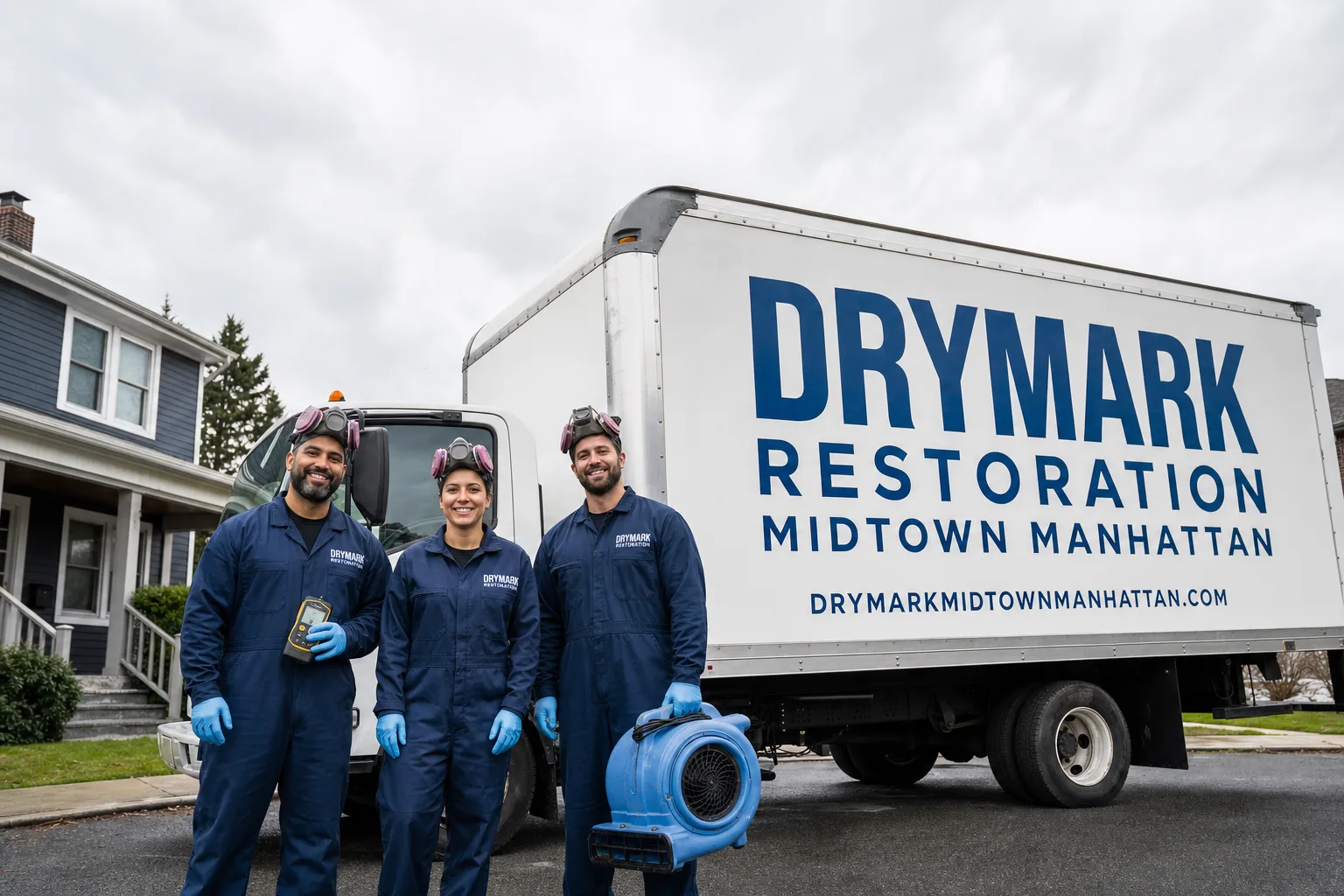
Free visual inspection and a written scope of work before any mitigation begins - photos, moisture readings, and drying logs go in your claim file
The scope we write is the scope we bill. Anything new gets shown to you, in writing, before we touch it.
 Before
 After
After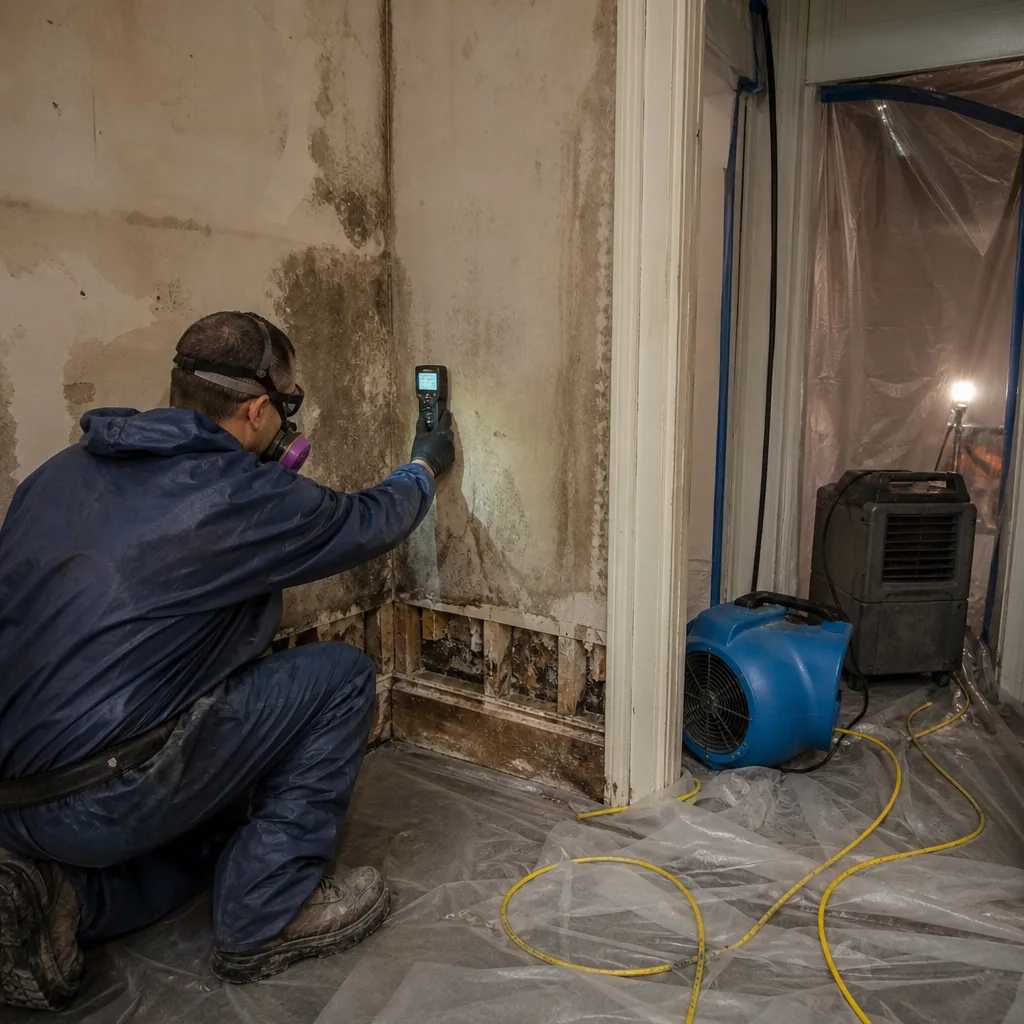 Before
 After
After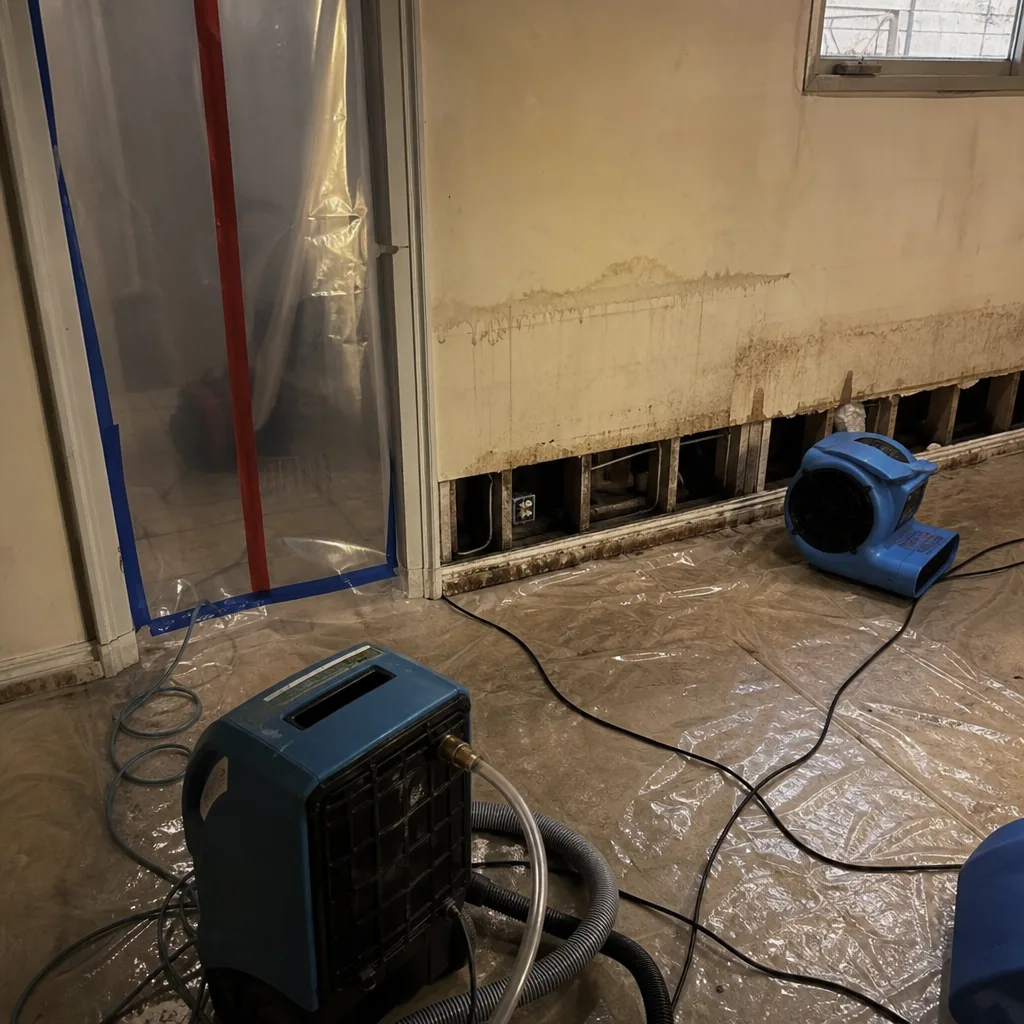 Before
 After
AfterFast, Reliable Mold Remediation Across Hoboken
Mold remediation in Hoboken typically runs $2,800-$7,500 for residential jobs, with most garden-level brownstone units falling in the $4,200-$6,000 range due to the city’s unique flood conditions. We’re DryMark Restoration Midtown Manhattan, and our crews cross the Hudson daily to reach Hoboken properties within 45-60 minutes of a call to (862) 212-1646. Dispatch and scheduling are coordinated from our New York City office, but the technicians who arrive at your door know Hoboken’s building stock: the converted brownstones on Garden Street, the garden-level rentals near the PATH station, the pre-war brick rowhouses with original plaster walls that trap moisture like a sponge.
We’ve learned that Hoboken’s mold problems aren’t like mold problems in Jersey City or Union City. The city’s combined sewer-stormwater system, its bowl-shaped topography, and its century-old masonry construction create a specific remediation profile that generic advice misses entirely. Our Mold Remediation team documents every job to IICRC standards with photo records, written scopes, and daily moisture logs that keep insurance claims moving.
Why DryMark Restoration Midtown Manhattan Is Hoboken’s Preferred Mold Remediation Company
Hoboken residents research before they call. They read the three-star reviews. They want to see documentation, not promises. We’ve restored properties across Hoboken’s roughly one-square-mile footprint since 2011 - garden-level floods on Willow Avenue, sewage backups near Observer Highway, condo-wide mold outbreaks spreading through solid masonry party walls on Washington Street. Our reviews from Hoboken customers consistently cite the same thing: we show up with a written price before anyone touches a wall, and we leave behind a photo record that their adjuster can read like a file.
Response time to Hoboken averages under an hour from initial call to crew arrival for active water intrusion. For established mold conditions without active flooding, we schedule within 24 hours. Every technician is background-checked, uniformed, and licensed; the license number is provided on your written scope. Live person answers every call, 24 hours a day, 7 days a week - no voicemail trees while water is still wicking into plaster.
Our local knowledge runs deep. We know that western Hoboken blocks near Observer Highway and the rail yards flood before the waterfront because the terrain slopes inward, and the century-old combined sewer backs up from that interior low point first. We know that original horsehair plaster in pre-war brownstones holds moisture five days longer than modern drywall, extending drying logs and documentation requirements. We know that virtually every flood event in Hoboken involves Category 3 black water, not clean water, which changes every decision about what can be saved and what must be removed.
Our Mold Remediation Services in Hoboken
Mold Inspection & Testing
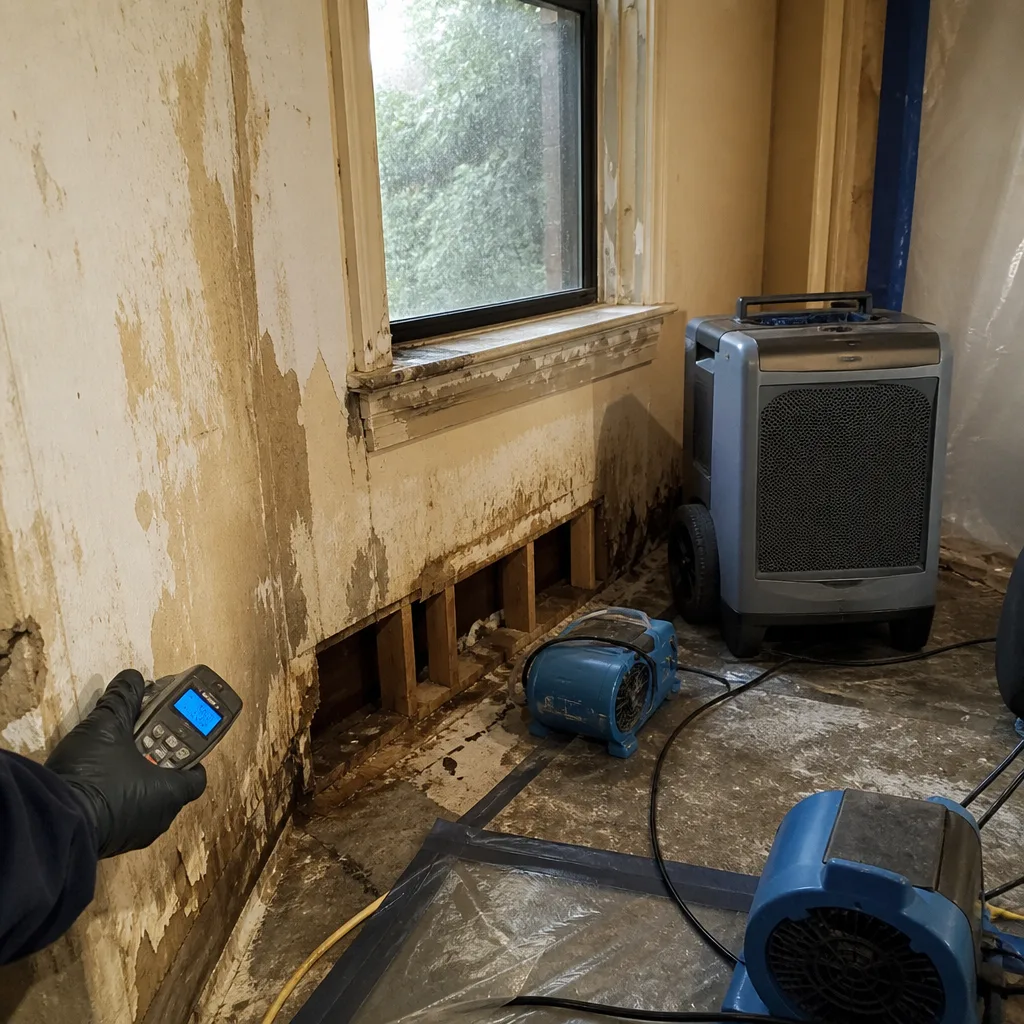
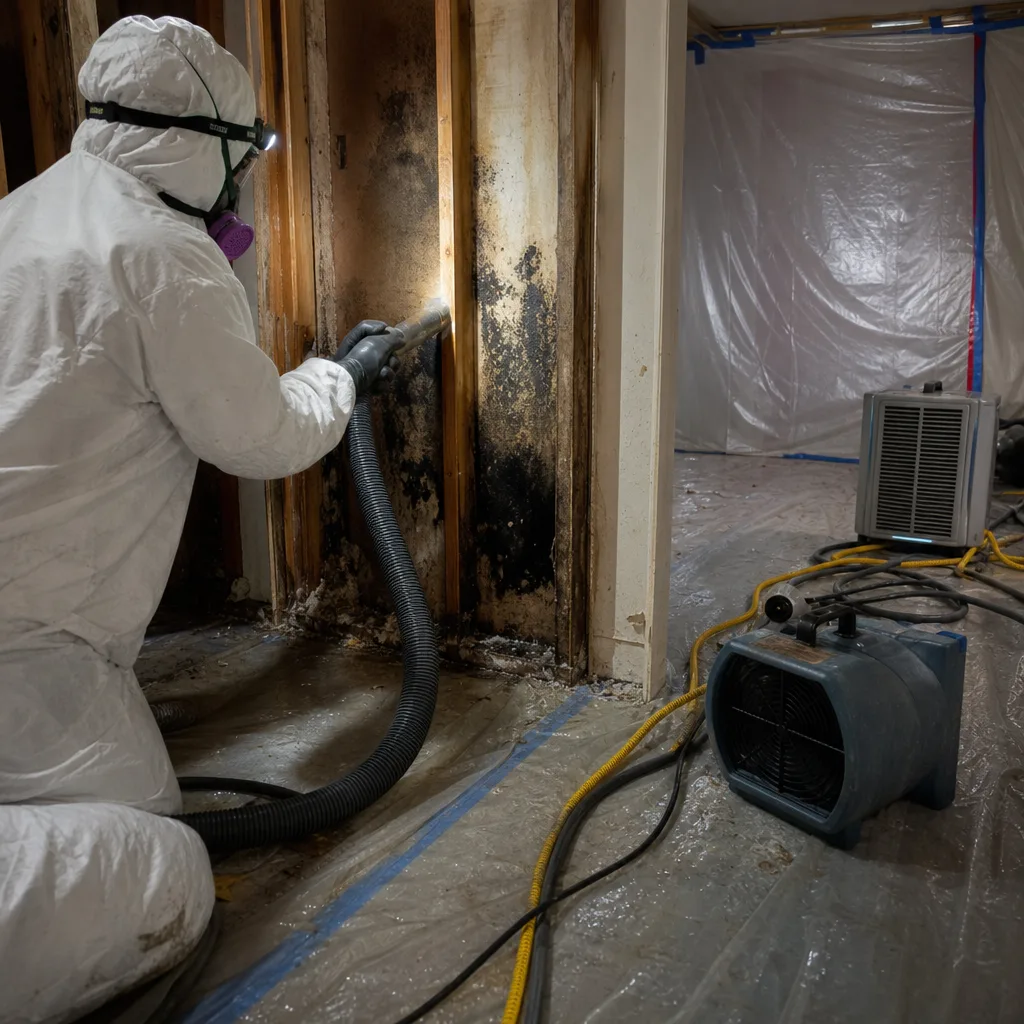
A proper mold inspection in Hoboken starts with understanding the building. We don’t just test for spore counts; we map moisture intrusion pathways through solid masonry party walls, identify original plaster versus replaced drywall, and document pre-existing conditions that affect remediation scope. In Hoboken’s converted brownstones, we regularly find mold colonization in wall cavities where moisture wicked laterally from an adjoining unit’s leak - a scenario invisible to surface testing alone. Our inspections include moisture mapping with penetrating meters, thermal imaging to locate hidden water, and air quality sampling analyzed by independent laboratories. Every finding is photographed and written into a scope with a fixed price before work begins, per Haven Standard, Clause 1.
Mold Removal
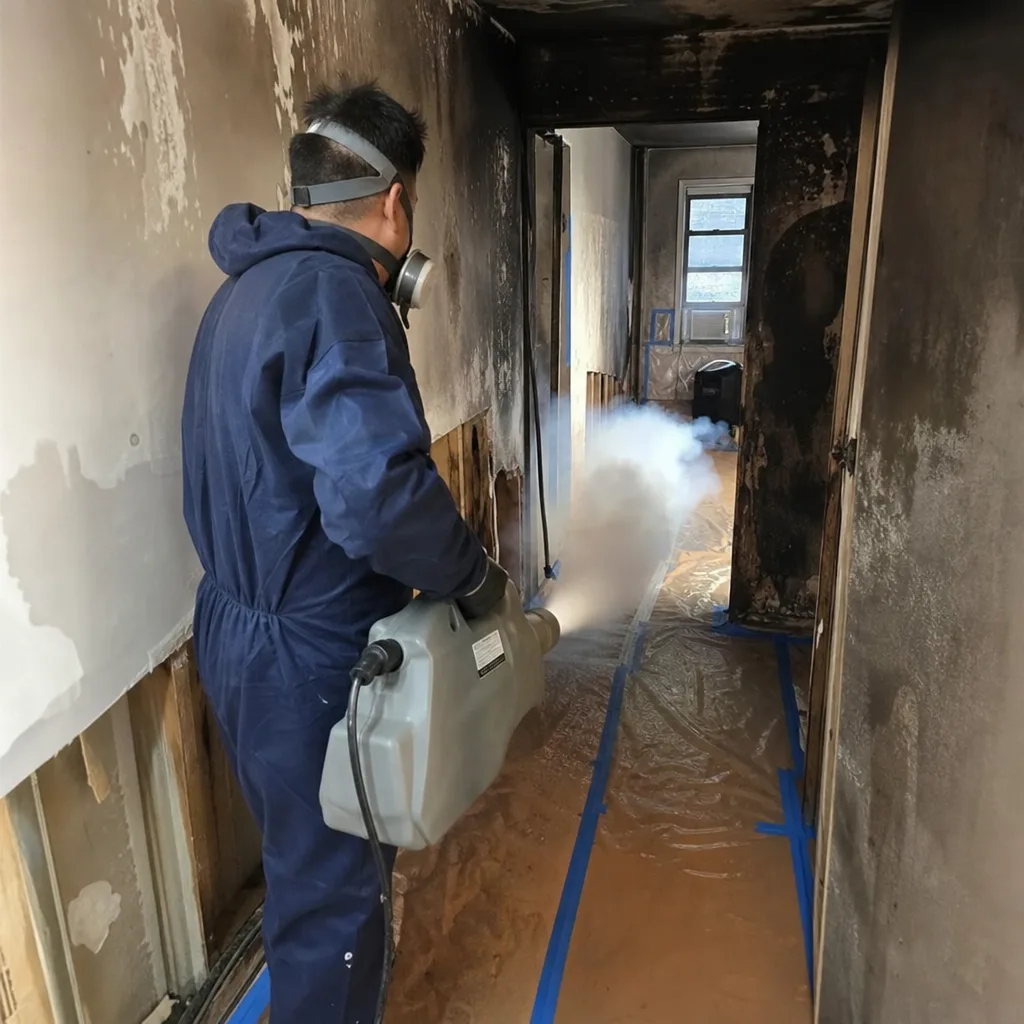
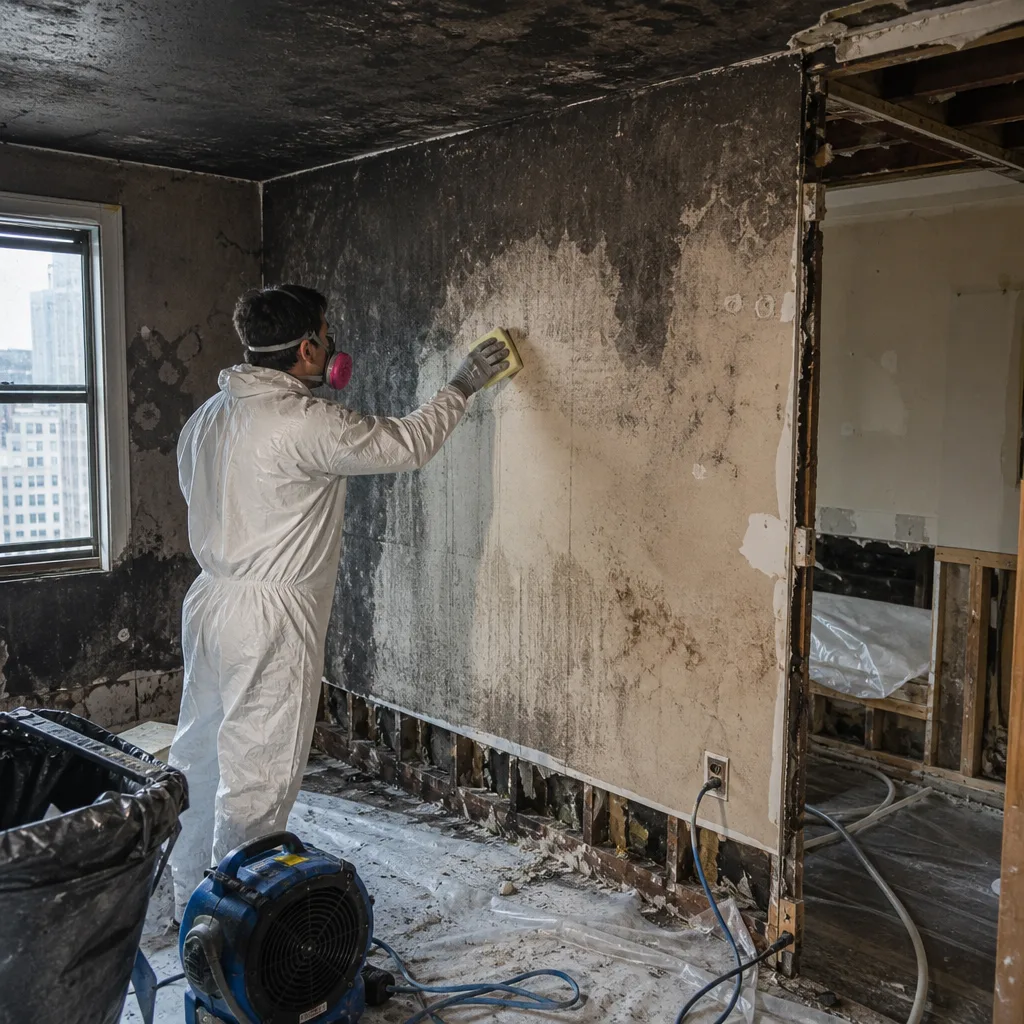
Mold removal in Hoboken requires containment protocols scaled to dense multi-unit construction. Negative air pressure, HEPA filtration, and sealed work zones prevent cross-contamination to neighboring condos or apartments. In pre-1978 buildings - most of Hoboken’s housing stock - we test for asbestos in pipe insulation, floor tile, and joint compound before disturbing any material. If asbestos or lead paint is present, abatement must precede mold remediation; we coordinate this sequence so the job doesn’t halt mid-demolition. Our crews use professional-grade HEPA vacuums, antimicrobial treatments registered for residential use, and disposal protocols that satisfy Hoboken’s waste requirements. Documentation at every stage protects your insurance claim and your property record.
Black Mold Remediation
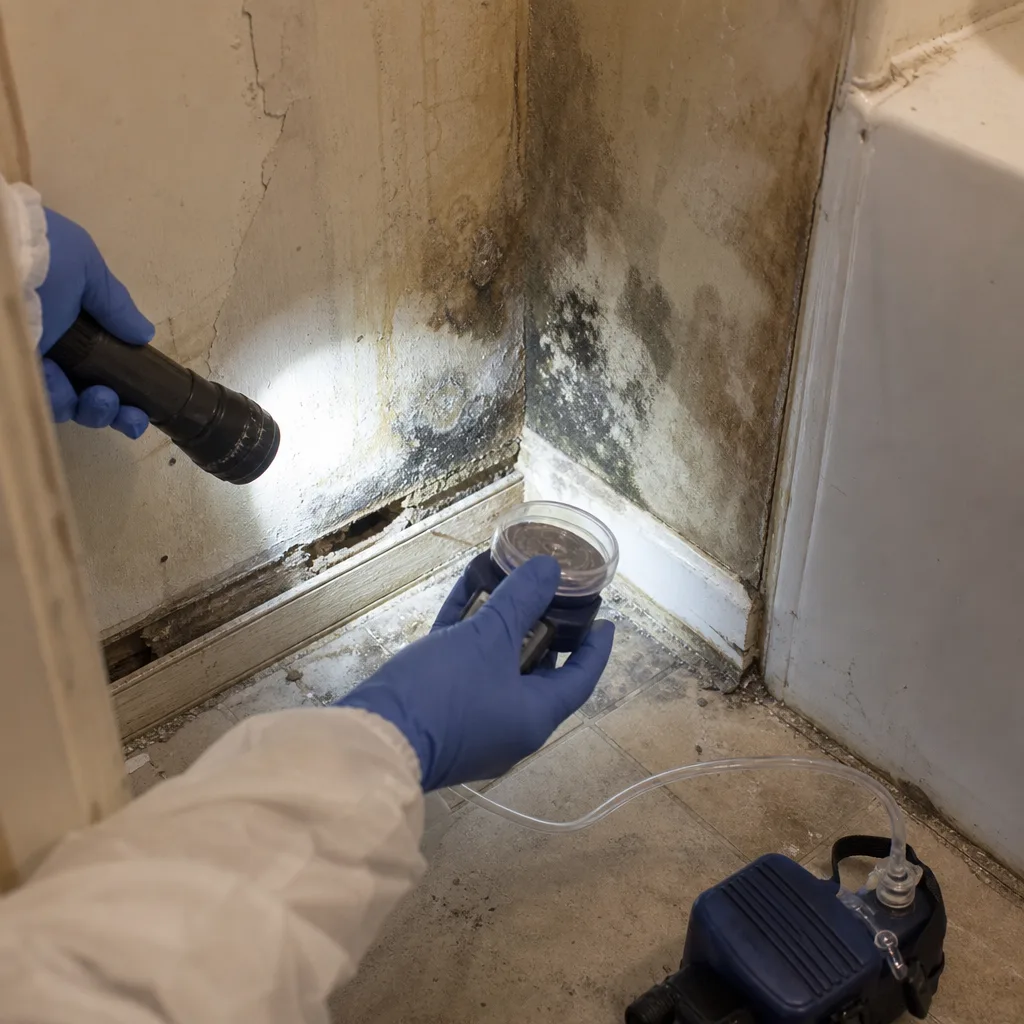
Stachybotrys chartarum and other toxigenic molds thrive in Hoboken’s chronically damp conditions: the Hudson River humidity, the poor drainage of bowl-shaped terrain, and the extended drying times of original plaster walls. Black mold remediation here demands more aggressive protocols than in drier climates or modern construction. We establish full containment, deploy HEPA air scrubbers at negative pressure, and remove all porous materials below the contamination line rather than attempting surface cleaning. In Hoboken’s garden-level units, we’ve learned that visible black mold on a wall surface almost always indicates deeper colonization in the plaster cavity - especially in buildings with previous Category 3 flooding that was dried in place by less thorough contractors. Our approach removes the source, treats the structure, and documents clearance testing before containment comes down.
Air Quality Restoration
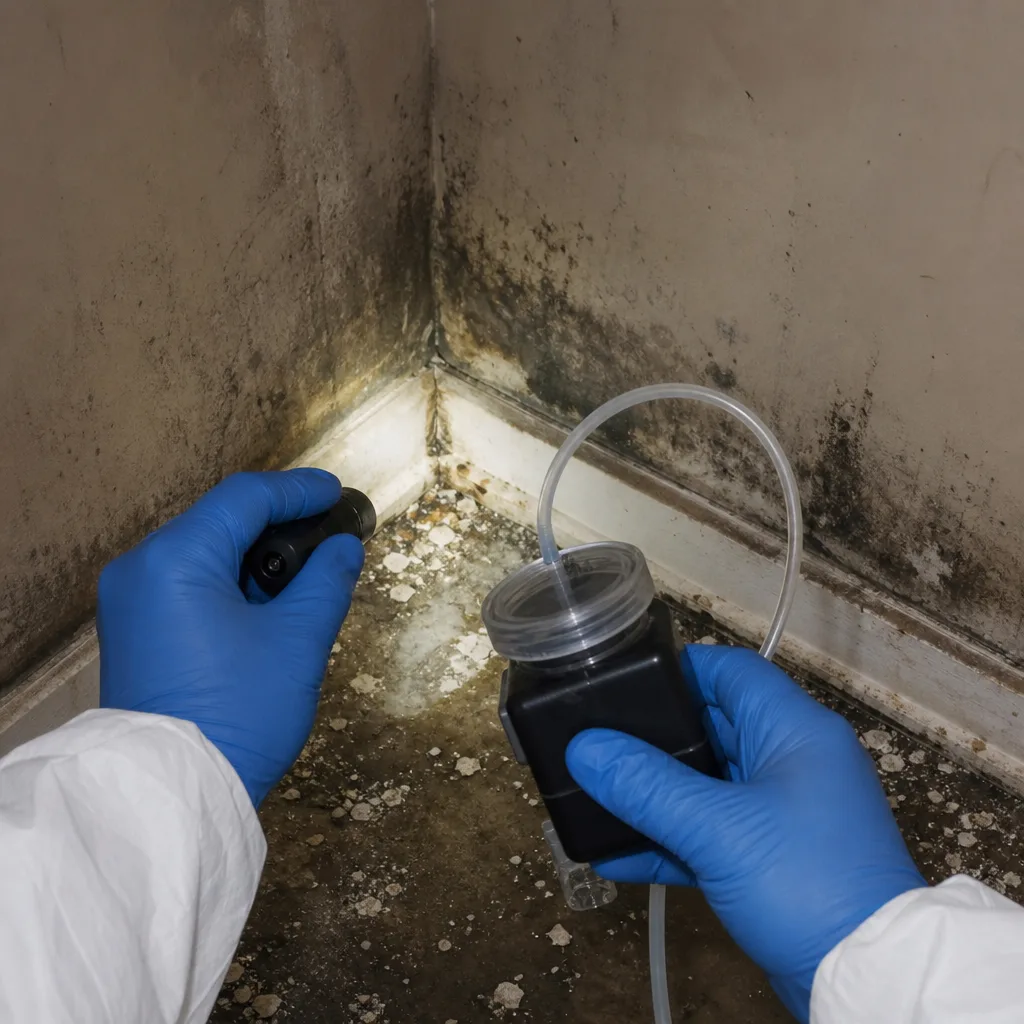
After remediation, Hoboken properties need active air quality restoration, not passive waiting. We deploy HEPA air scrubbers, hydroxyl generators, and carbon filtration to remove particulates, mycotoxins, and residual odors from the remediation process. In tight brownstone floor plans with limited ventilation, this active approach restores breathable air faster than natural dilution. We verify results with post-remediation air sampling compared to outdoor baseline levels, documented in your job file for insurance and property disclosure purposes. For condo associations and rental property managers in Hoboken, this documentation is often required for unit re-occupancy.
Moisture & Humidity Control
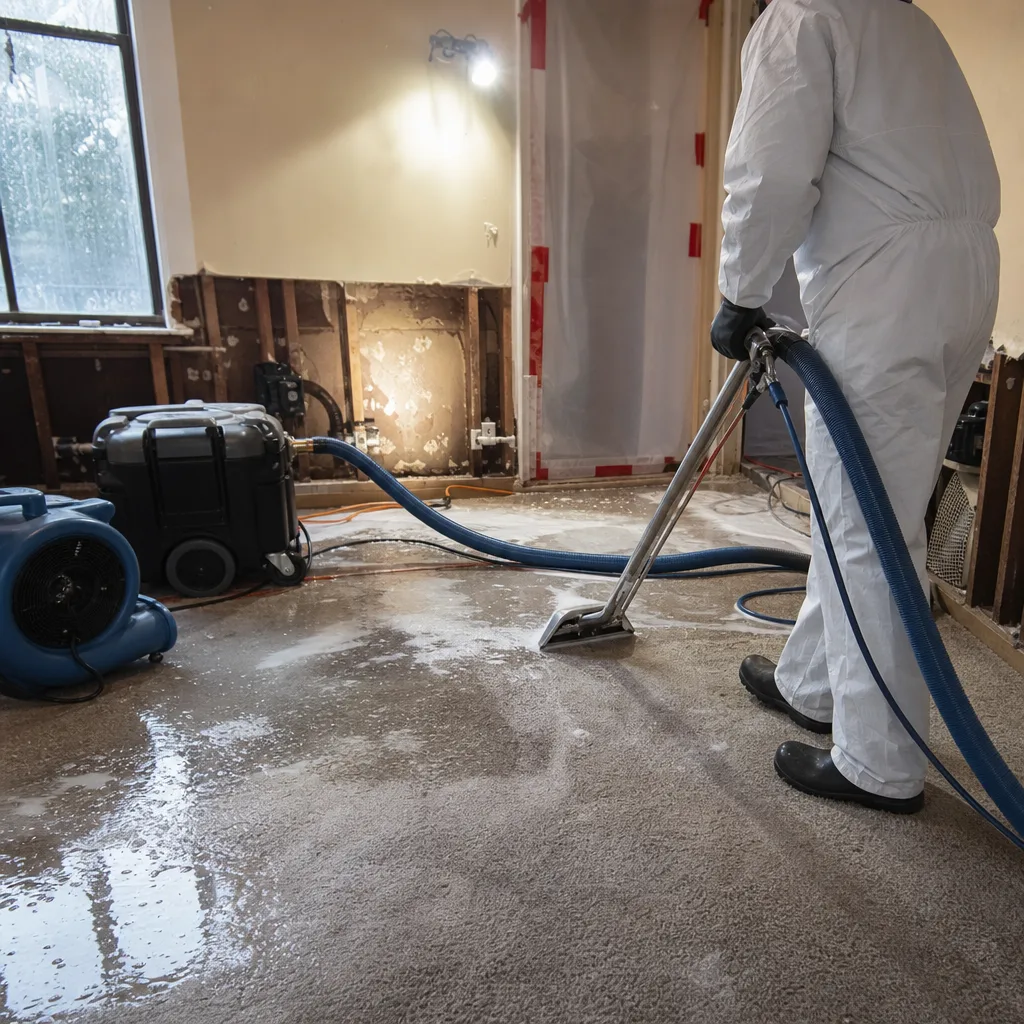
Chronic humidity in Hoboken’s low-lying, river-adjacent environment makes mold recurrence a genuine risk without ongoing moisture control. We install and monitor permanent dehumidification systems sized to Hoboken’s specific conditions: basement and garden-level units that sit below grade, units with limited cross-ventilation due to party-wall construction, and properties with recurring sewer backup history. Our moisture control plans include humidity monitoring, targeted ventilation improvements, and maintenance schedules documented to IICRC standards. For properties with repeated flooding, we coordinate with plumbers and municipal engineers to identify backflow prevention and sump pump solutions that reduce future mold risk.
What happens when you call
- 1
A real person answersNo phone trees - you reach a local pro.
- 2
You get an upfront price rangeHonest numbers before anyone is dispatched.
- 3
A background-checked tech heads outLicensed & insured, dispatched right away.
- 4
You approve before work beginsNothing starts until you say go.
BeforeAfterTrusted Brands We Service in Hoboken
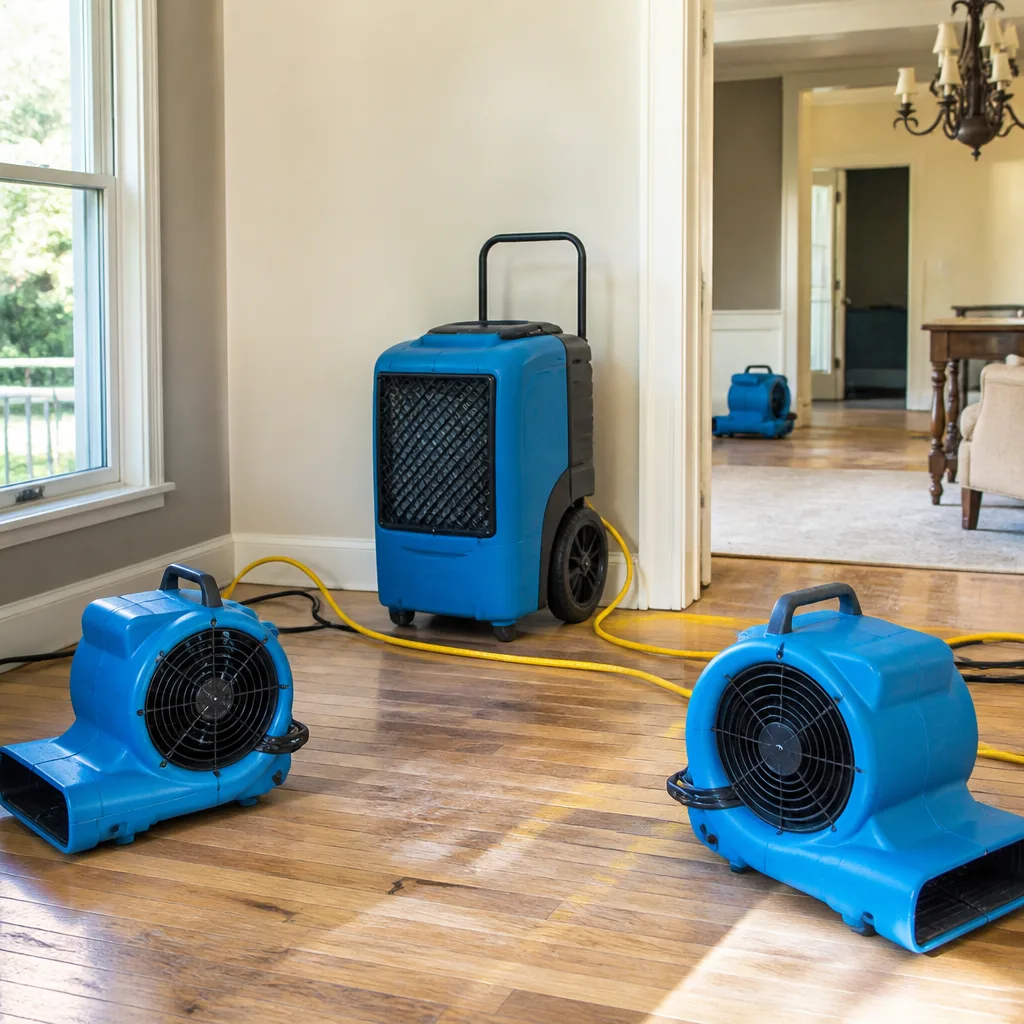
Our Hoboken crews deploy professional-grade drying and remediation equipment from Phoenix, XPOWER, and B-Air - brands selected for performance in dense urban environments where space is limited and airflow must be precisely controlled. Phoenix dehumidifiers handle the high grain depression needed for plaster wall drying; XPOWER air movers create laminar airflow in narrow brownstone hallways without disturbing containment; B-Air HEPA scrubbers maintain negative pressure in multi-unit buildings where cross-contamination is the primary risk. We stock replacement filters, hoses, and containment materials locally, so Hoboken jobs don’t wait for parts. Every piece of equipment is logged to your job file with serial numbers and operating hours, producing the documentation that turns restoration invoices into payable claims.
Common Mold Remediation Problems We See in Hoboken Homes
- Category 3 black water from combined sewer backups. Hoboken’s aging combined sewer-stormwater system means virtually every flood intrusion involves sewage-contaminated water, not clean or gray water. Porous materials below the flood line must be removed and antimicrobial treatment applied; drying in place creates hidden mold colonization that blooms through paint months later.
- Lateral moisture spread through solid masonry party walls. Water wicks horizontally between adjoining units in brownstone and rowhouse construction, causing mold in neighboring condos that were never part of the original leak. Remediation scopes that don’t account for this spread fail repeatedly.
- Original plaster walls trapping moisture far longer than modern drywall. Horsehair plaster in pre-war Hoboken buildings holds water for days after surface readings appear normal, extending drying timelines and requiring more intensive documentation to prove pre-loss condition to insurers.
- Asbestos and lead paint halting mid-job demolition. Pre-1978 buildings routinely contain both hazards. Testing before disturbance, and coordinating abatement before mold remediation, prevents work stoppages that extend tenant displacement and inflate costs.
Pricing for Mold Remediation in Hoboken, NJ
Mold remediation in Hoboken carries specific cost drivers that don’t apply in neighboring municipalities. The city’s combined sewer system makes almost every water-related mold job a Category 3 black water event, requiring removal of porous materials, antimicrobial treatment, and full PPE rather than simple drying. Original plaster walls extend labor and equipment time. Pre-1978 buildings may require asbestos and lead testing and abatement before standard remediation can proceed.
| Service | Typical Range in Hoboken |
|---|---|
| Mold inspection & testing | $450-$850 |
| Contained mold removal (single room, modern construction) | $2,800-$4,200 |
| Black mold remediation (garden-level brownstone, Category 3 history) | $4,500-$7,500 |
| Full-unit remediation with air quality restoration | $6,000-$12,000 |
| Asbestos/lead testing (when required) | $350-$600 |
| Post-remediation clearance testing | $300-$500 |
These ranges reflect actual Hoboken jobs we’ve completed. Every job receives a written price before work begins, per Haven Standard, Clause 1. No scope-creep additions once the crew is inside. We also offer a Free Second Opinion on any competitor’s written estimate - bring their scope and we’ll review it at no charge. Call (862) 212-1646 for a written estimate; estimates are free and include full moisture mapping.
We Also Serve Cities Near Hoboken
Our crews cross the Hudson daily for Mold Remediation in Hoboken and continue into Union City and Jersey City for properties with similar urban density and aging infrastructure. Each city’s building stock and municipal systems create distinct remediation profiles; we adjust protocols accordingly rather than applying one template.
Serving Hoboken, NJ - Our Local Coverage Area
We’re based in the Hoboken area and know this community well. Use the map below to see our service coverage - if you’re nearby, we can almost certainly help.
FAQs - Mold Remediation in Hoboken
Hoboken’s combined sewer-stormwater system means virtually every water intrusion is Category 3 black water, requiring removal of porous materials and antimicrobial treatment rather than simple drying. The city’s original plaster walls and solid masonry party walls extend labor, equipment time, and documentation requirements. Call (862) 212-1646 for a written estimate specific to your property - estimates are free.
Yes. Original horsehair plaster traps moisture far longer than modern drywall, extending drying timelines by five days or more and requiring more intensive moisture logging to document pre-loss condition for insurance. Plaster also crumbles when saturated, sometimes requiring removal rather than preservation. We test plaster integrity during initial moisture mapping and include findings in your written scope.
Evacuate the space, avoid contact with standing water, and call (862) 212-1646 immediately. Sewer backups in Hoboken involve Category 3 black water with pathogen and chemical contamination; standard wet/dry vacuums and household fans spread contamination and create ideal mold growth conditions. Our crews arrive with full PPE, extract standing water, establish containment, and begin antimicrobial treatment within hours.
Pre-1978 Hoboken buildings routinely contain both. We test for asbestos in pipe insulation, floor tile, and joint compound, and for lead paint on disturbed surfaces, before any demolition begins. If present, licensed abatement must precede mold remediation; we coordinate this sequence so work doesn’t halt mid-job. Testing and abatement costs are itemized in your written scope under Haven Standard, Clause 1.
Hoboken’s terrain slopes inward from the waterfront, creating a topographic bowl with its lowest point near the western rail yards and Observer Highway. The combined sewer system backs up from this interior low point first, flooding those blocks before waterfront streets see standing water. Jobs in those blocks after significant storms almost always involve sewage contamination requiring full PPE, antimicrobial treatment, and disposal of all porous materials below the flood line.
Written by Alicia Brennan, Owner at Back to Dry Restoration, serving Hoboken since 2011 under The Haven Standard.