
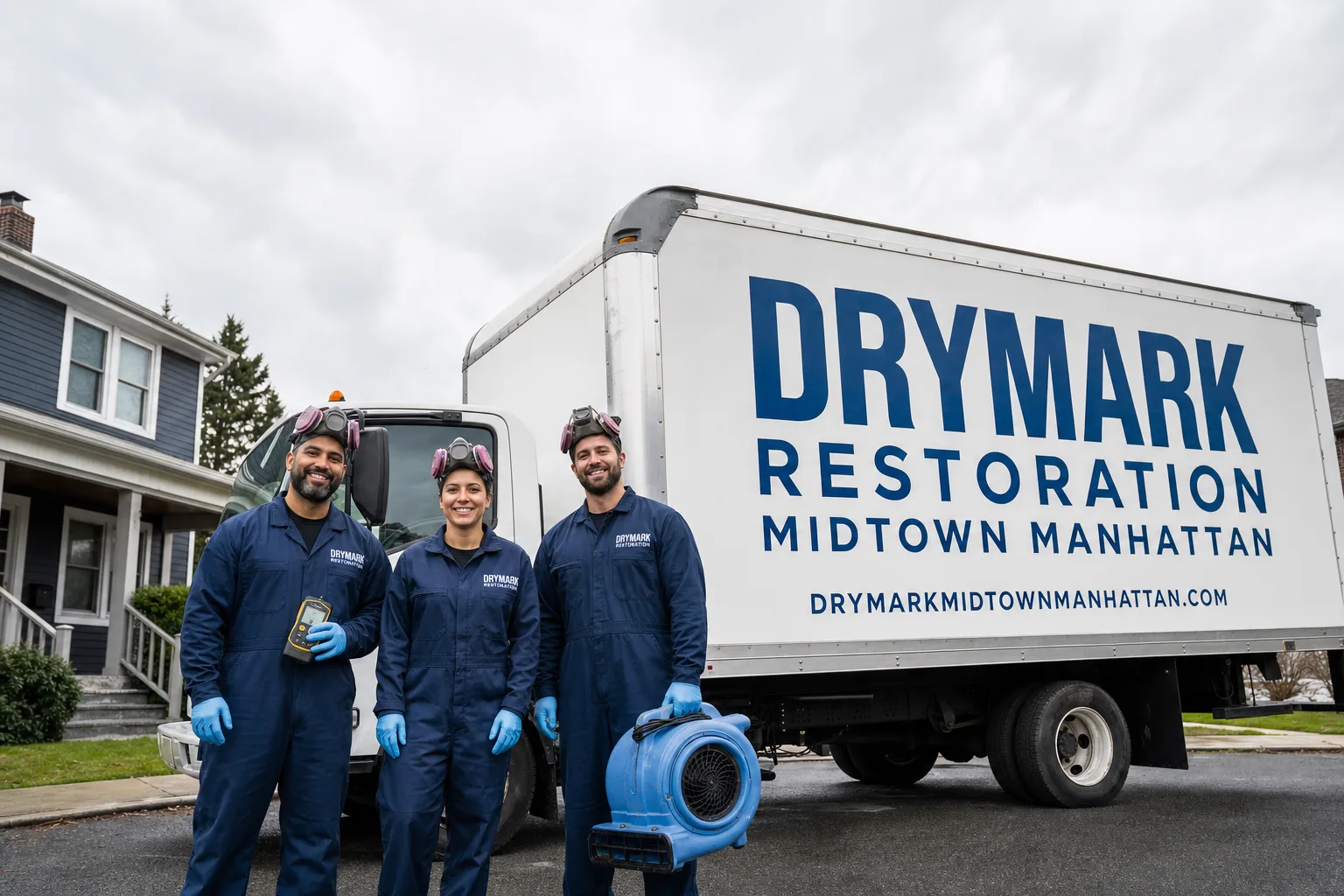
Free visual inspection and a written scope of work before any mitigation begins - photos, moisture readings, and drying logs go in your claim file
The scope we write is the scope we bill. Anything new gets shown to you, in writing, before we touch it.
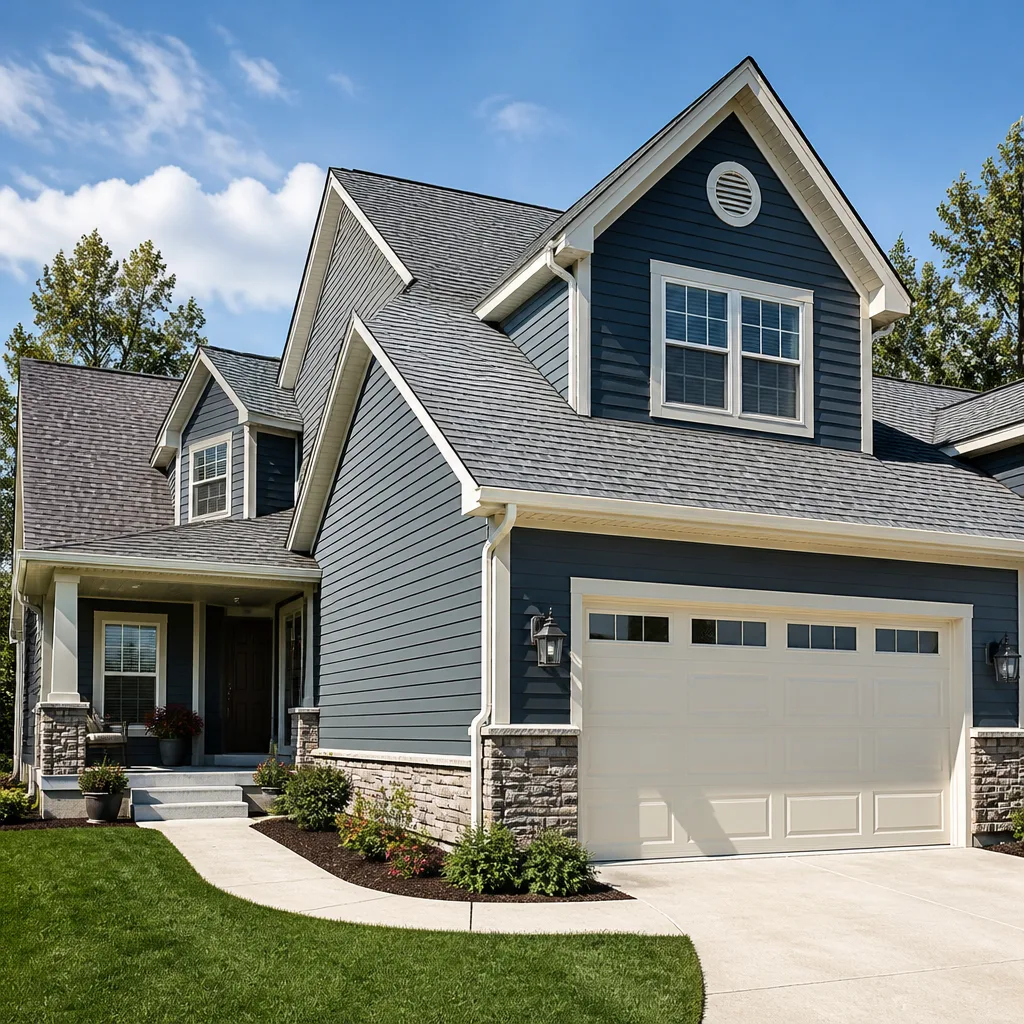
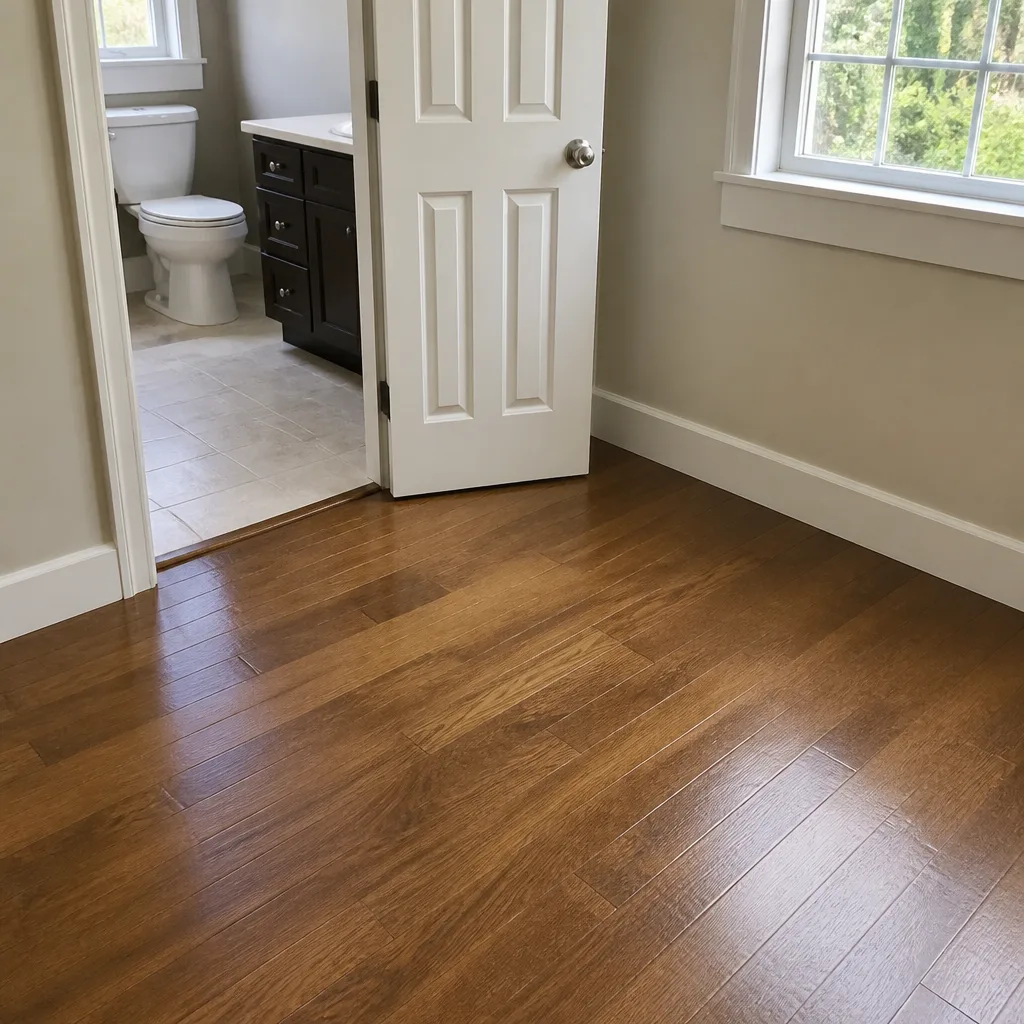
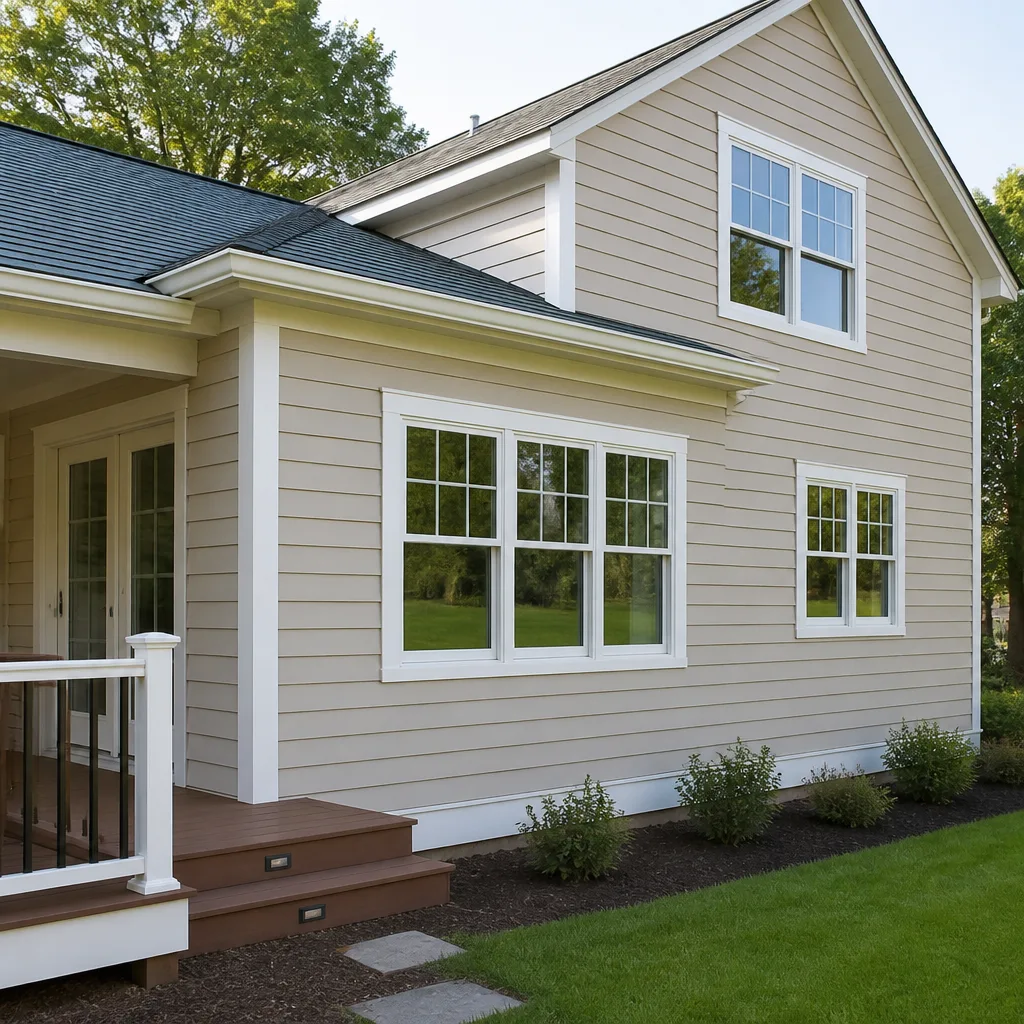
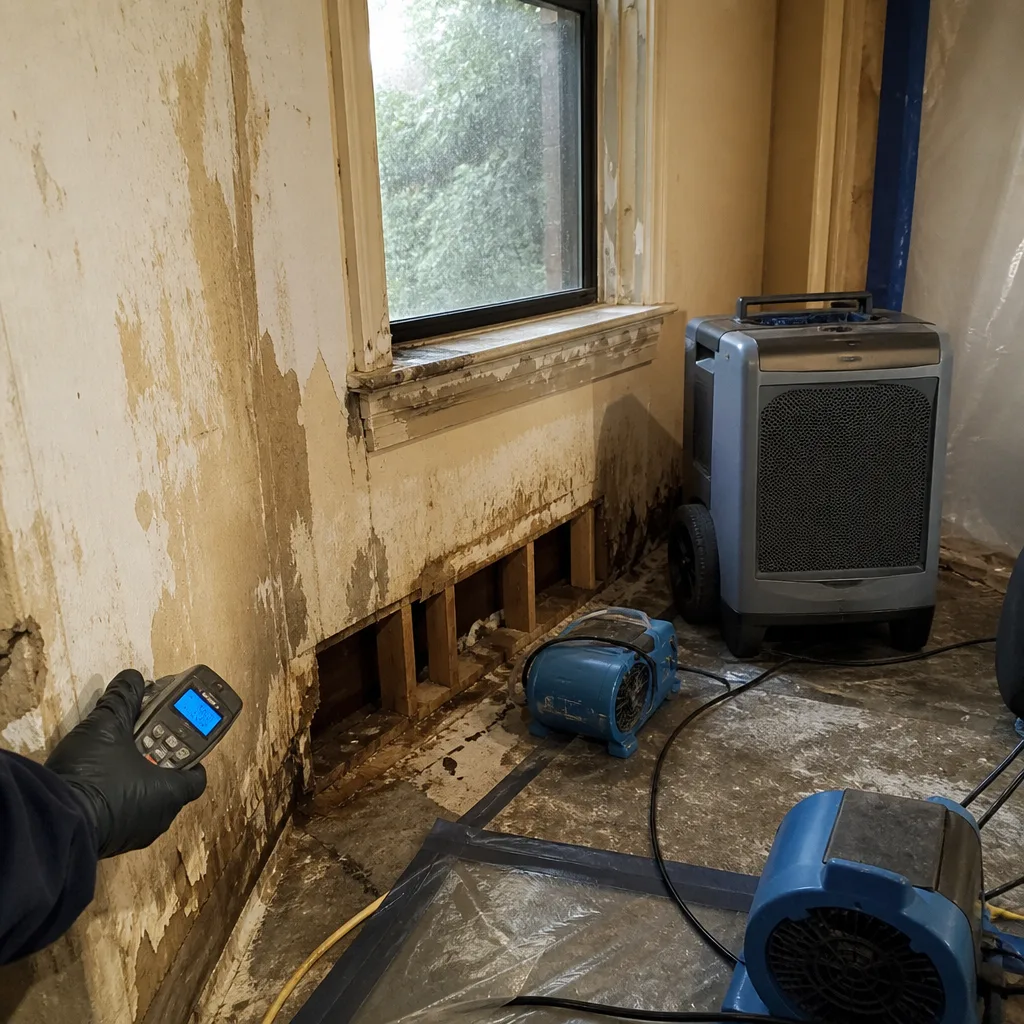 Before
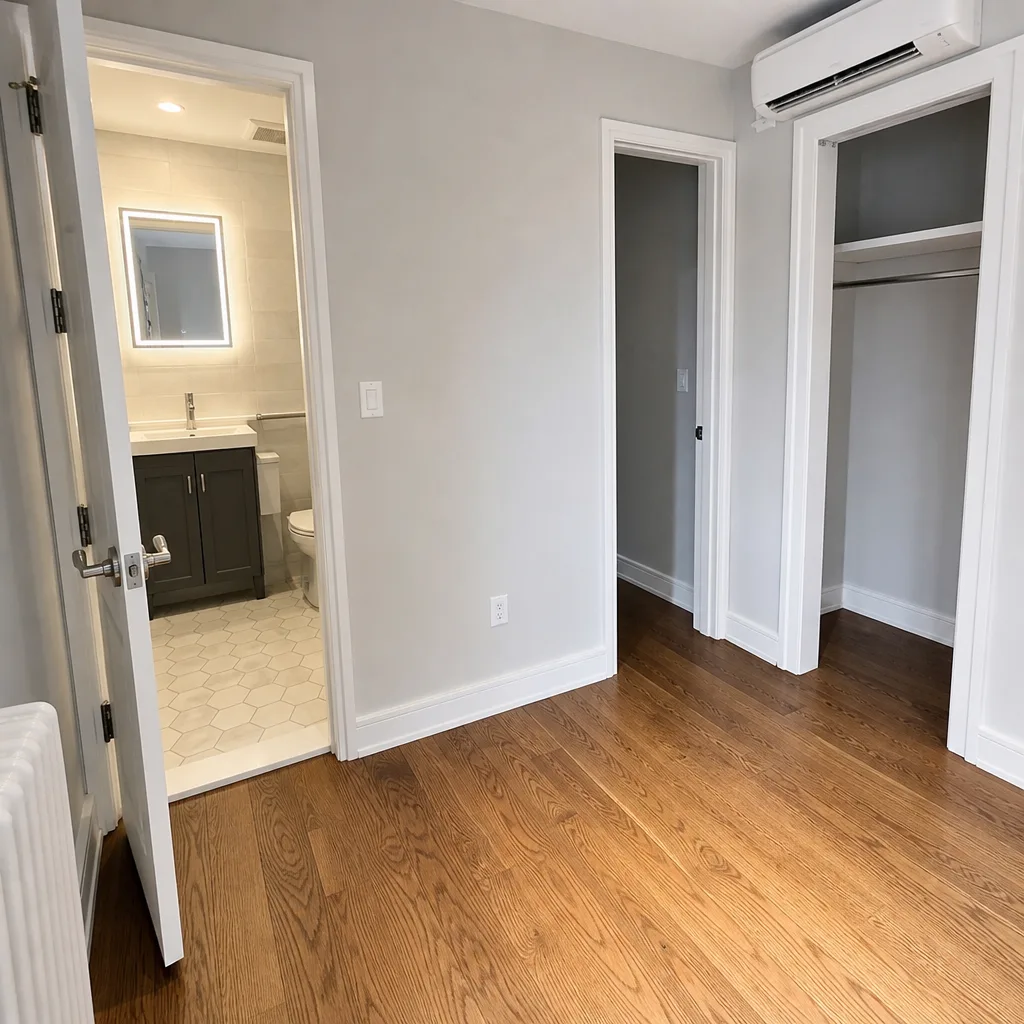 After
After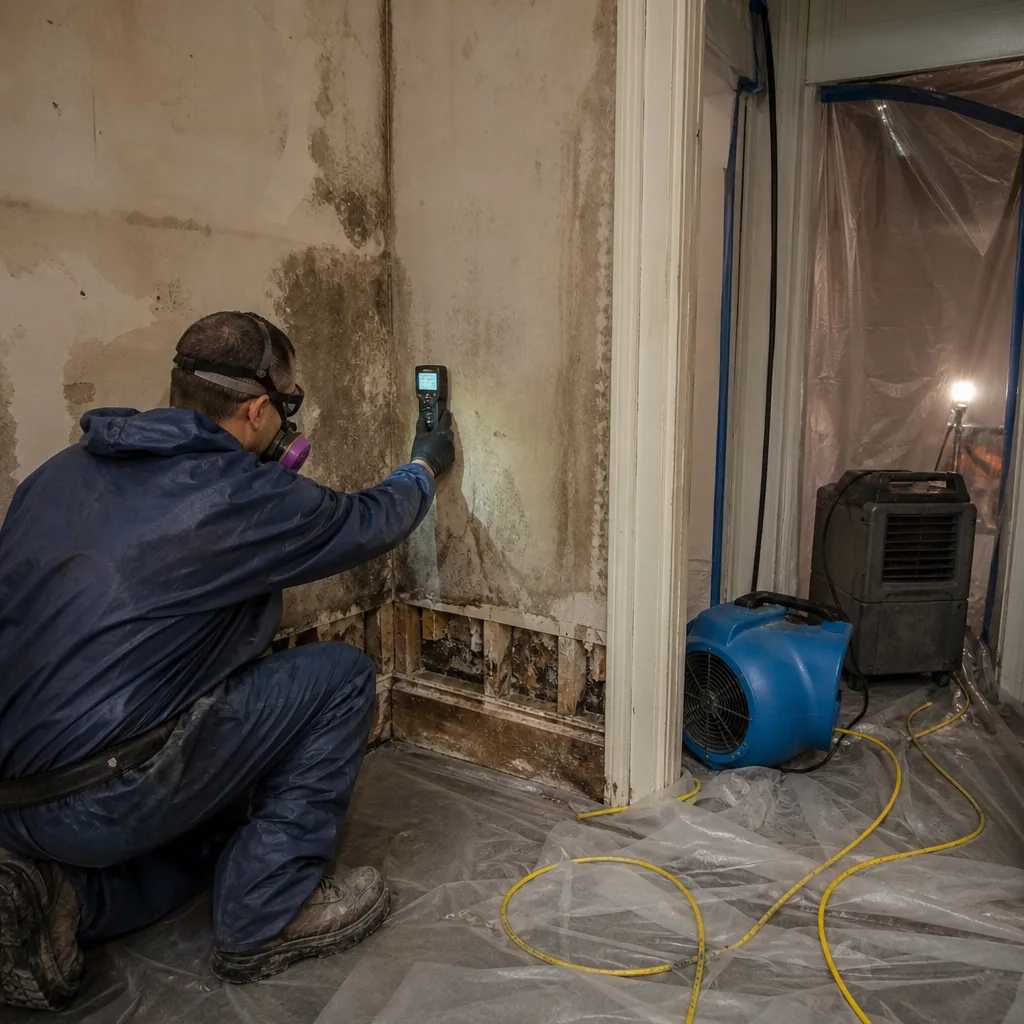 Before
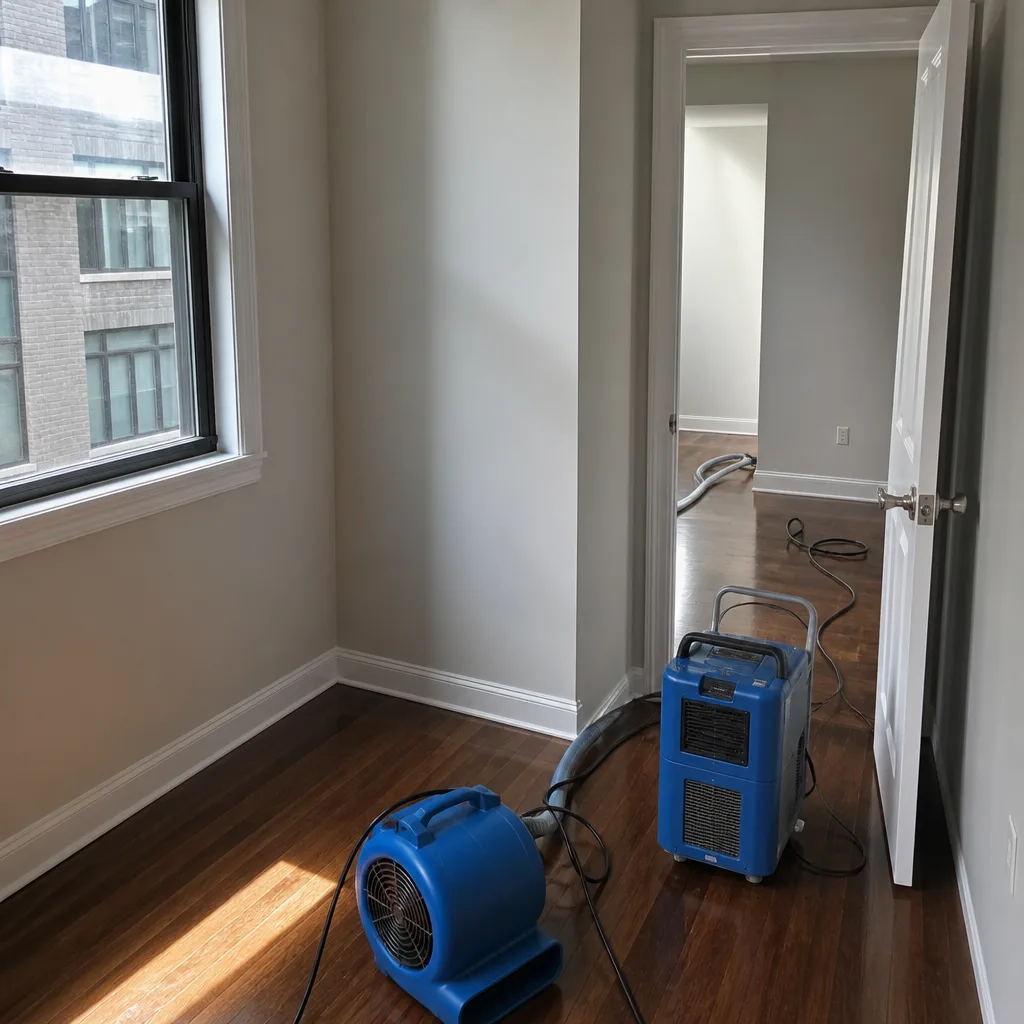 After
After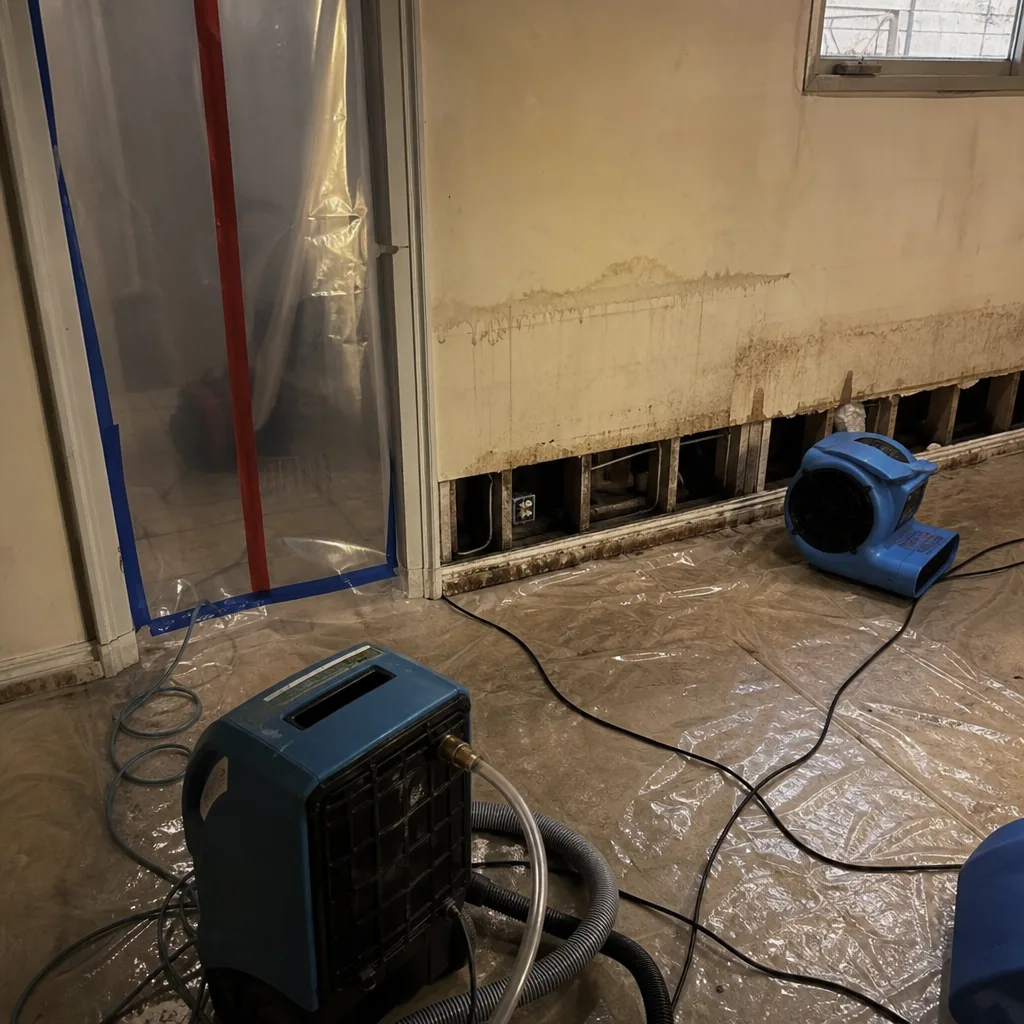 Before
 After
AfterFast, Reliable Water Damage Restoration Across Midtown Manhattan
Water damage restoration in Midtown Manhattan typically runs $2,800-$8,500 for most residential and commercial units, with emergency extraction starting at $1,200 and full structural drying averaging $3,200-$5,800 for a standard one- to two-bedroom apartment or small office. Our crews are dispatched from our New York City office and can be on-site anywhere from the Garment District to the Plaza District within 45-60 minutes during emergency hours. Call (862) 212-1646 and a live person answers - no voicemail, no callbacks tomorrow while water keeps moving.
Midtown Manhattan isn’t like other markets. A burst pipe on 31 doesn’t stay on 31. In pre-war and mid-century high-rise towers from the 1920s through the 1970s, original cast iron steam risers and pneumatic supply lines run through shared vertical pipe chases serving dozens of tenants simultaneously. We’ve traced ceiling collapses on the 28th floor to failed joints three floors above, water tracking silently inside chase walls for weeks. That’s why our Water Damage Restoration team leads with thermal imaging, moisture mapping, and documentation that building management and insurers can read - not guesswork.
Why DryMark Restoration Midtown Manhattan Is Midtown Manhattan’s Preferred Water Damage Restoration Company
We’ve restored water damage in Midtown Manhattan’s Class A commercial towers, landmark hotels, and mixed-use high-rises since 2011. Alicia Brennan founded Back to Dry Restoration after working as a claims adjuster and watching sloppy documentation kill legitimate homeowner claims. She built The Haven Standard around the opposite: every job gets a written price before work starts, a photo record on every visit, and daily moisture logs that turn restoration invoices into payable claims.
Our Midtown Manhattan customers leave reviews mentioning the same things. They note that our technician named the moisture reading on their drywall (16.2%, pre-loss target 12%) rather than saying “it feels dry.” They mention the written scope they signed before anyone unrolled a hose. They describe the photo record we delivered showing pre-loss condition, mid-dry readings, and final verification - documentation their adjuster accepted without dispute.
Response time to Midtown Manhattan averages 45-60 minutes for emergency calls. We coordinate access through building management and union-staffed freight elevators, which every restoration company in this district must do, but we do it without wasting the hour. Our dispatchers have direct lines to major Midtown building management companies and understand the access protocols for towers from Bryant Park to the United Nations Plaza.
Local knowledge matters here because the building stock demands it. Midtown’s aging cast iron supply lines, spray-applied asbestos-containing fireproofing on structural steel, and steam-heat risers mean that invasive restoration work above the affected area frequently triggers NYC Local Law 15 asbestos abatement requirements. Our crews know when to stop, contain, and call in DEP-licensed abatement before proceeding - protecting the tenant, the building, and the claim.
Our Water Damage Restoration Services in Midtown Manhattan
Emergency Water Extraction
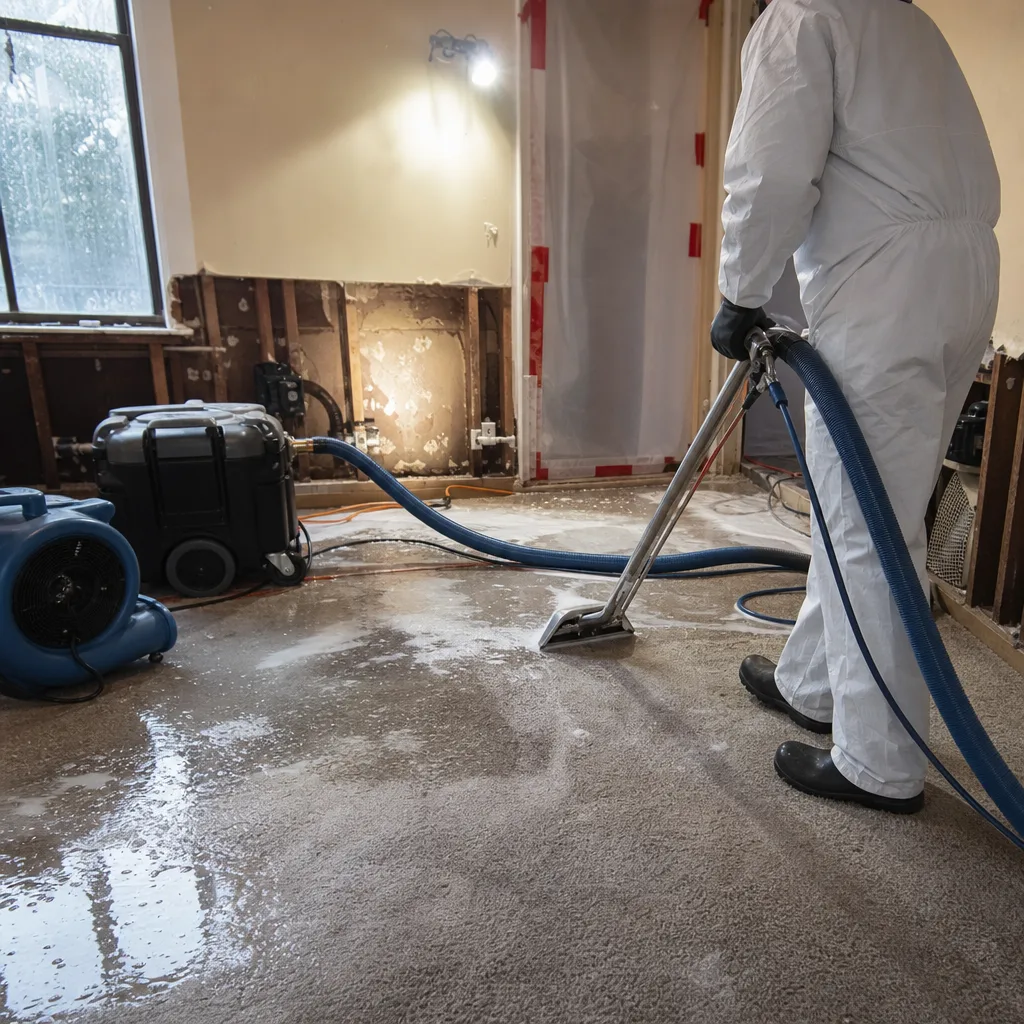
Water moves fast in Midtown Manhattan towers. A single burst pipe or accidental sprinkler discharge on an upper floor can silently damage 10-15 occupied floors below before detection. Tenants in this district - hedge funds, law firms, hotels paying $80-$150 per square foot in rent - face catastrophic hourly business-interruption losses. Our emergency extraction crews deploy truck-mounted and portable extraction systems from Dri-Eaz and XPOWER, sized for commercial floor plates, not residential rooms. We extract standing water, document the volume removed, and begin moisture mapping immediately. Every minute of delay is documented business interruption that an insurer will question.
Structural Drying & Dehumidification
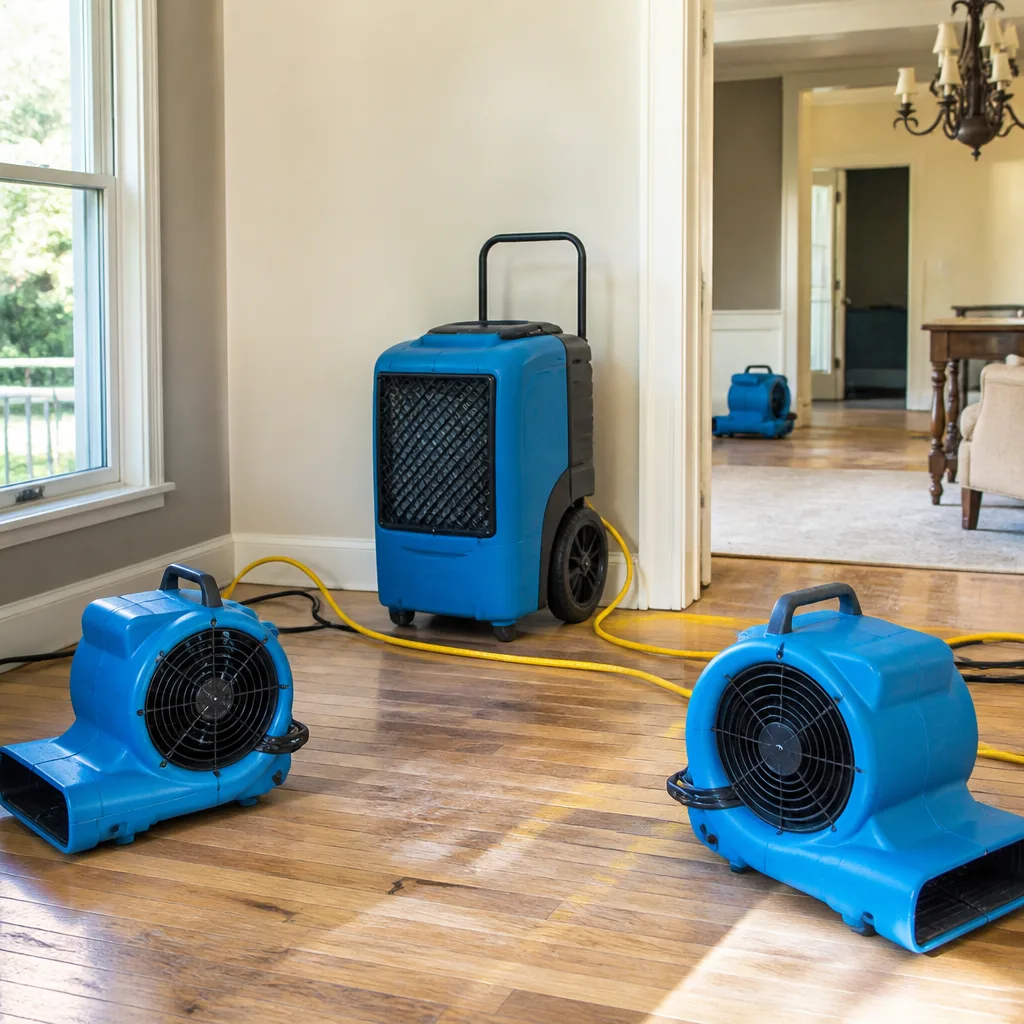
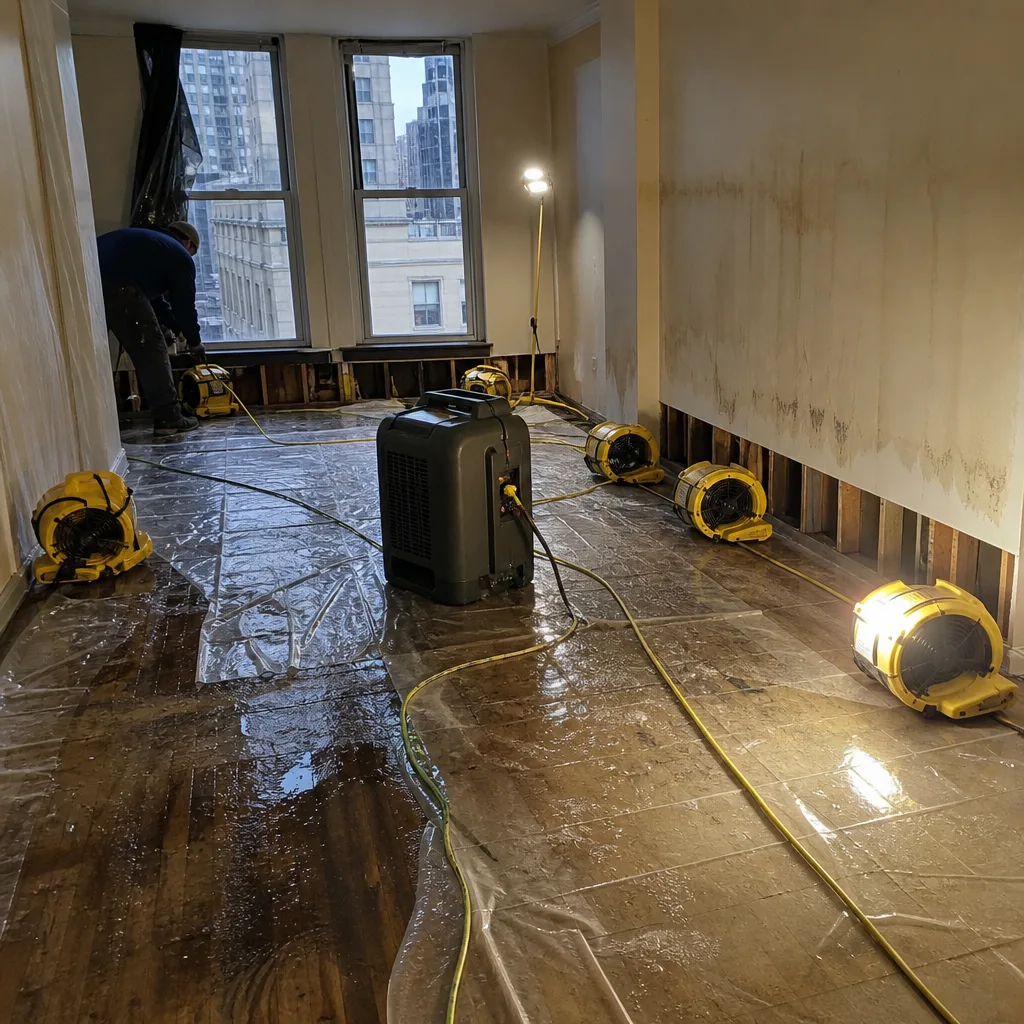
Standard residential drying setups fail in Midtown’s Class A towers. Large floor plates, floor-to-ceiling glass, and HVAC systems designed for occupancy rather than drying require commercial-grade dehumidification and air movers. We deploy Phoenix dehumidifiers and B-Air axial air movers, calculating psychrometric data - temperature, relative humidity, and vapor pressure differential - to establish how much moisture the air can hold and how fast we can remove it. Daily drying logs track moisture readings by room, by material, by day. These logs are the documentation that separates a paid claim from a disputed one. We don’t guess at dry. We measure it, log it, and sign it.
Flood Cleanup
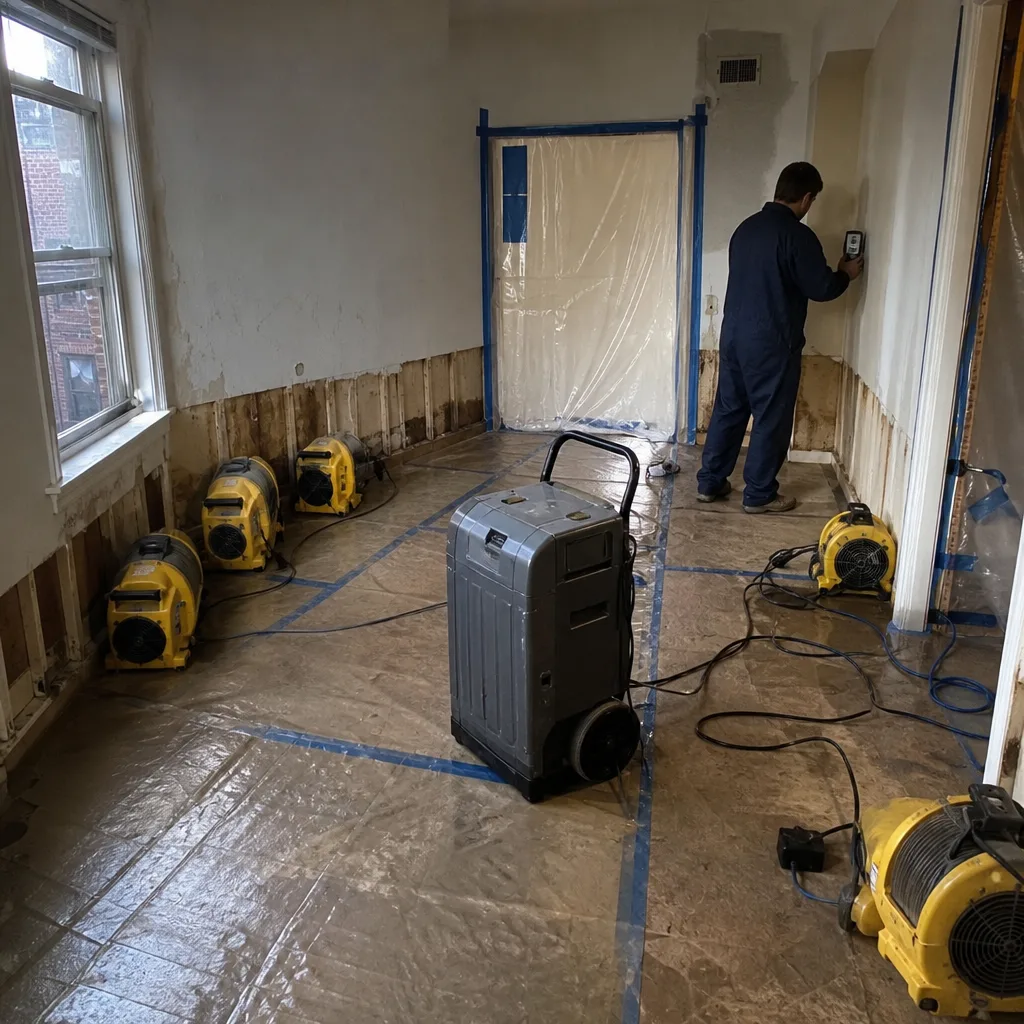
Midtown Manhattan’s flat rooftop terraces, mechanical penthouses, and HVAC equipment pads take the full force of nor’easters and summer convective storms. Aging roof membranes fail slowly, creating infiltration events that travel undetected through multiple finished floors. Winter freeze-thaw cycles stress exposed rooftop cooling-tower supply lines, making freeze-burst events in minimally heated upper mechanical rooms a recurring seasonal failure mode. Our flood cleanup addresses category 1, 2, or 3 water classification, establishes containment boundaries, and documents pre-loss condition before any demolition begins. In Midtown towers, we also coordinate with building engineers to inspect rooftop membrane condition and mechanical penthouse plumbing - because the source of floor 22 damage is often on the roof.
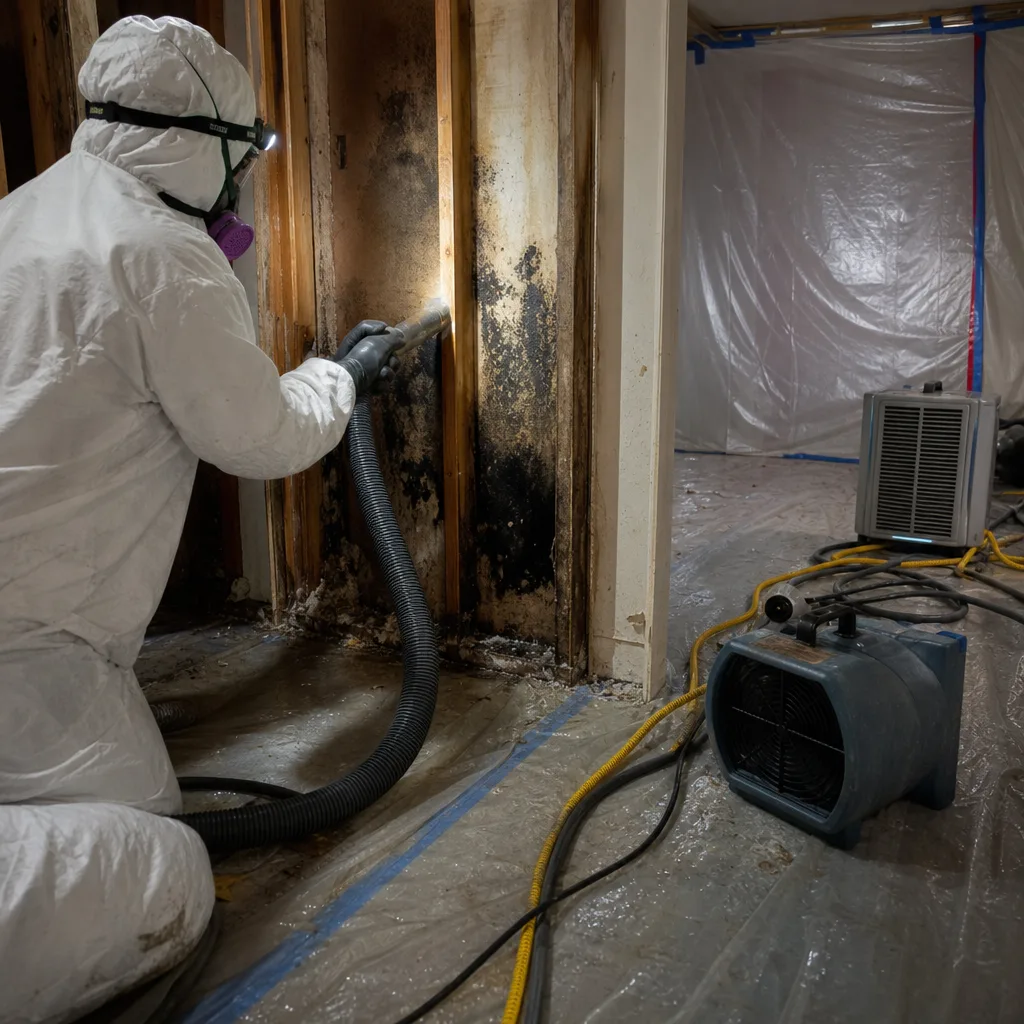
Burst Pipe Restoration
We were called to a Class A tower near Rockefeller Center after a property manager reported a ceiling collapse on the 28th floor, even though no supply line on that floor showed any leak. Our tech ran a thermal scan of the shared vertical chase and traced the source to a failed cast iron joint on 31, where a slow drip had been tracking inside the chase wall for weeks and bypassing three floors entirely. We performed water extraction on the affected ceiling cavities, set up structural drying with Phoenix dehumidifiers and air movers, established containment to isolate the chase, logged moisture readings floor by floor, and provided moisture mapping and drying logs so building management could document pre-loss condition for the hedge fund tenant’s business-interruption claim. Burst pipe restoration in Midtown requires this level of chase-wall investigation as standard practice, not an upsell.
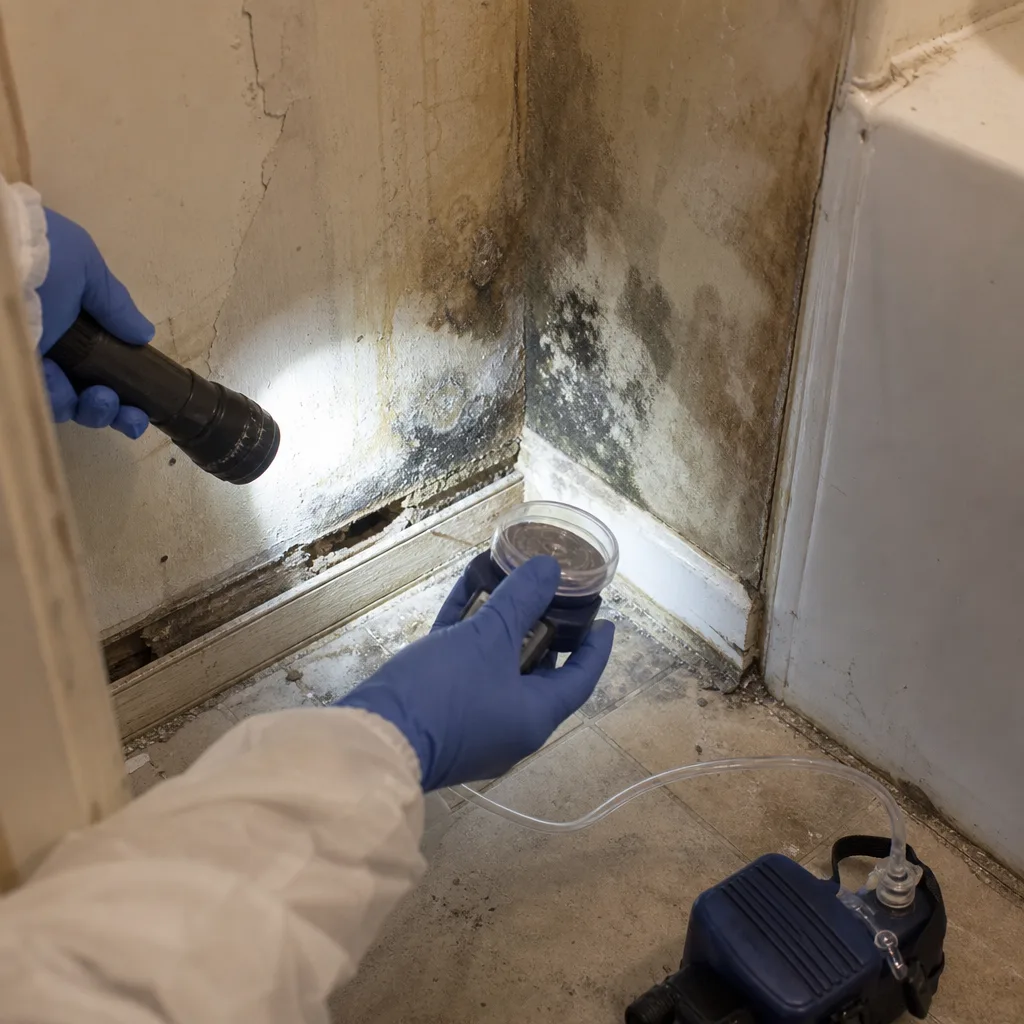
Basement Water Removal
Midtown Manhattan has limited basement space compared to outer boroughs, but what exists - sub-cellar mechanical rooms, utility vaults, loading dock areas - floods differently. These spaces often house electrical transformers, emergency generators, and building infrastructure where category 3 water creates both property damage and operational shutdown risk. Our basement water removal prioritizes safety isolation, documented electrical lockout, and extraction with equipment rated for contaminated water environments.
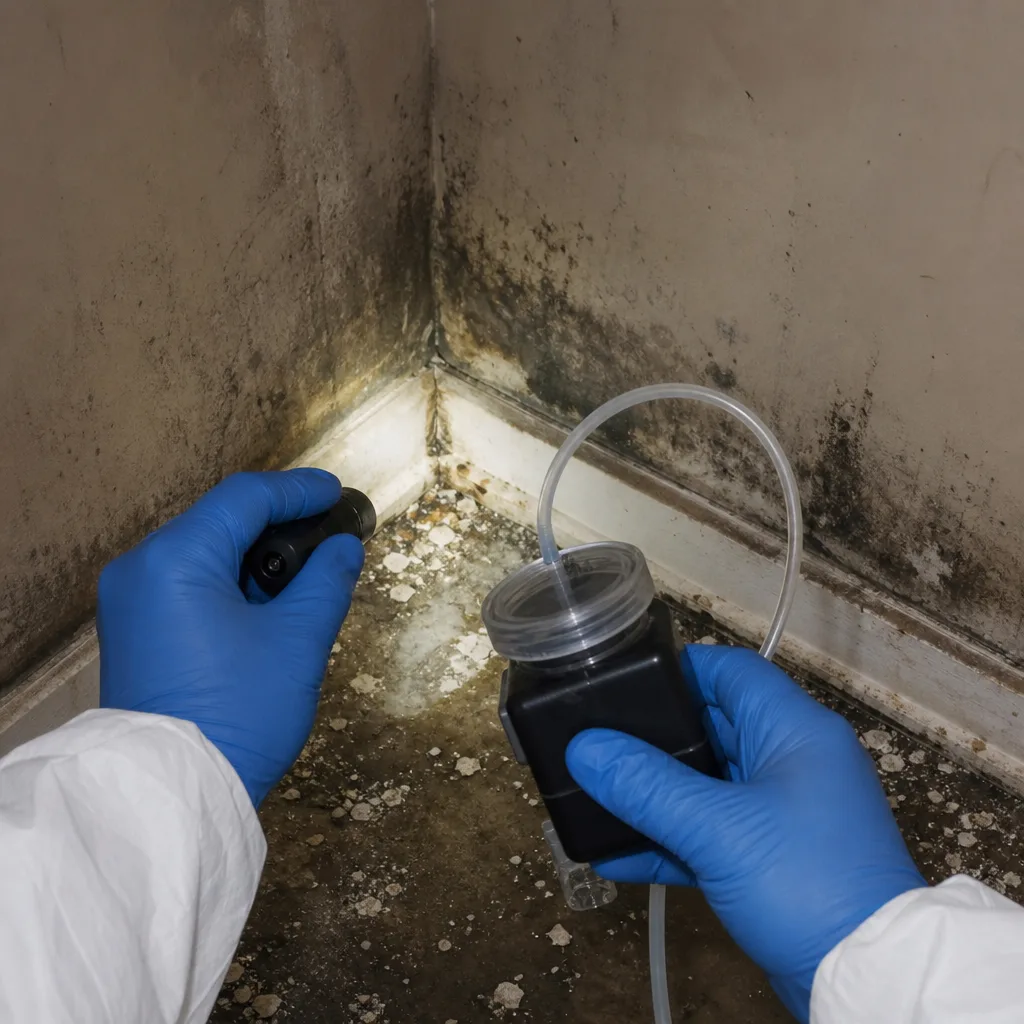
Ceiling & Roof Leak Water Damage
Ceiling damage in Midtown towers demands source verification above the visible stain. We’ve seen crews moisture-map only the finished floor, miss the chase entirely, and watch drying fail while mold begins. Our protocol: thermal scan the chase, identify the actual floor of origin, coordinate access through building management and union freight elevators, then document every step. The ceiling you see is rarely where the problem started.
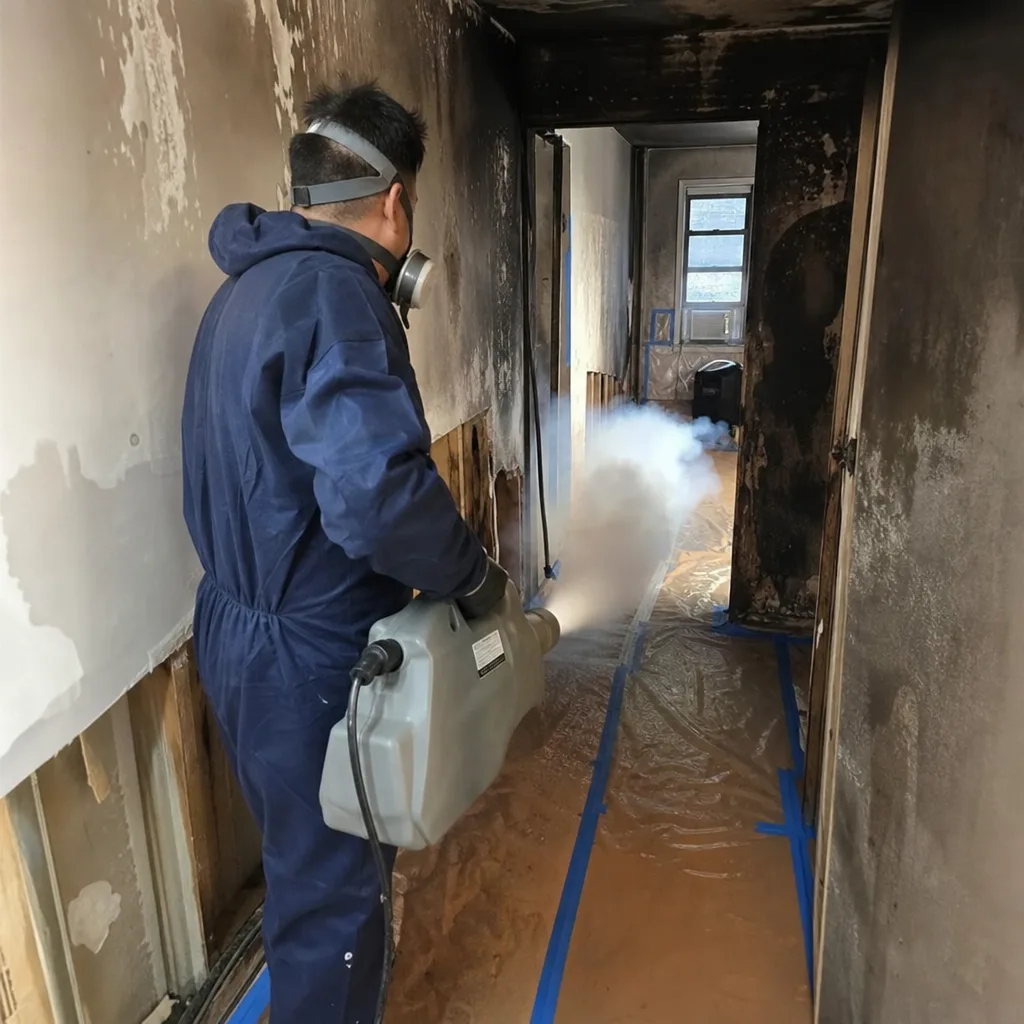
What happens when you call
- 1
A real person answersNo phone trees - you reach a local pro.
- 2
You get an upfront price rangeHonest numbers before anyone is dispatched.
- 3
A background-checked tech heads outLicensed & insured, dispatched right away.
- 4
You approve before work beginsNothing starts until you say go.
BeforeAfterTrusted Brands We Service in Midtown Manhattan
Our equipment fleet includes professional-grade drying systems from Dri-Eaz, Phoenix, and B-Air - brands specified by IICRC, RIA, and IFA documentation standards. We stock replacement air movers, dehumidifier filters, and extraction wands locally, reducing wait times when equipment cycles need refreshing during multi-day drying jobs. For Midtown Manhattan customers, this means no delay while parts ship from a warehouse in another state. When a Phoenix 200 HT dehumidifier needs a filter change on day three of a drying job in a Murray Hill tower, we have it. Documentation requires consistent equipment performance, and consistent performance requires maintenance parts on hand.
Common Water Damage Restoration Problems We See in Midtown Manhattan Homes
- Assuming the visible ceiling stain is the source. In Midtown’s pre-war towers, the actual failure is often a cast iron steam riser or pneumatic supply line joint several floors above inside a shared chase. Crews that only moisture-map the finished floor miss the chase entirely. Drying fails. Mold begins within 24 to 48 hours.
- Skipping chase-wall thermal scanning because access requires coordination. The pipe chase serves dozens of tenants. Building management and union freight elevator scheduling take time. The delay lets category 3 water sit. We coordinate access before we arrive, not after we discover the chase is involved.
- Using standard residential drying setups in Class A towers. Large floor plates need commercial-grade dehumidification and air movers. Underpowered equipment produces extended drying times and moisture readings that never reach pre-loss condition. The insurer denies the supplemental.
- Missing seasonal freeze-burst patterns in mechanical penthouses. Winter freeze-thaw cycles attack exposed rooftop cooling-tower supply lines in minimally heated upper mechanical rooms. These failures often go unnoticed until water surfaces multiple floors below. We inspect penthouse mechanical as part of source verification.
Pricing for Water Damage Restoration in Midtown Manhattan, NY
Emergency water extraction in Midtown Manhattan starts at $1,200 for a standard apartment or small office unit, with typical ranges of $1,200-$2,800 depending on standing water volume and access complexity. Structural drying and dehumidification runs $3,200-$5,800 for most one- to two-bedroom residential or small commercial spaces, scaling to $6,500-$12,000 for larger floor plates or multi-floor commercial units. Full flood cleanup with category 3 water, contamination protocols, and disposal averages $4,500-$8,500. Burst pipe restoration including chase-wall investigation, thermal scanning, and multi-floor documentation typically falls between $3,800-$7,200.
What moves the price: square footage affected, water classification (clean, gray, or black), whether chase-wall access requires building management coordination and union elevator scheduling, and whether asbestos abatement triggers under NYC Local Law 15. Every job is quoted in writing before work begins, Haven Standard, Clause 1 - no exceptions, no scope-creep additions once the crew is inside. We also offer a Free Second Opinion on any competitor’s written estimate. Call (862) 212-1646 for exact pricing on your specific situation.
We Also Serve Cities Near Midtown Manhattan
Our crews respond throughout the immediate metro core, including Water Damage Restoration in Midtown Manhattan and surrounding districts: Murray Hill to the east, Upper East Side to the northeast, Long Island City across the Queensboro Bridge, and Manhattan island-wide. Dispatch and scheduling are coordinated from our New York City office with local crews serving each district.
Serving Midtown Manhattan, NY - Our Local Coverage Area
We’re based in the Midtown Manhattan area and know this community well. Use the map below to see our service coverage - if you’re nearby, we can almost certainly help.
FAQs - Water Damage Restoration in Midtown Manhattan
The actual leak originated from a failed cast iron joint or pneumatic supply line three floors above, inside a shared vertical pipe chase serving dozens of tenants. Water tracked silently down the chase wall, bypassed the intervening floors entirely, and surfaced as a ceiling collapse on your level. Our protocol includes thermal scanning of chase walls as standard practice, not an optional add-on, to trace the true source before any drying begins. Call (862) 212-1646 - we’ll run the scan and show you the image.
Mold colonization begins in 24 to 48 hours when moisture remains above 16% in drywall or 20% in wood framing, which is typical after a chase-wall leak that went undetected. In Midtown towers, the delay caused by building management access coordination and union freight elevator scheduling often pushes response past this window. We pre-coordinate access to compress that timeline. Daily moisture logs track progress and document that drying stayed ahead of colonization - critical for insurer acceptance.
Category 1 is clean water from a broken supply line - safe for limited contact. Category 2 is gray water with mild contamination, typically from dishwasher or washing machine discharge, requiring disinfection protocols. Category 3 is black water: sewage, ground flooding, or water that has passed through building materials or the chase wall, carrying pathogens and requiring full PPE, containment, and specialized disposal. Many Midtown chase-wall leaks start as category 1 but become category 3 by the time they surface, because the water traveled through multiple building material layers. We test and classify before work begins, document the classification, and adjust protocols accordingly.
Midtown’s Class A towers restrict after-hours access, require escorted entry, and mandate use of union-staffed freight elevators for equipment and demolition debris. Residential restoration companies unfamiliar with these protocols arrive, discover they cannot access the floor or move equipment, and burn hours re-coordinating while water spreads. Our dispatchers maintain direct lines to major Midtown building management companies and schedule freight elevator windows before our trucks leave. This coordination is standard on every Midtown job, not a surprise delay.
Yes. Minimally heated or unoccupied mechanical penthouses experience freeze-thaw cycles that stress exposed cooling-tower supply lines and rooftop plumbing. A small crack releases water slowly into insulation and chase walls, traveling undetected for days or weeks until it surfaces as a ceiling collapse or wall saturation multiple floors below. We inspect penthouse mechanical as part of source verification on every winter water damage call in Midtown, and we document roof membrane and penthouse plumbing condition for building management’s maintenance records. Call (862) 212-1646 if you suspect slow infiltration - early thermal scanning prevents the multi-floor collapse.
Written by Alicia Brennan, Owner at Back to Dry Restoration, serving Midtown Manhattan since 2011.