
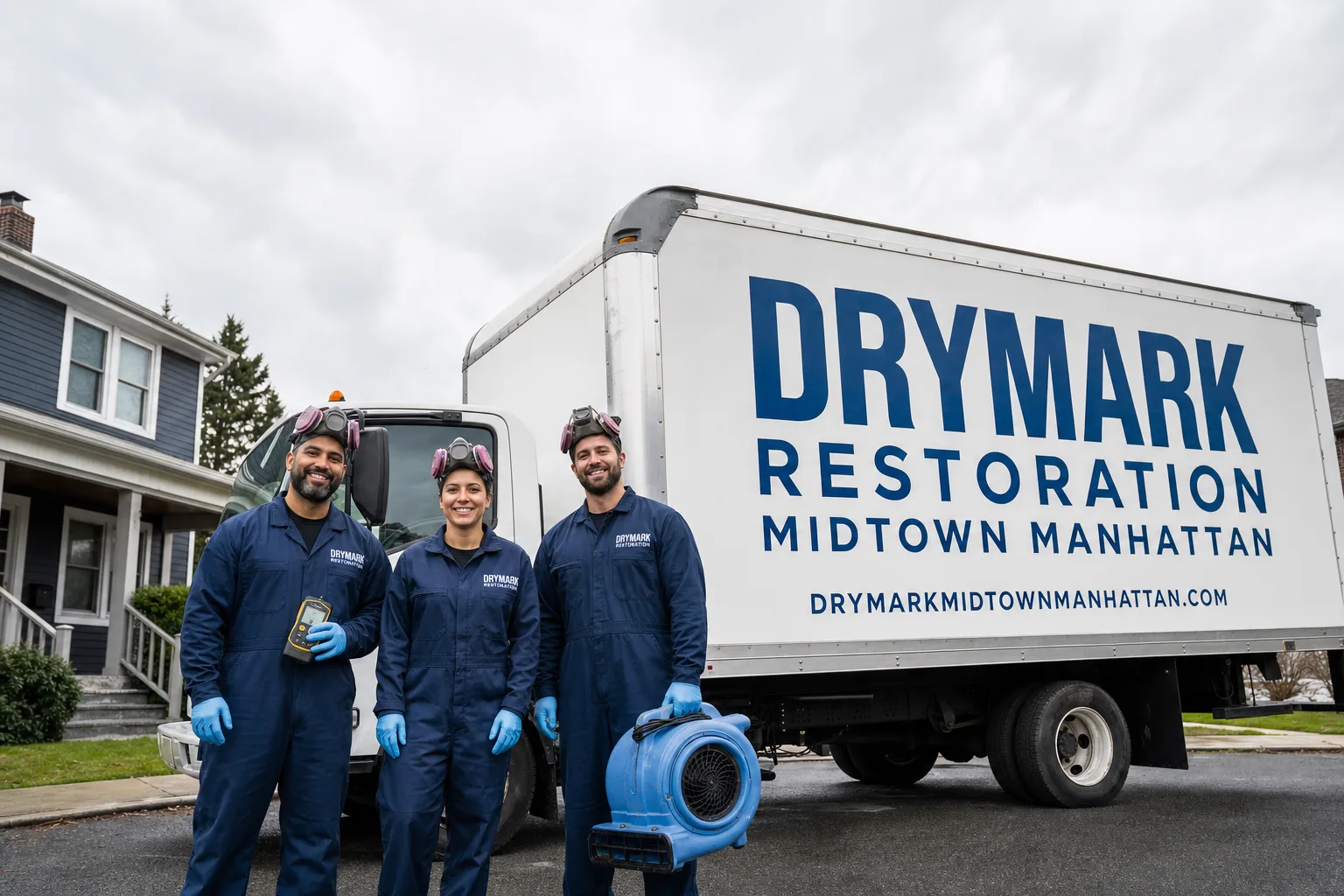
Free visual inspection and a written scope of work before any mitigation begins - photos, moisture readings, and drying logs go in your claim file
The scope we write is the scope we bill. Anything new gets shown to you, in writing, before we touch it.
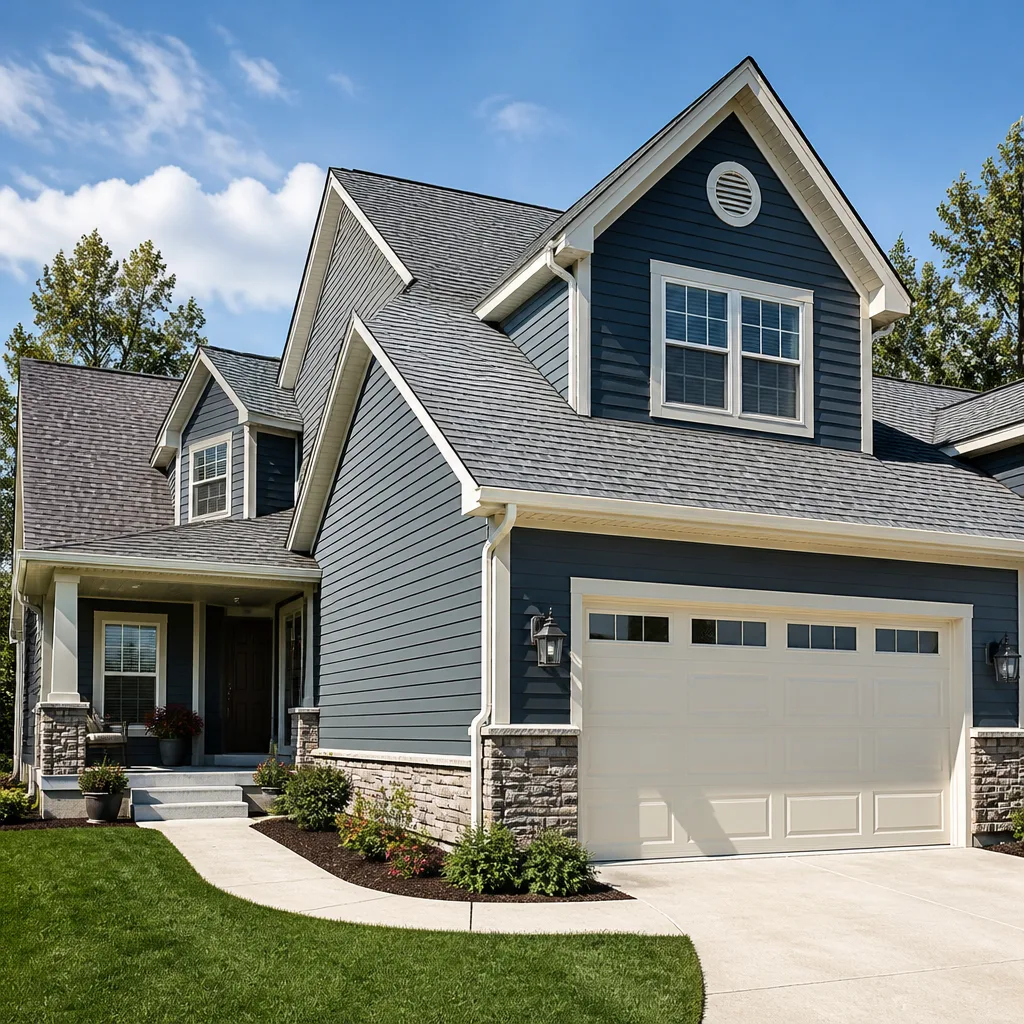
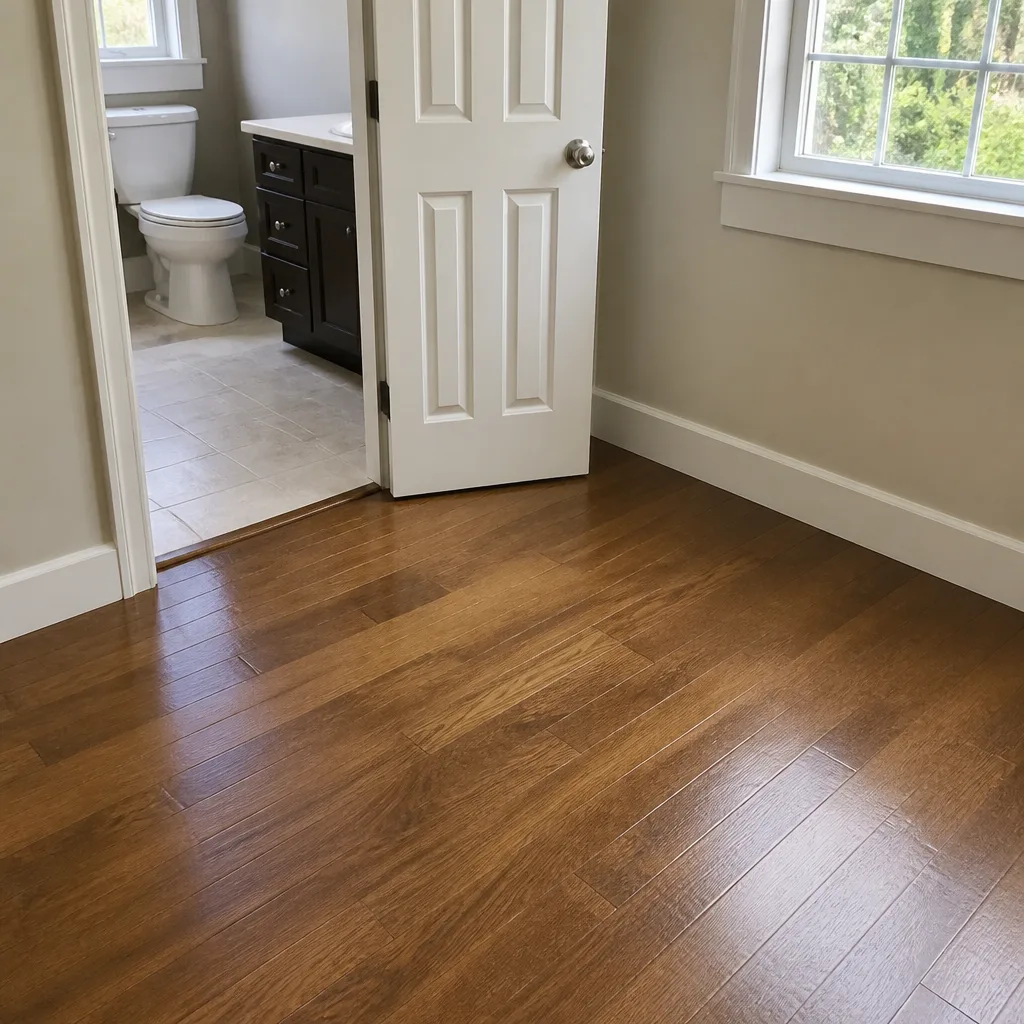
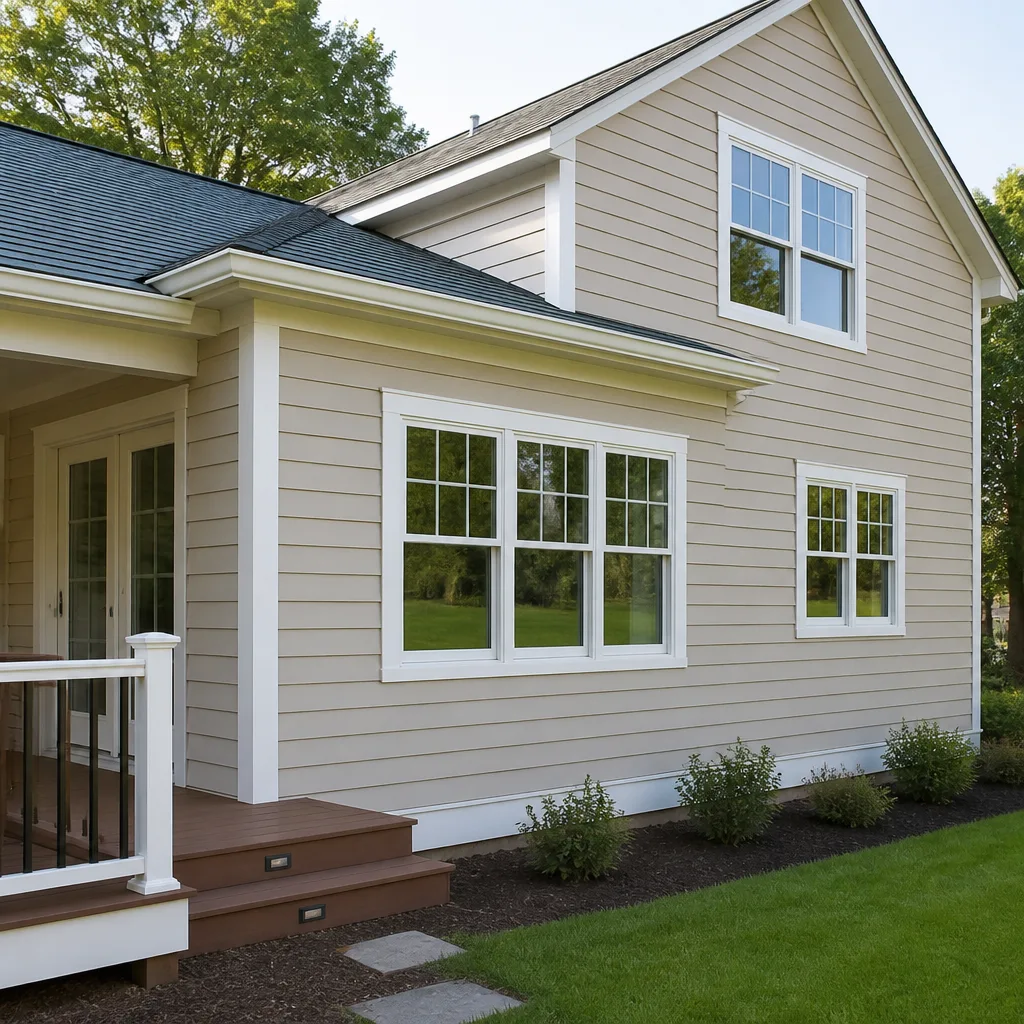
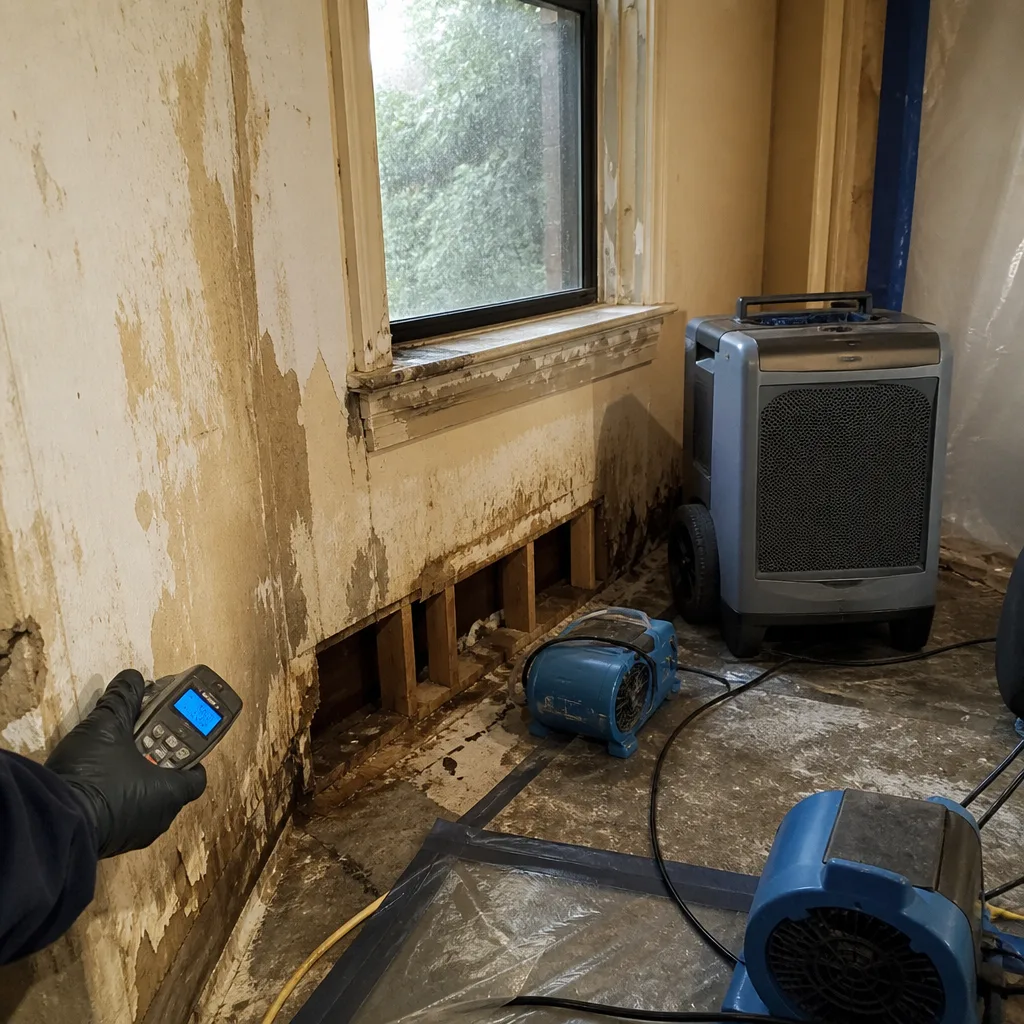 Before
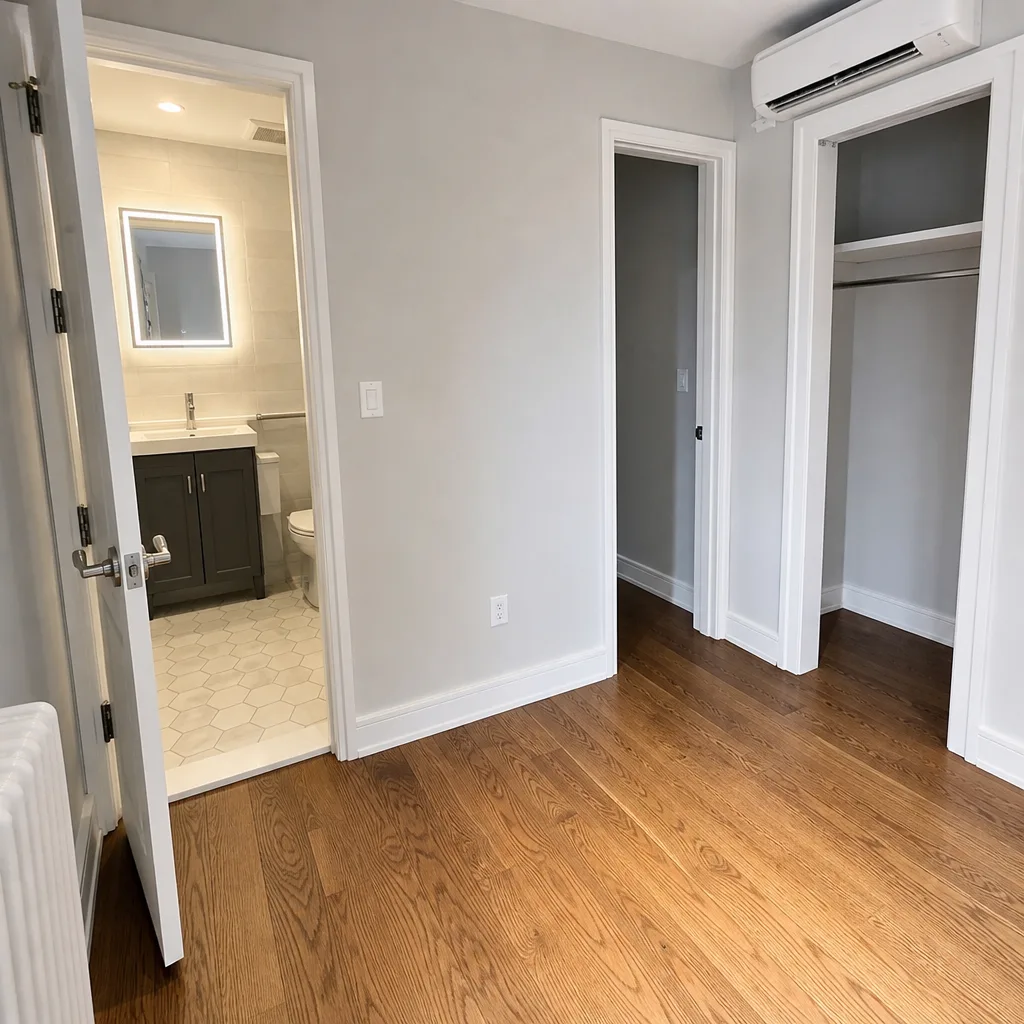 After
After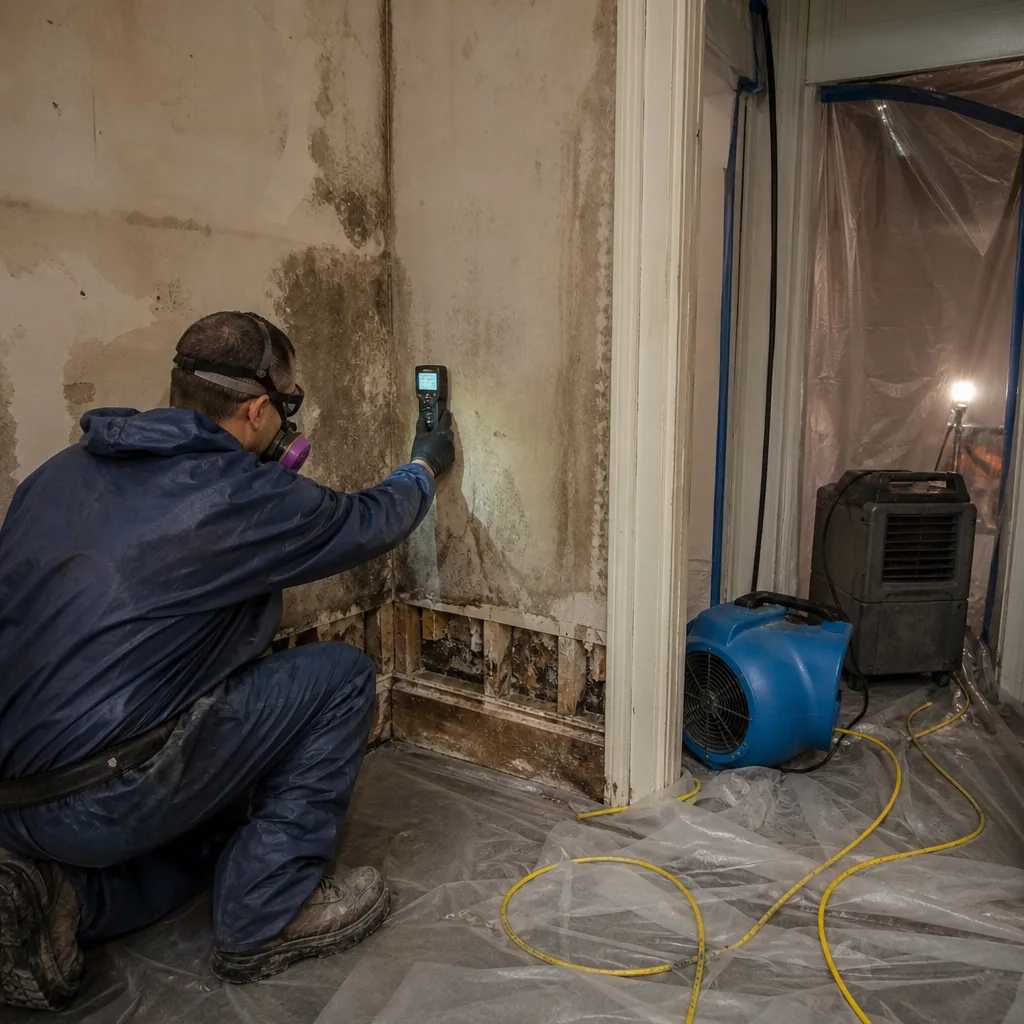 Before
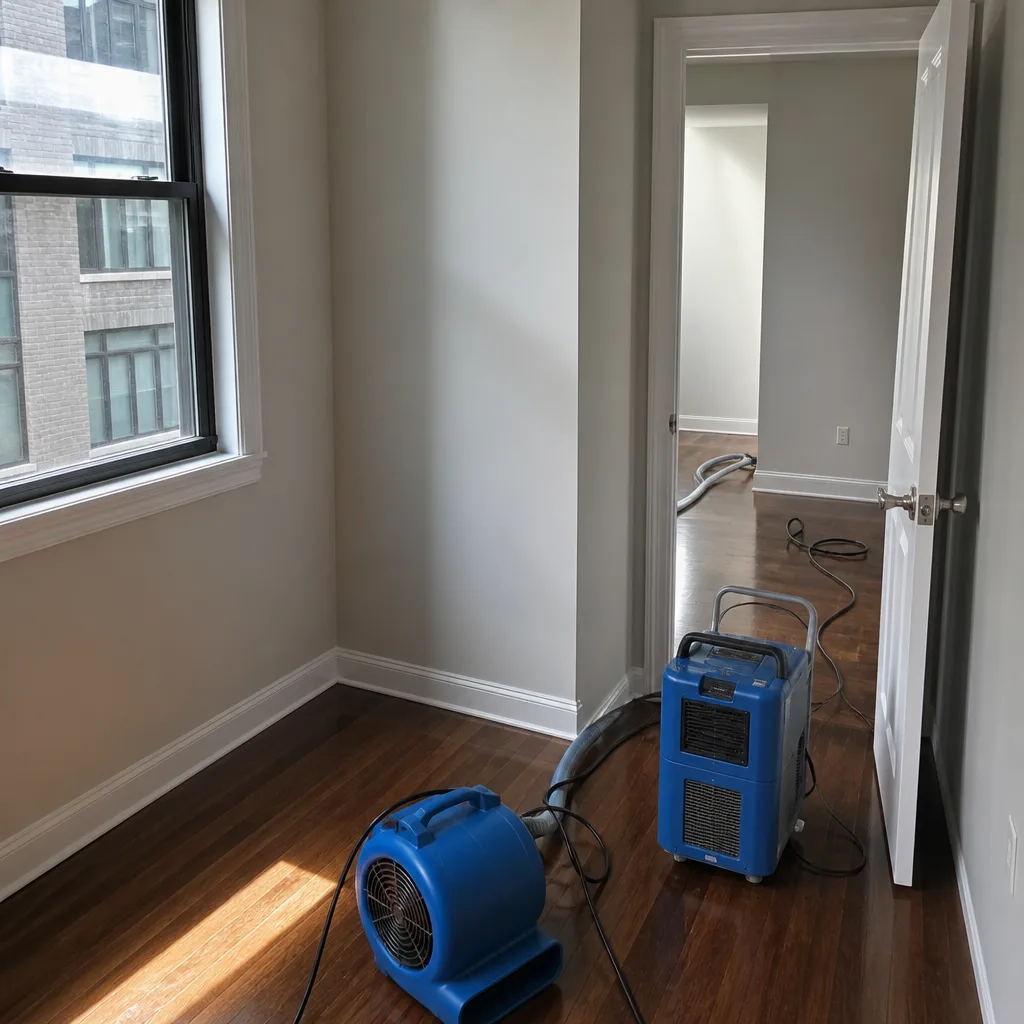 After
After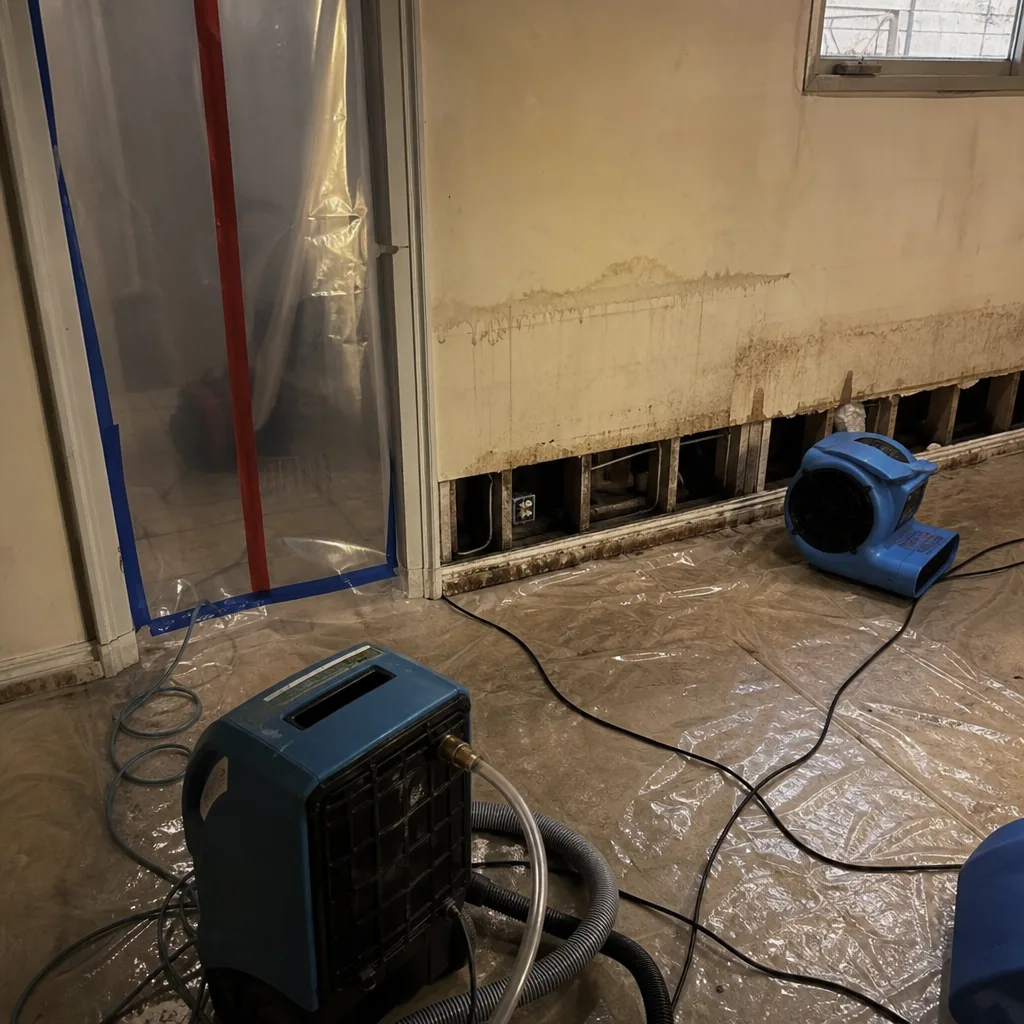 Before
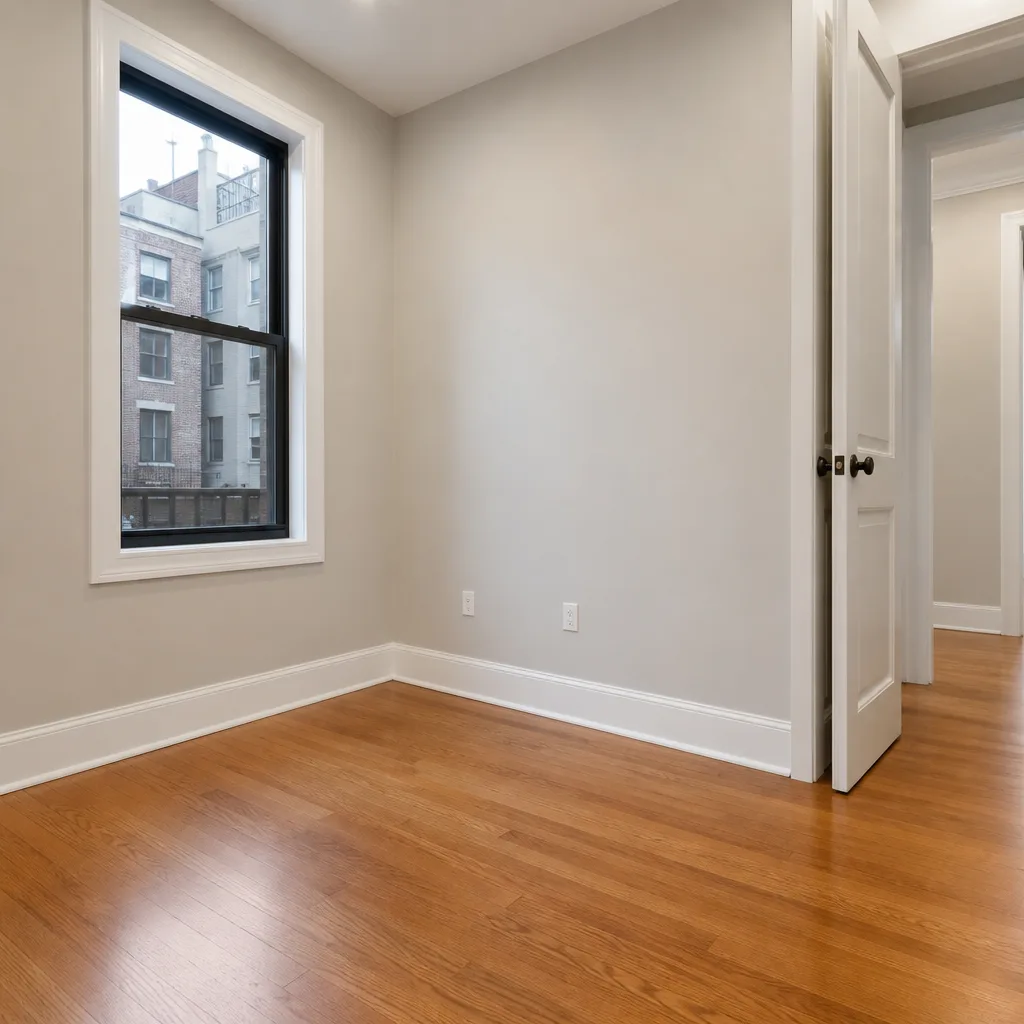 After
AfterTrusted Storm & Disaster Restoration for Midtown Manhattan Homeowners
Storm and disaster restoration in Midtown Manhattan typically runs $3,200-$18,500 depending on damage severity, with emergency board-up and roof tarping available within 60-90 minutes during active weather events. We also provide Storm & Disaster Restoration in Long Island City. At DryMark Restoration Midtown Manhattan, we’ve restored more than 12,000 homes since 2011, every one with a written price before work started and a documented photo record when the crew left. When a nor’easter drives rain through a compromised roof on West 57th Street or a summer derecho shatters windows across a Murray Hill brownstone, we’re the documentation-first restoration company that turns your damage into a payable insurance claim. Call (862) 212-1646 - a live person answers 24 hours a day, 7 days a week, no voicemail trees.
Midtown Manhattan’s vertical density creates unique restoration challenges. Water travels through curtain-wall systems, affects multiple floors simultaneously, and pools in mechanical spaces that pre-war buildings weren’t designed to drain. Our crews carry the moisture meters, thermal imaging, and extraction equipment to work in buildings with freight elevators only, after-hours access restrictions, and co-op board documentation requirements. We’ve dried out units from home buildings on Central Park South to commercial lofts in the Garment District, and we understand the difference between a Class 2 water loss in a 1920s co-op and a Class 3 loss in a glass tower.
What Our Storm & Disaster Restoration Service Includes
Storm Damage Cleanup
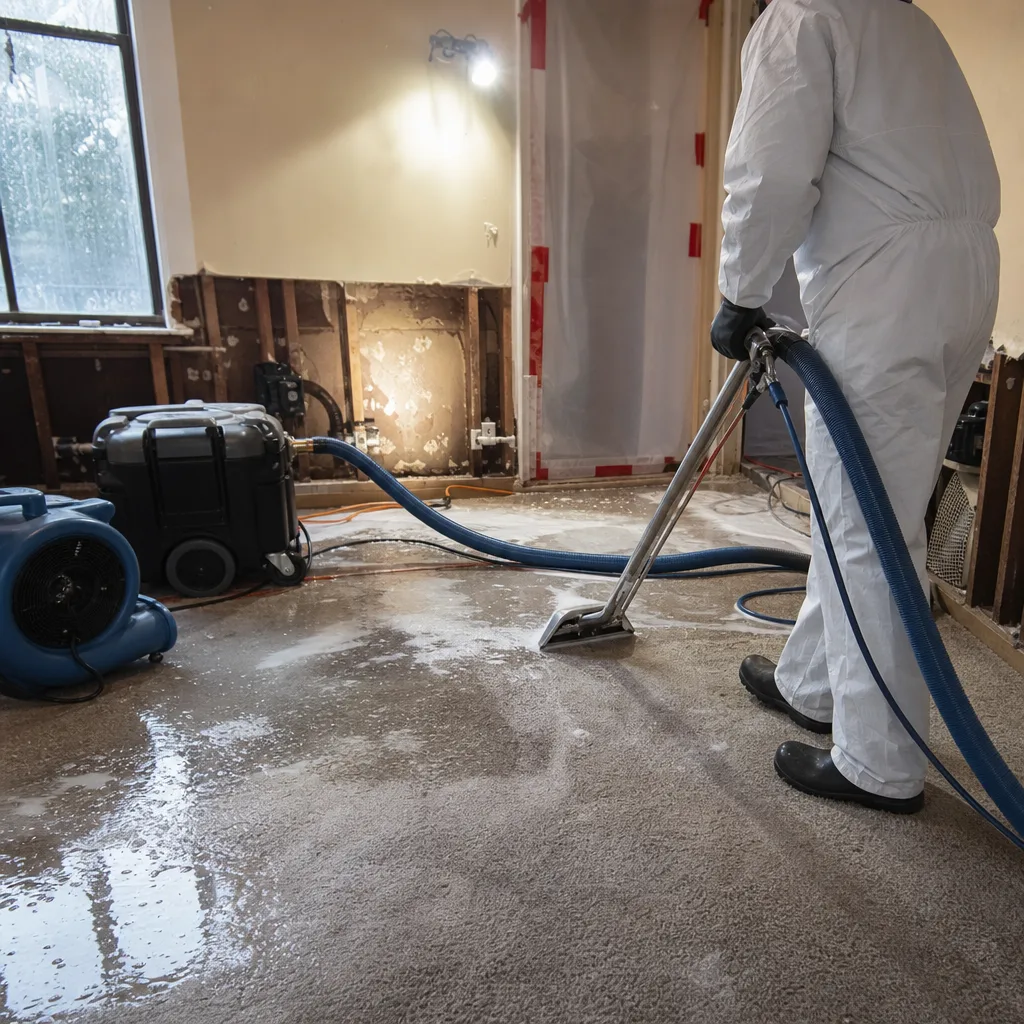
Storm damage cleanup addresses the immediate aftermath of severe weather: water intrusion, structural compromise, and contaminated debris spread across affected spaces. In Midtown Manhattan, this often means clearing waterlogged drywall from a penthouse terrace drain failure on West 42nd Street or extracting Category 2 gray water that entered through a failed window seal during a coastal storm. Our crews arrive with truck-mounted extraction units, portable containment systems for high-rise logistics, and the documentation protocols that satisfy both your insurer and your building management.
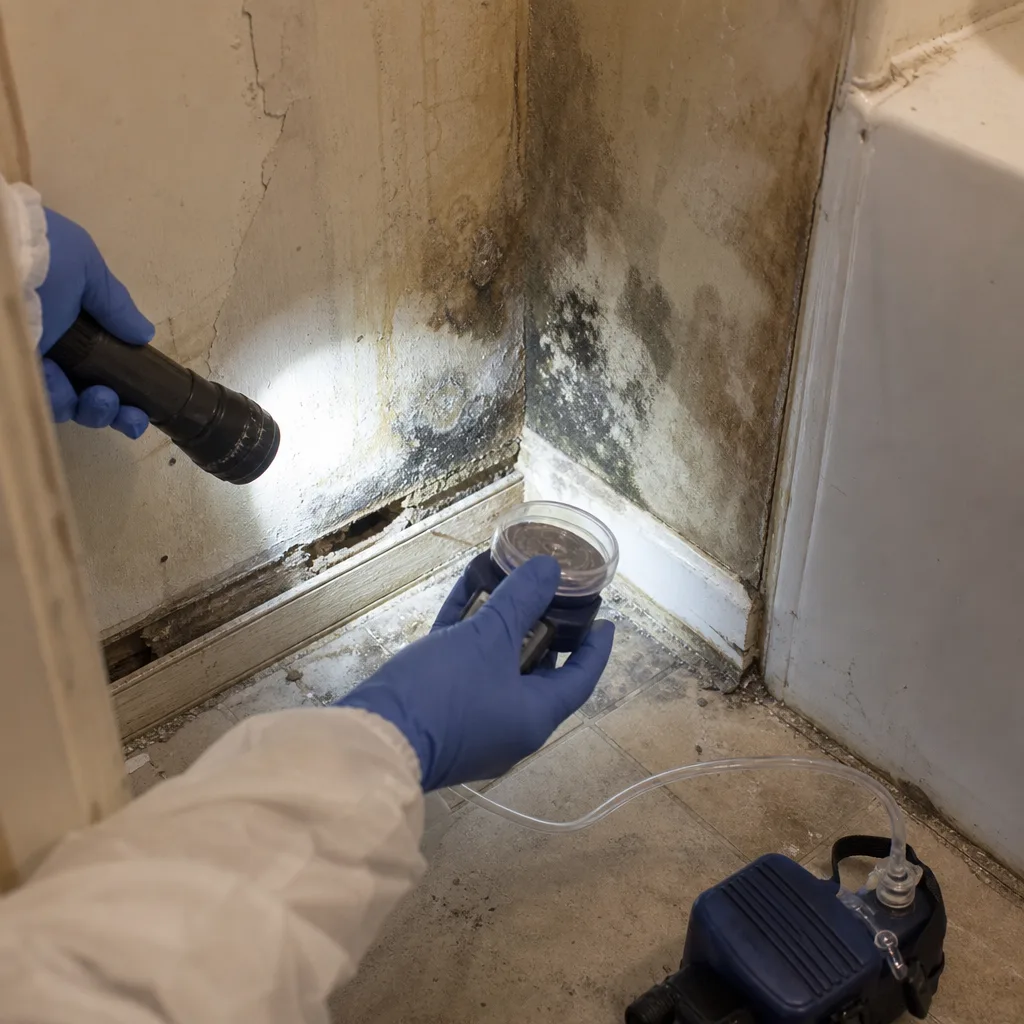
Flood Damage Restoration
Flood damage restoration removes standing water, dries structural materials, and prevents secondary damage like mold colonization in Midtown Manhattan’s tight building envelopes. We’ve handled basement flooding in buildings near the East River where tidal surge overwhelmed sump systems, and we’ve dried upper-floor units where wind-driven rain found seams in curtain-wall construction. Every flood job includes psychrometric data - temperature, relative humidity, and vapor pressure differential readings - tracked in daily drying logs that your adjuster can follow without interpretation.
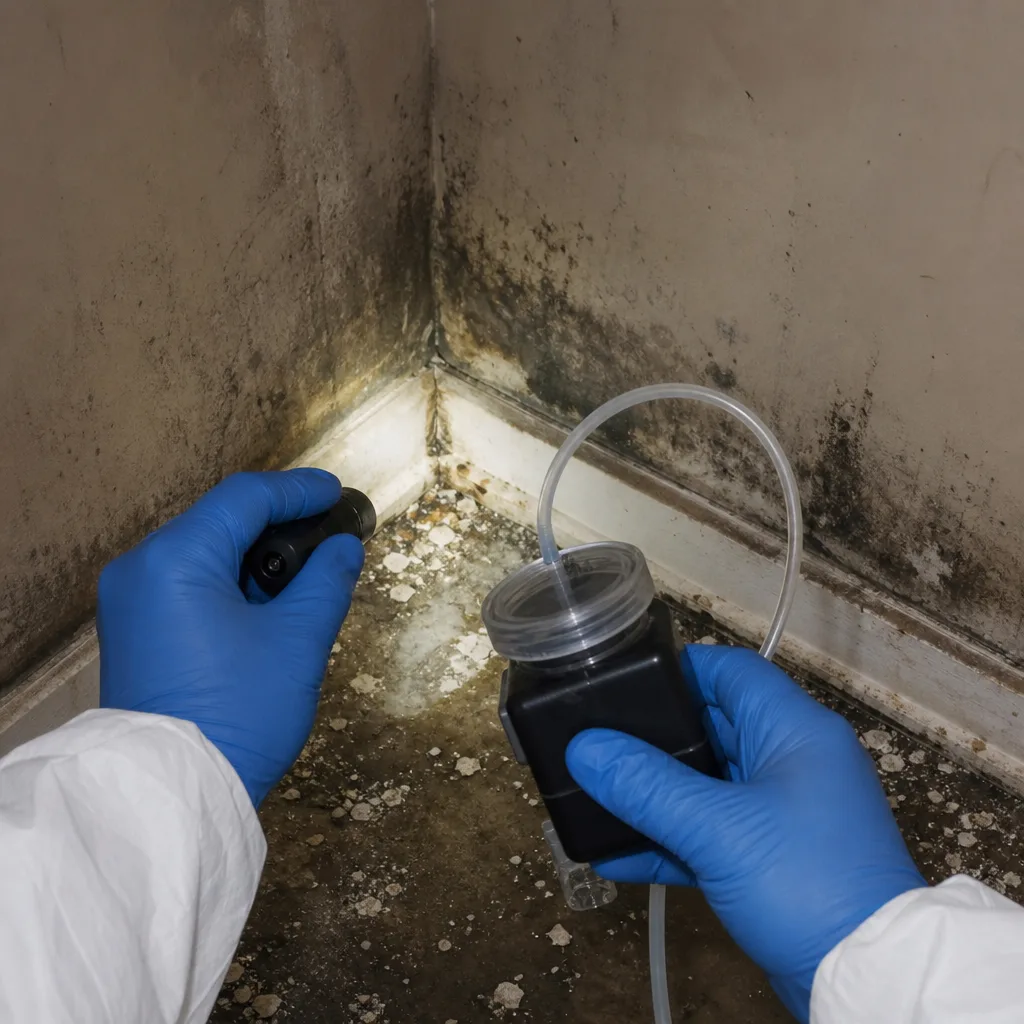
Emergency Board-Up
Emergency board-up secures breached openings within the critical first hours after storm damage, preventing additional water intrusion, theft, and liability exposure. In Midtown Manhattan, where street-level access may require NYPD coordination and building management approval, our crews carry pre-cut plywood inventory, temporary door hardware, and the permits to work in DOT-regulated spaces. We document every board-up with timestamped photos, measurements, and a written scope before any material is installed - Haven Standard, Clause 1.
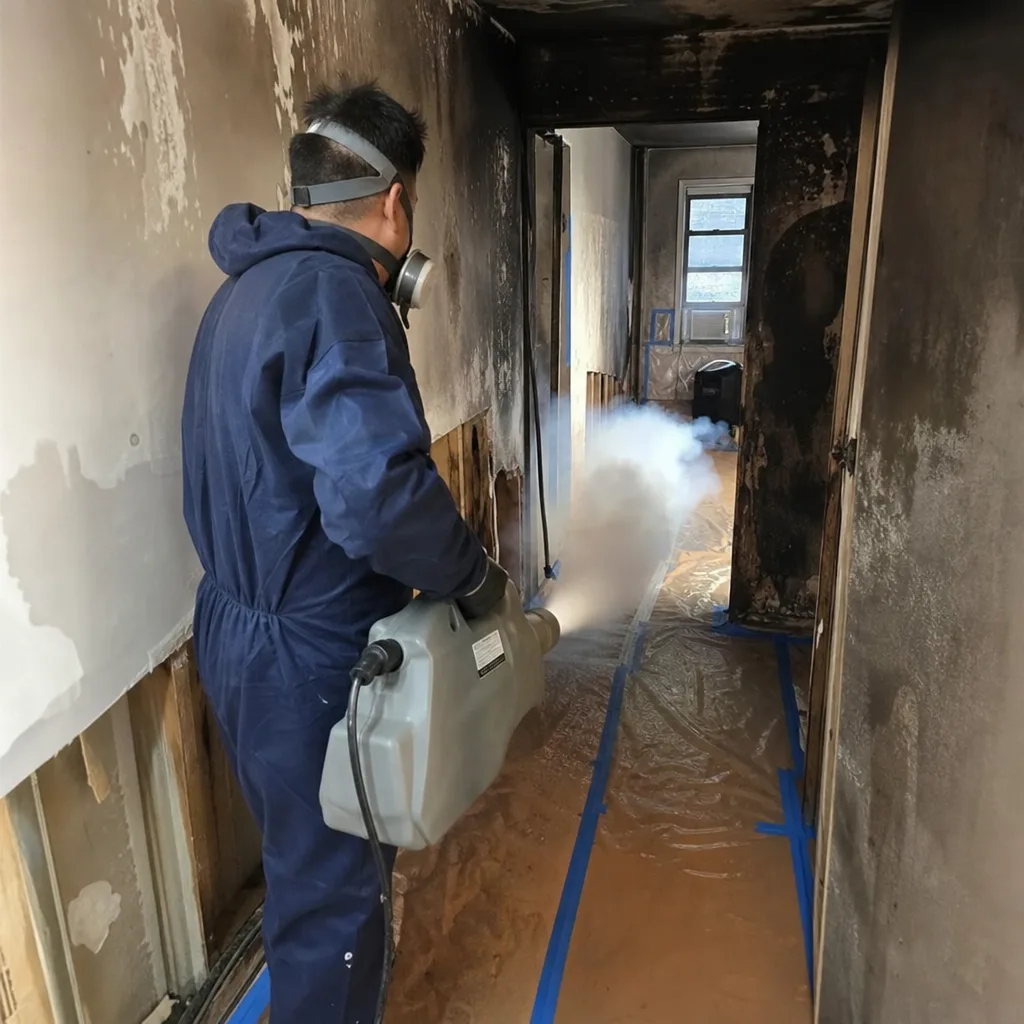
Roof Tarping
Roof tarping provides temporary weather protection when shingles, membrane, or flashing have failed and permanent repair must wait for conditions or insurance approval. We’ve tarped flat roofs on Midtown commercial buildings where HVAC equipment created penetration vulnerabilities, and we’ve secured pitched roofs on pre-war townhouses where ice damming tore away gutters. Our tarps are installed with proper fastening for wind uplift, edge sealing for water shedding, and the photo documentation that proves temporary protective measures were taken promptly.
Debris Removal
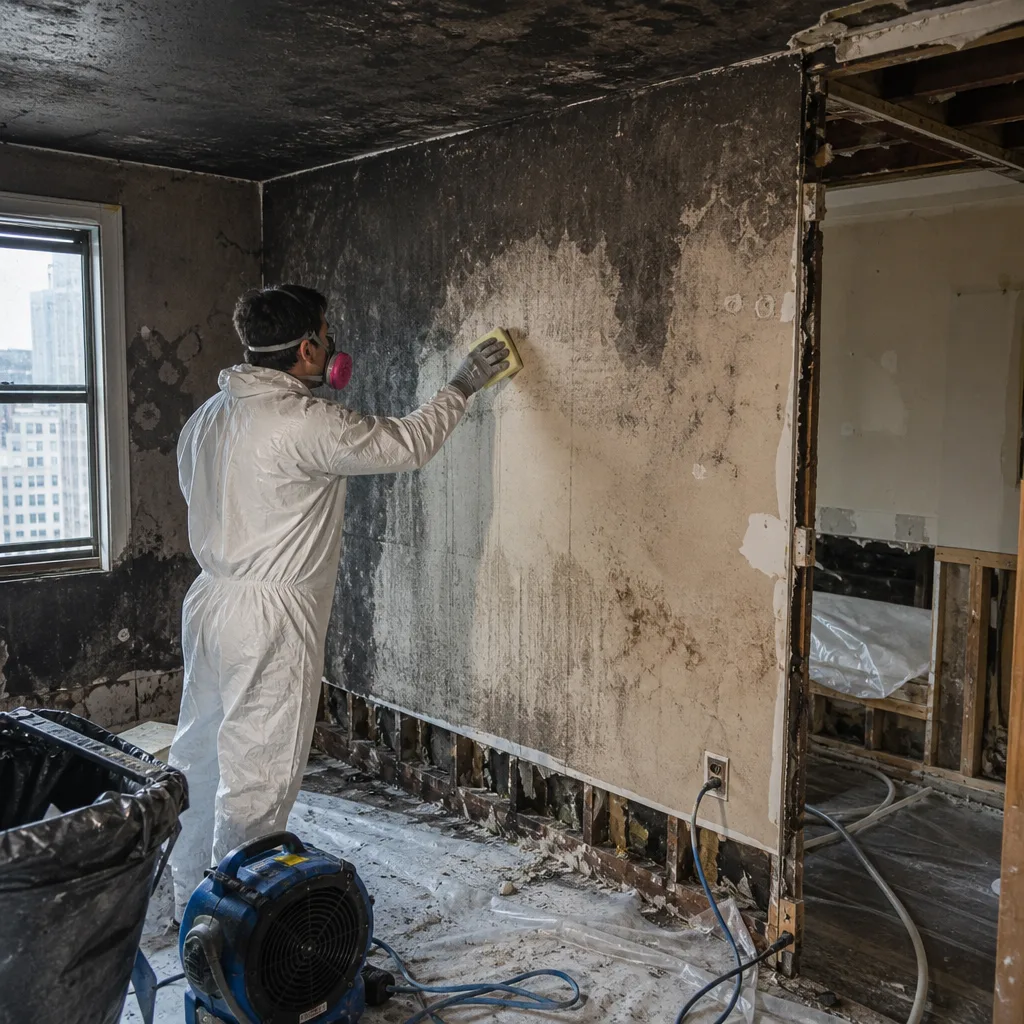
Debris removal clears storm-damaged materials safely and documents what was disposed of for insurance inventory purposes. In Midtown Manhattan, this means navigating DOB debris chute requirements, coordinating with building superintendents for freight elevator scheduling, and separating hazardous from non-hazardous materials at the point of removal. We itemize every load with weight, material classification, and disposal facility documentation - the evidence that supports your personal property and debris removal coverage.
Wind Damage Repair
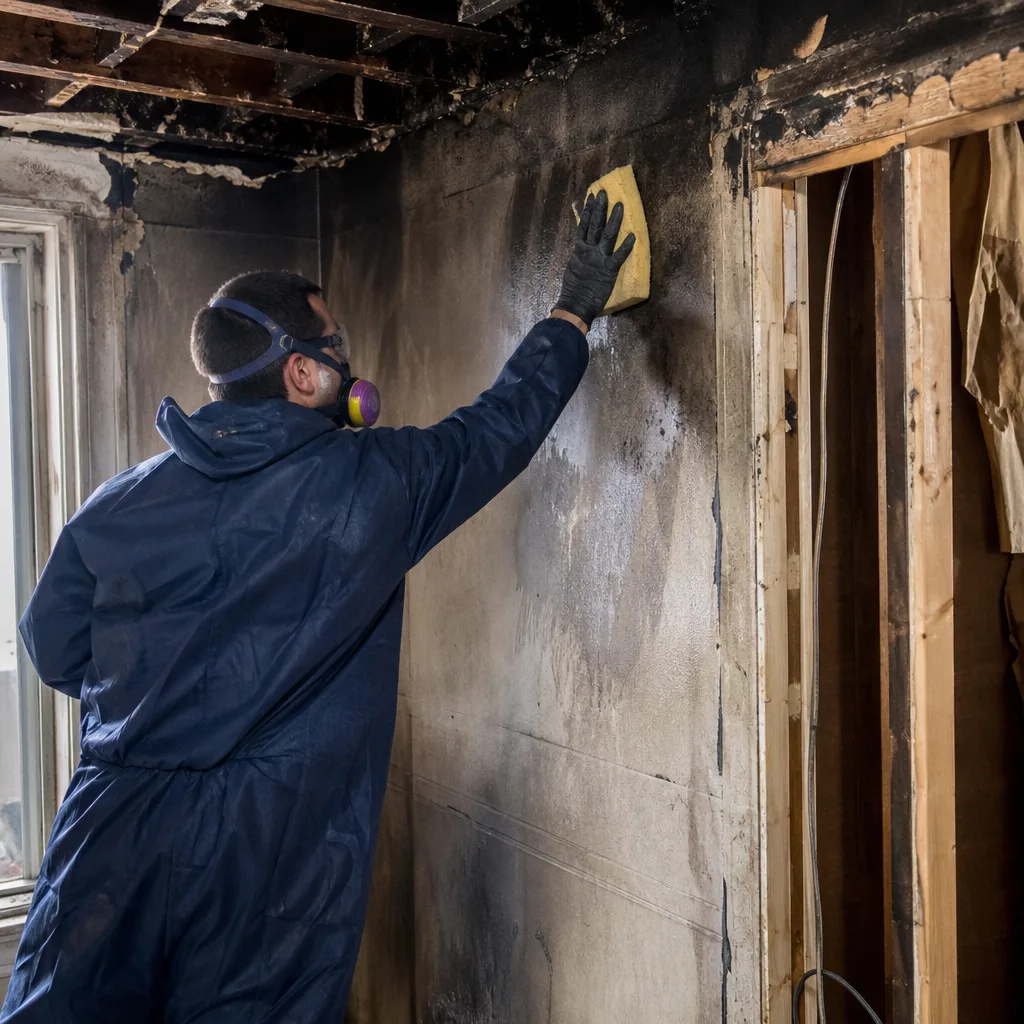
Wind damage repair restores structural and envelope integrity after high-velocity events compromise roofing, siding, windows, or exterior mechanical systems. We’ve repaired facade damage on Midtown buildings where sustained winds over 60 mph dislodged terra cotta and limestone elements, and we’ve replaced window systems where pressure differentials blew out insulated glass units. Our repairs include moisture intrusion assessment of hidden cavities, because wind damage that looks cosmetic often conceals water paths that will cause problems months later.
What happens when you call
- 1
A real person answersNo phone trees - you reach a local pro.
- 2
You get an upfront price rangeHonest numbers before anyone is dispatched.
- 3
A background-checked tech heads outLicensed & insured, dispatched right away.
- 4
You approve before work beginsNothing starts until you say go.
Brands We Service for Storm & Disaster Restoration
Our equipment fleet includes professional-grade drying systems from Dri-Eaz, Phoenix, XPOWER, B-Air, and Injectidry, and our technicians are trained on the specific deployment protocols for each manufacturer’s systems. We’ve run hundreds of Dri-Eaz dehumidification jobs in Midtown Manhattan’s tight floor plans, where the Revolution LGR’s compact footprint and 80-pint capacity match the spatial constraints of pre-war apartments. Our Phoenix 200 MAX units handle the high-volume extraction demands of commercial lobby flooding, with the grain depression performance to dry dense structural materials in buildings where demolition access is limited by landmark or co-op restrictions.
XPOWER air movers and B-Air centrifugal units complete our drying configurations, positioned according to each manufacturer’s airflow specifications and monitored with daily moisture readings until materials reach their dry standard. Whether your building’s restoration requires Injectidry hardwood floor drying mats to preserve original oak in a 1920s co-op, or Phoenix desiccant dehumidification for a below-grade mechanical space, we specify the right equipment and document its performance. And whether you have Dri-Eaz, Phoenix, XPOWER, B-Air, or any other professional drying system already in place from emergency services, we can assess its performance and integrate with or replace it as the drying plan requires.
BeforeAfterSigns You Need Storm & Disaster Restoration Right Now
- Visible water staining on ceilings or walls that appeared during or immediately after a storm. These stains indicate active or recent water intrusion through the building envelope, and in Midtown Manhattan’s multi-story construction, the source may be several floors above or horizontal through curtain-wall systems. Delayed response allows water to migrate into insulation, electrical chases, and structural cavities where it causes exponentially more damage.
- Broken, missing, or displaced roofing, flashing, or facade elements. Any breach in the weather barrier invites additional water with every subsequent rain event, and in high-rise environments, wind pressures intensify at elevation. Temporary protection must be installed before the next weather cycle, or the scope of restoration grows from contained to comprehensive.
- Standing water in basements, mechanical rooms, or tenant spaces. Water that remains more than 24 hours degrades to Category 2 or 3 contamination, triggers mold germination, and compromises electrical and mechanical systems. In Midtown Manhattan’s dense infrastructure, basement flooding may also affect building-wide systems including boilers, elevators, and fire suppression.
- Windows or doors that no longer seal properly after high-wind events. Pressure differentials during storms warp frames, dislodge weatherstripping, and crack insulated glass units, creating ongoing water and air infiltration paths. What feels like a draft is often a measurable moisture load that your HVAC system cannot overcome, leading to condensation and microbial growth.
- Debris impact damage to exterior walls, HVAC equipment, or structural elements. Wind-borne debris in urban environments includes construction materials, signage, and facade elements from neighboring buildings, with impact energies that compromise structural integrity. Even damage that appears superficial may have transferred force to connections, waterproofing membranes, or structural supports that require professional assessment.
Our Storm & Disaster Restoration Process - Step by Step
- 1
Emergency Response and Site Securing - We arrive with the equipment to stop ongoing damage: extraction units for standing water, board-up materials for breached openings, and tarping supplies for roof failures. Our technician documents the scene with timestamped photos before any work begins, establishing the baseline condition that your insurer and adjuster will reference. A written scope and price are delivered before work starts - Haven Standard, Clause 1 - with no exceptions.
- 2
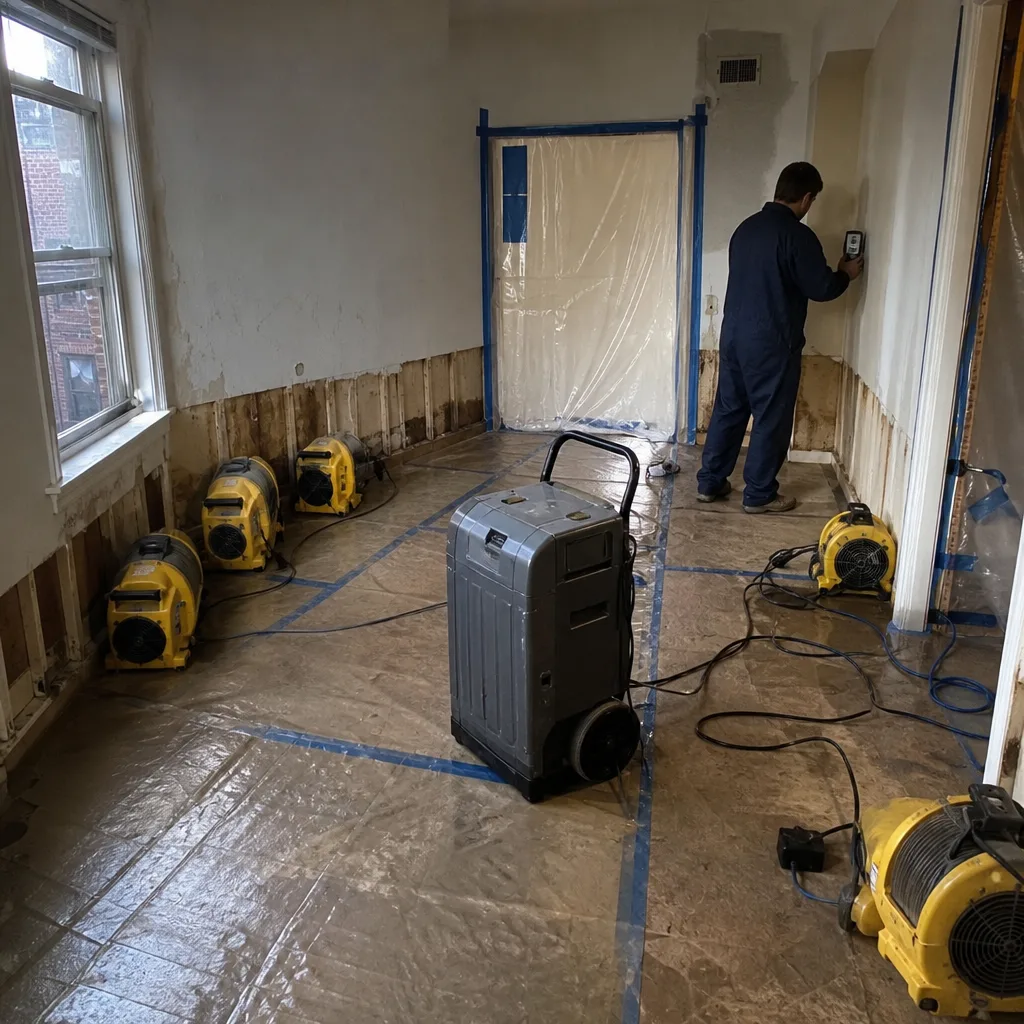
Damage Assessment and Moisture Mapping - Using thermal imaging cameras, non-penetrating moisture meters, and penetrating probes where appropriate, we map the full extent of water migration beyond what’s visible. In Midtown Manhattan buildings, this means tracing water through steel stud cavities, concrete floor plates, and the interstitial spaces between original construction and later renovations. We identify material classifications: Category 1 clean water, Category 2 gray water, or Category 3 black water, each requiring different handling and documentation.
- 3
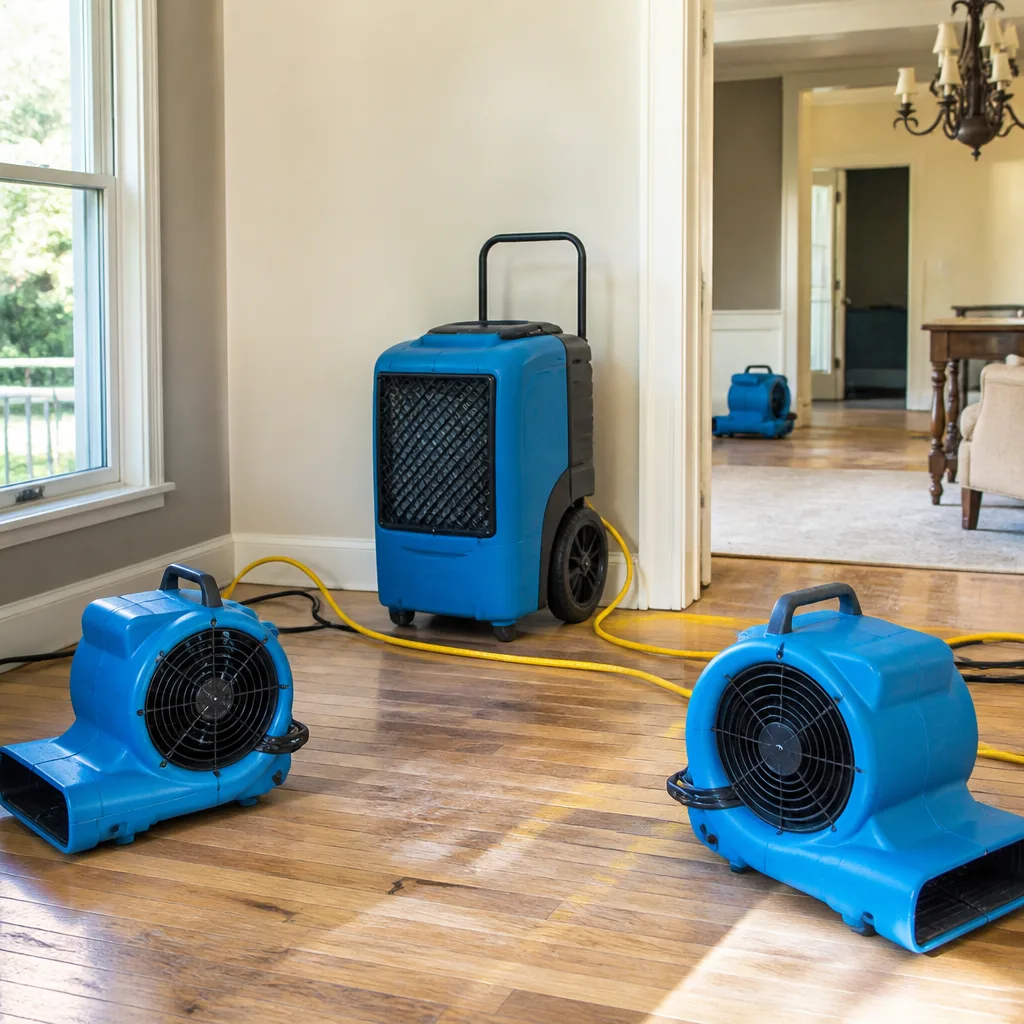
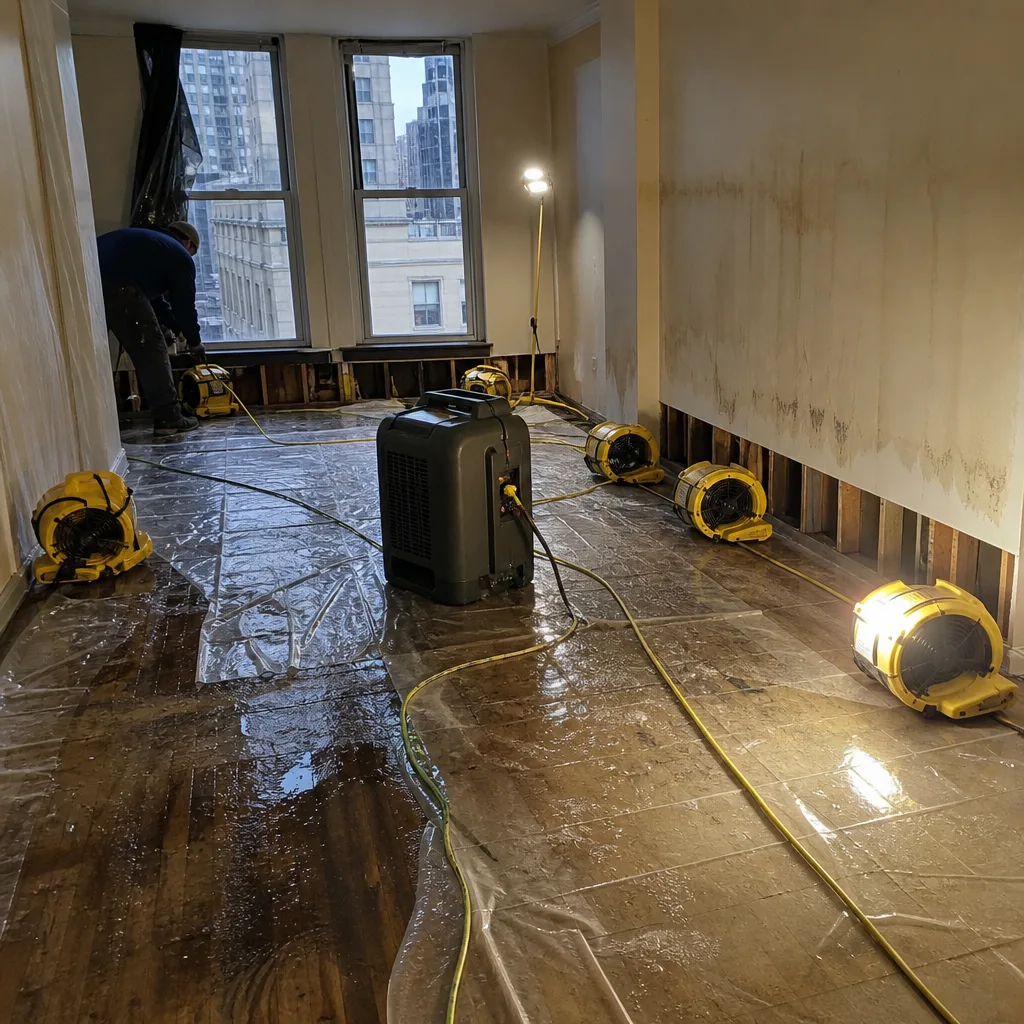
Water Extraction and Structural Drying - We deploy the professional-grade drying systems specified by our assessment: Dri-Eaz LGR dehumidifiers, Phoenix desiccant units, XPOWER and B-Air air movers positioned for optimal airflow patterns, and Injectidry systems for specialty materials like hardwood and plaster. Daily moisture logs record temperature, relative humidity, and specific humidity at each monitoring point, producing the psychrometric data that proves drying progress to your adjuster.
- 4
Content Manipulation and Pack-Out - When affected spaces require extensive drying or reconstruction, we inventory, photograph, and pack out contents to our secured storage facility or to on-site pods coordinated with building management. Each item receives a condition assessment photograph and inventory number, creating the documentation chain that supports your personal property claim and ensures return to pre-loss condition.
- 5
Reconstruction and Final Documentation - Once materials reach their dry standard, we provide written reconstruction scope options, from targeted repair to full restoration, with pricing before any rebuild work begins. Final documentation includes completion photos, moisture verification readings, a signed drying log, and our 365-Day Done Right Promise under The Haven Standard - if it’s not done right, we make it right.
How Much Does Storm & Disaster Restoration Cost in Midtown Manhattan?
Our Storm & Disaster Restoration cost guide explains how Midtown Manhattan pricing reflects the complexity of high-rise logistics, dense building construction, and the documentation standards that insurers require for claim payment. A typical emergency board-up for a residential unit runs $850-$2,400 depending on opening count, floor height, and DOT permit requirements. Roof tarping on a Midtown commercial or residential building ranges $1,800-$5,500, with high-elevation rigging and after-hours access premiums at the upper end. Flood damage restoration for a contained Class 2 water loss in a one-bedroom apartment typically costs $4,200-$9,500, while comprehensive storm damage restoration involving multiple systems in a larger unit or commercial space can reach $15,000-$35,000.
Several factors move pricing within these ranges. Building access restrictions - freight elevator scheduling, after-hours security protocols, co-op board notification requirements - add labor hours that flat-rate pricing cannot absorb. Material classification matters: Category 1 clean water extraction and drying costs significantly less than Category 3 black water requiring full PPE, antimicrobial treatment, and specialized disposal. Hidden damage discovered during moisture mapping, such as water migration through multiple floors or into structural concrete, expands scope and requires written change orders with your approval.
To avoid overpaying, demand a written price before work begins on any phase - Haven Standard, Clause 1 exists precisely to prevent the scope-creep additions that inflate restoration invoices. Compare estimates on documentation quality, not price alone: the company that provides daily moisture logs, photo records, and equipment specification sheets delivers the evidence your adjuster needs to pay the claim without dispute. Our free estimates include all of this documentation, and our Free Second Opinion on any competitor’s written estimate lets you verify whether another scope captures the full damage or omits critical steps.
Storm & Disaster Restoration Near Midtown Manhattan - Our Service Area
We maintain response readiness across Manhattan and the immediate metro core, with typical arrival times of 45-90 minutes in Storm & Disaster Restoration in Midtown Manhattan, Storm & Disaster Restoration in Murray Hill, and the Storm & Disaster Restoration in Upper East Side. Our crews also serve Long Island City, the Upper West Side, Hoboken, West New York, Union City, Greenpoint, Astoria, and Williamsburg, with extended response times of 90-120 minutes for outer borough and New Jersey locations. We coordinate with building management, FDNY, and NYPD as needed for street-level access, and we carry the insurance certificates and licensing documentation that Manhattan co-op and condo boards require before granting entry.
Serving Midtown Manhattan, NY - Our Local Coverage Area
We’re based in the Midtown Manhattan area and know this community well, and we also offer Astoria Storm & Disaster Restoration. Use the map below to see our full service coverage - if you’re nearby, we can almost certainly help.
Frequently Asked Questions - Storm & Disaster Restoration in Midtown Manhattan
Storm and disaster restoration is the professional process of returning a property to pre-loss condition after damage from severe weather events including hurricanes, nor’easters, derechos, and flash flooding. It encompasses emergency mitigation (board-up, tarping, water extraction), structural drying, debris removal, content restoration, and reconstruction. At DryMark Restoration Midtown Manhattan, every phase is documented with photos, moisture readings, and written scopes that satisfy insurance claim requirements.
Timeline varies by damage severity: emergency board-up and tarping are completed same-day, water extraction and initial drying typically require 3-5 days, and full restoration including reconstruction may extend to 2-8 weeks for complex losses. Midtown Manhattan building access restrictions, insurance adjuster scheduling, and material procurement for matching existing finishes often add days that simpler suburban projects avoid. We provide a written timeline with our scope, updated daily as conditions change.
Most residential storm restoration projects in Midtown Manhattan fall between $4,200 and $18,500, with emergency services like board-up starting around $850 and comprehensive multi-system restoration reaching $35,000 or more for large units or commercial spaces. We also handle Storm & Disaster Restoration - Maspeth. Your specific cost depends on water classification, affected square footage, building access complexity, and whether reconstruction is required. Call (862) 212-1646 for a written estimate with exact pricing - estimates are free, and we provide a Free Second Opinion on any competitor’s written quote.
Yes - our technicians are trained on Dri-Eaz, Phoenix, XPOWER, B-Air, and Injectidry systems, and we can assess, integrate with, or replace equipment already deployed by emergency services. We specify the right equipment for your building’s construction type and document its performance to IICRC, RIA, and IFA standards. Whether you need desiccant dehumidification for a below-grade mechanical space or hardwood floor drying mats to preserve original oak, we match the system to the material.
Yes - a live person answers every call to (862) 212-1646, 24 hours a day, 7 days a week, with no voicemail trees or next-business-day callbacks while water is still moving. Our emergency crews carry board-up materials, extraction equipment, and temporary weather protection to stop ongoing damage within 60-90 minutes in Midtown Manhattan. The documentation process begins at arrival: photos, moisture readings, and a written scope before any work starts.
Every job is covered by our 365-Day Done Right Promise under The Haven Standard - if it’s not done right, we make it right. This is a signed written guarantee, not a verbal assurance, and it applies to all workmanship, drying performance, and reconstruction. The warranty is transferable if you sell the property within the coverage period, and we maintain your job file with photos, moisture logs, and scope documents for the full term.
Safety first: if electrical systems are affected, turn off power at the breaker if you can do so safely, and avoid standing water near electrical sources. Document visible damage with your own photos for personal records, then move to a safe area and let our crew handle the rest. Do not attempt DIY board-up or roof access in active weather - these are genuinely dangerous activities requiring proper equipment and training. When you call (862) 212-1646, we’ll guide you through immediate protective steps and dispatch our crew with everything needed to secure the property professionally.
Schedule Your Storm & Disaster Restoration Service in Midtown Manhattan Today
Call (862) 212-1646 now - a live person answers 24 hours a day, 7 days a week. We’ll provide a written price before any work begins, document every visit with photos and moisture readings, and back our work with the 365-Day Done Right Promise under The Haven Standard. Your estimate is free, and we offer a Free Second Opinion on any competitor’s written estimate. When storm damage hits Midtown Manhattan, we’re the documentation-first restoration company that turns your crisis into a completed claim.
Written by Alicia Brennan, Owner at DryMark Restoration Midtown Manhattan, serving Midtown Manhattan since 2011.