
Last updated September 22, 2026
Free visual inspection and a written scope of work before any mitigation begins - photos, moisture readings, and drying logs go in your claim file
The scope we write is the scope we bill. Anything new gets shown to you, in writing, before we touch it.
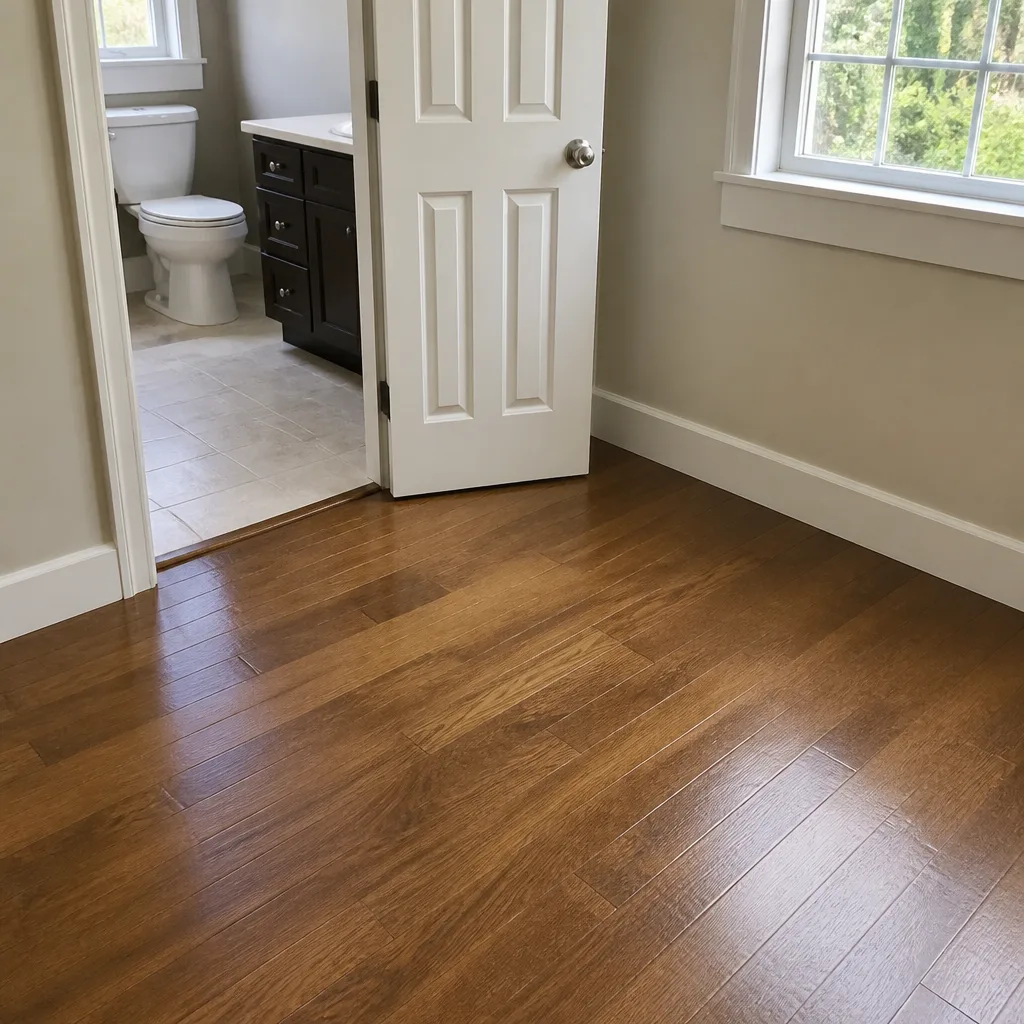
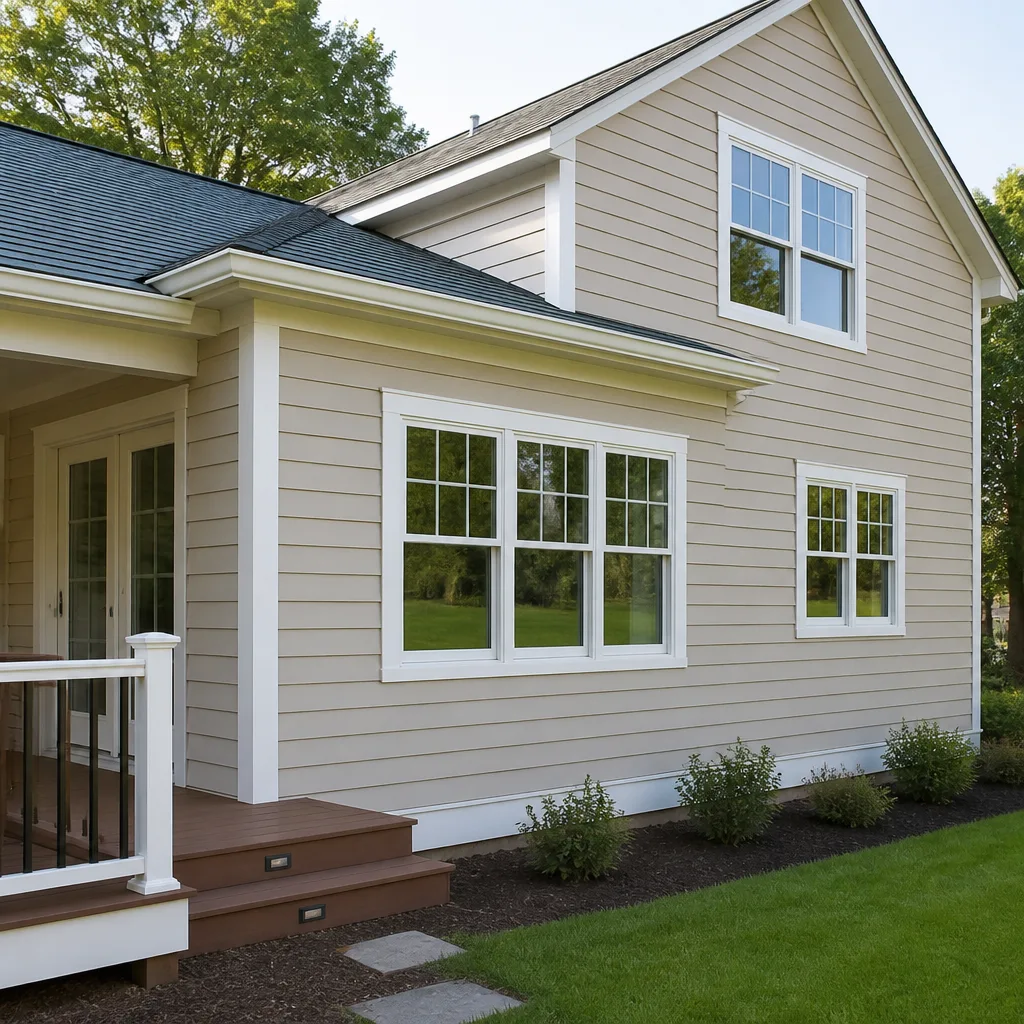
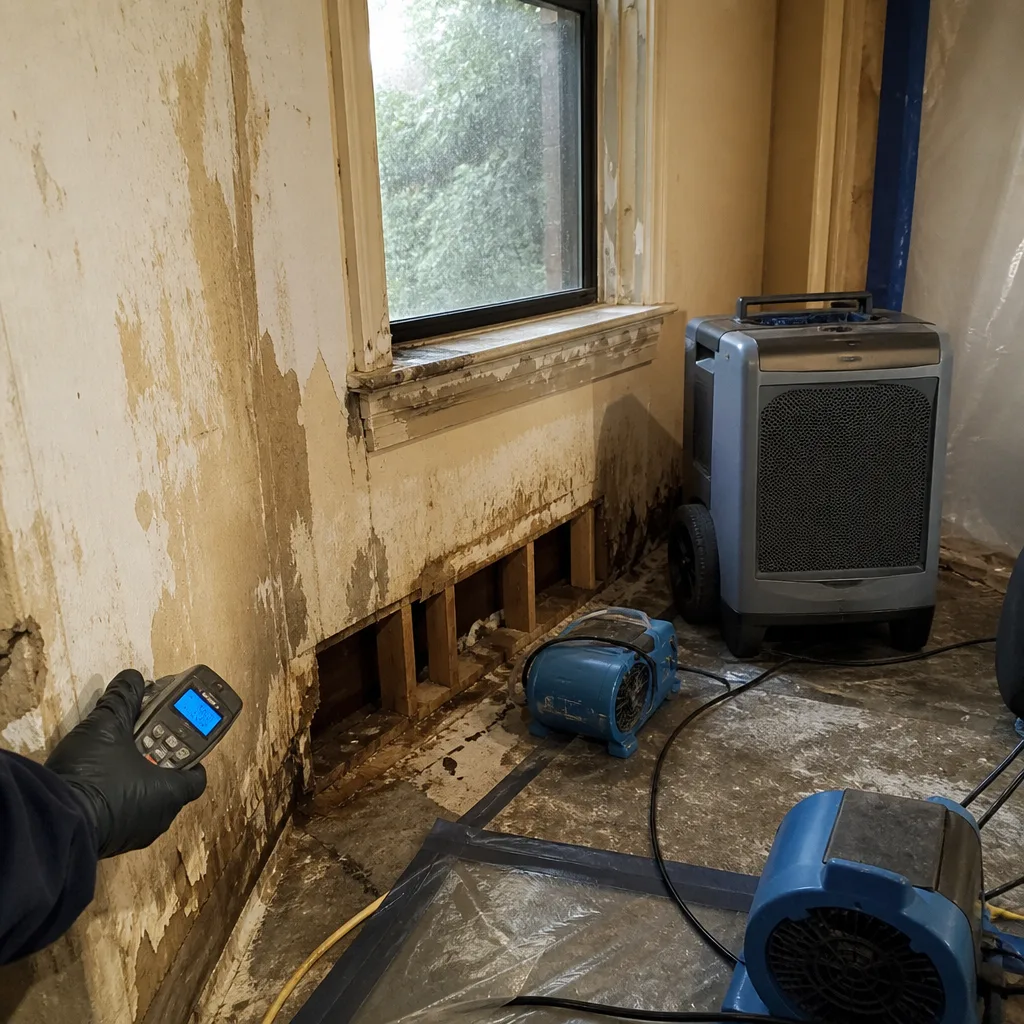 Before
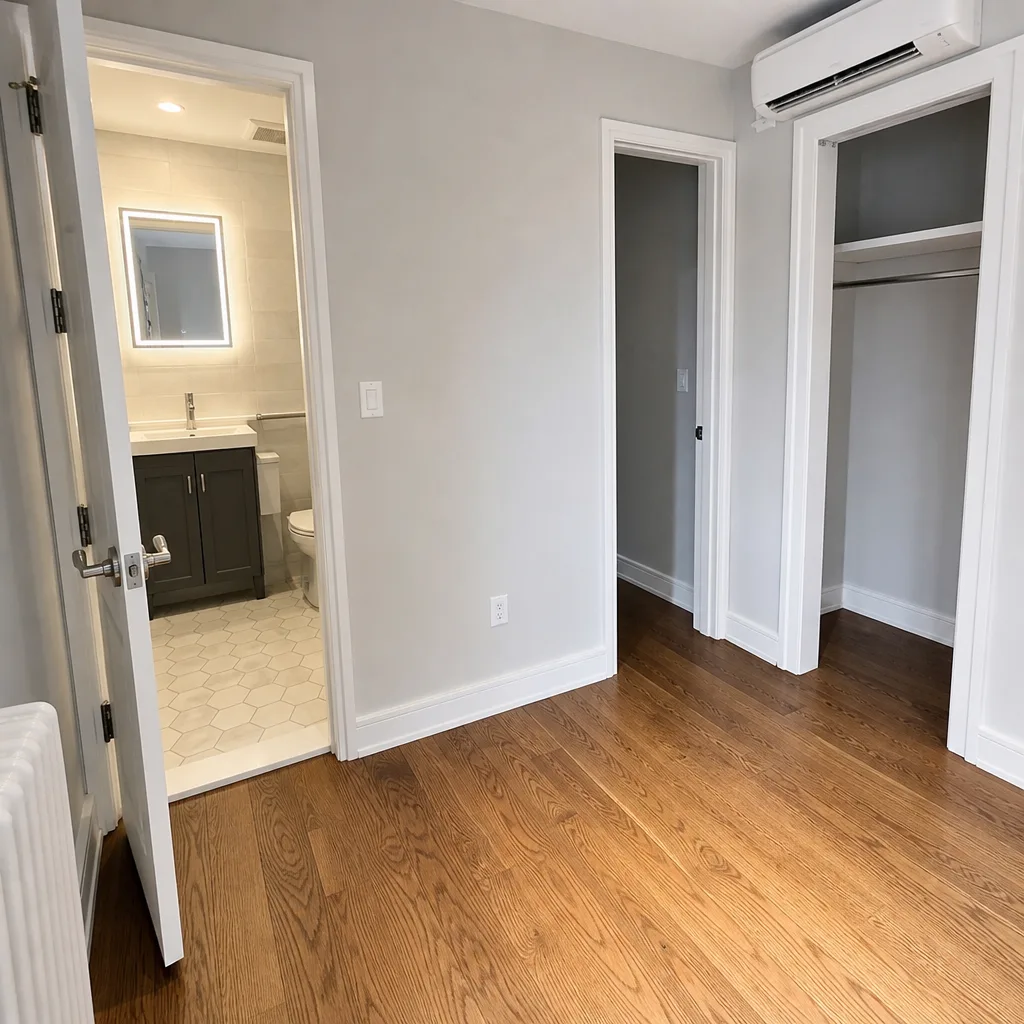 After
After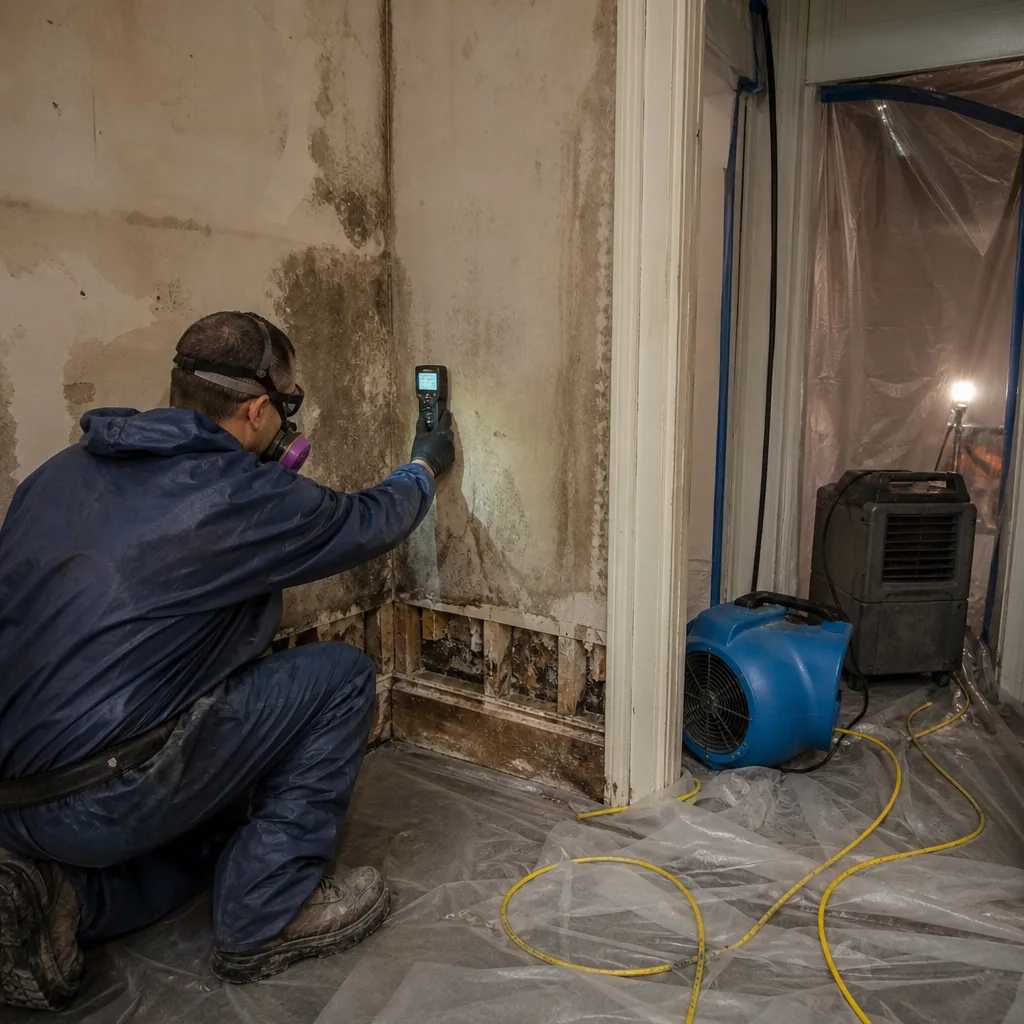 Before
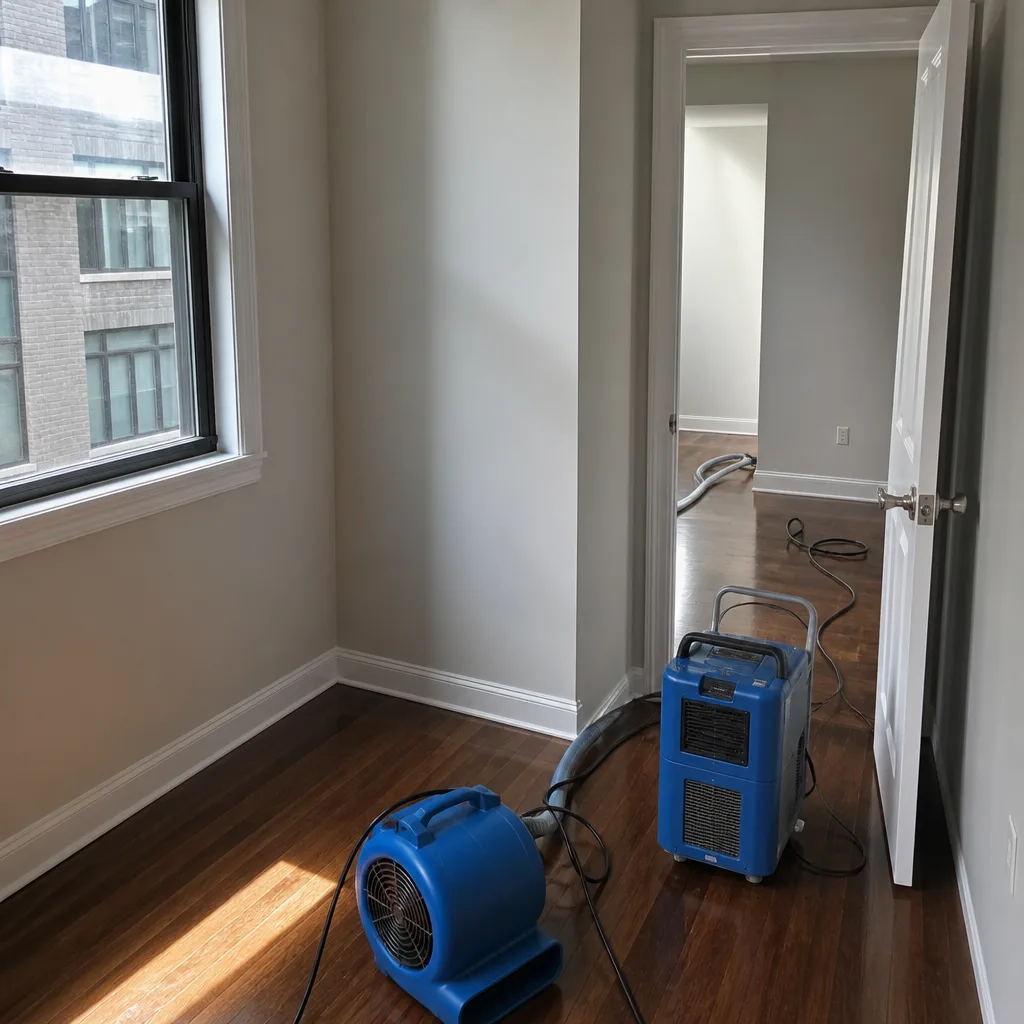 After
After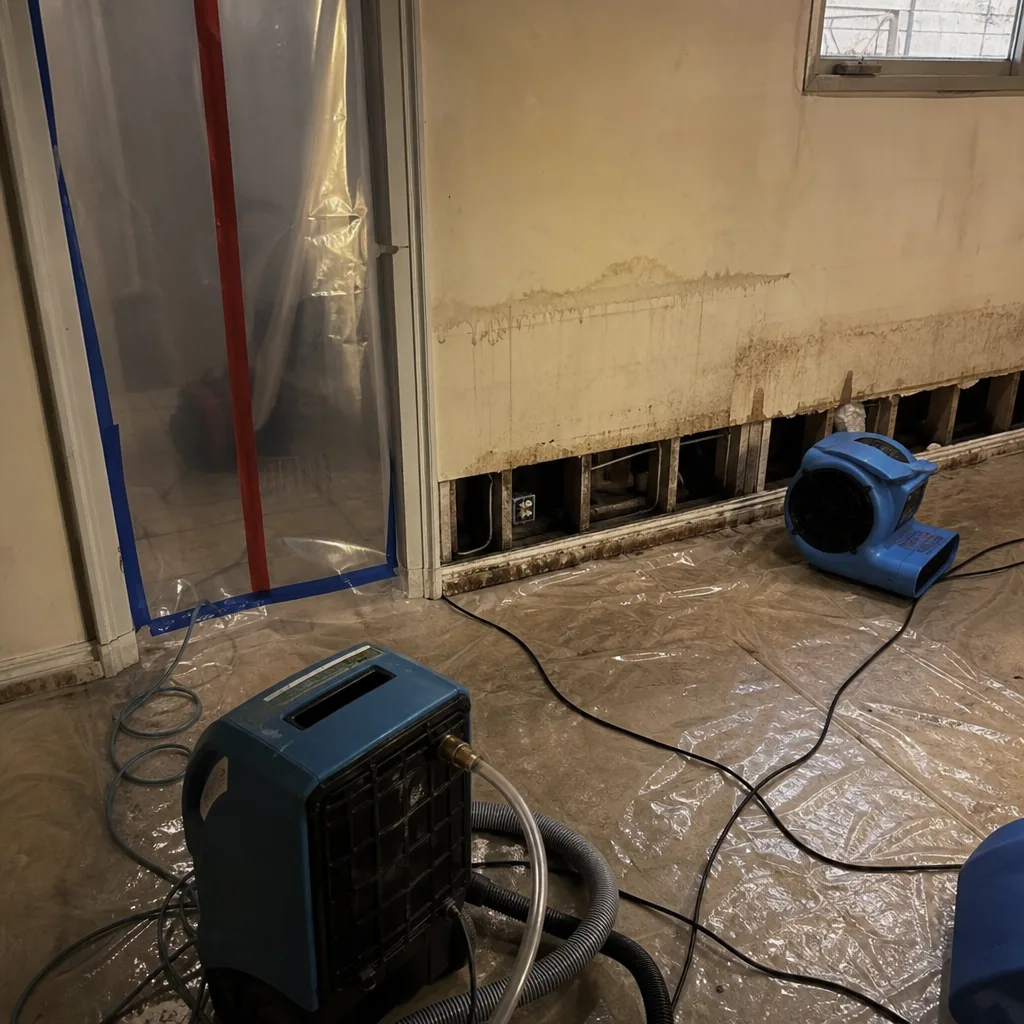 Before
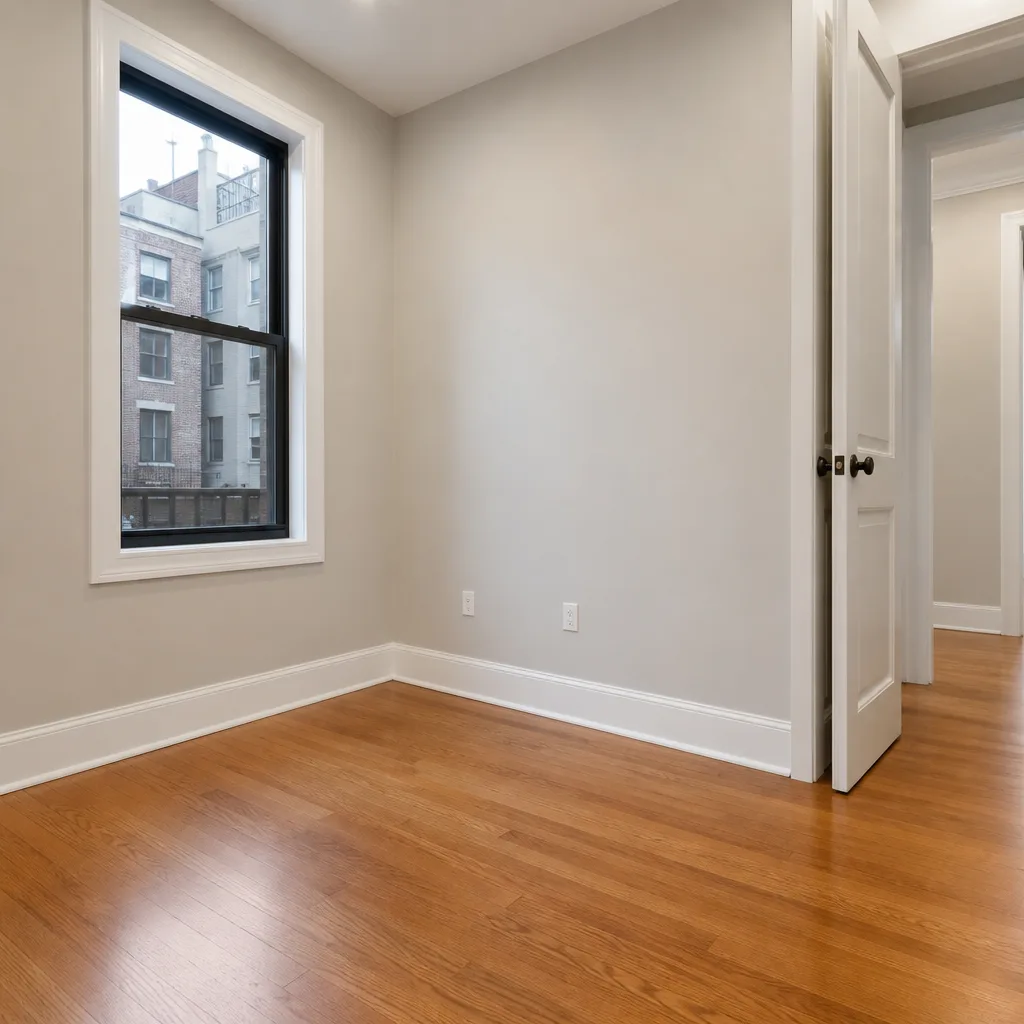 After
AfterDamage Restoration Permits, Codes & Inspections in NY: What You Need to Know
A Midtown co-op board approved a restoration project that the NYC Department of Buildings later flagged as requiring a permit no one pulled. The unpermitted work showed up in the building’s filing history and delayed the unit’s sale by four months. In New York City, restoration work sits at the intersection of emergency response and regulated construction, and the permit requirements are more granular than most homeowners realize. This guide maps exactly when a permit is required, which local laws apply to pre-war buildings common in Midtown Manhattan, and what your final inspection record needs to show for both resale and insurance purposes. For Damage Restoration Warning Signs: A Midtown Manhattan Homeowner’s Reference Guide, see our companion resource.
Quick Answer
Most structural restoration work in New York City requires a Department of Buildings permit when it affects load-bearing elements, the building envelope, electrical or plumbing systems, or exceeds defined thresholds for mold remediation. A contractor who pulls the wrong permit type or skips the process entirely can leave unpermitted work in the public record, complicating future sales and insurance claims. For help deciding when to bring in experts, read our DIY vs Professional Damage Restoration: The Midtown Manhattan Homeowner’s Decision Guide. Homeowners should verify permit filings through the DOB NOW portal before work begins and request inspection sign-offs as part of their final restoration documentation.
Table of Contents
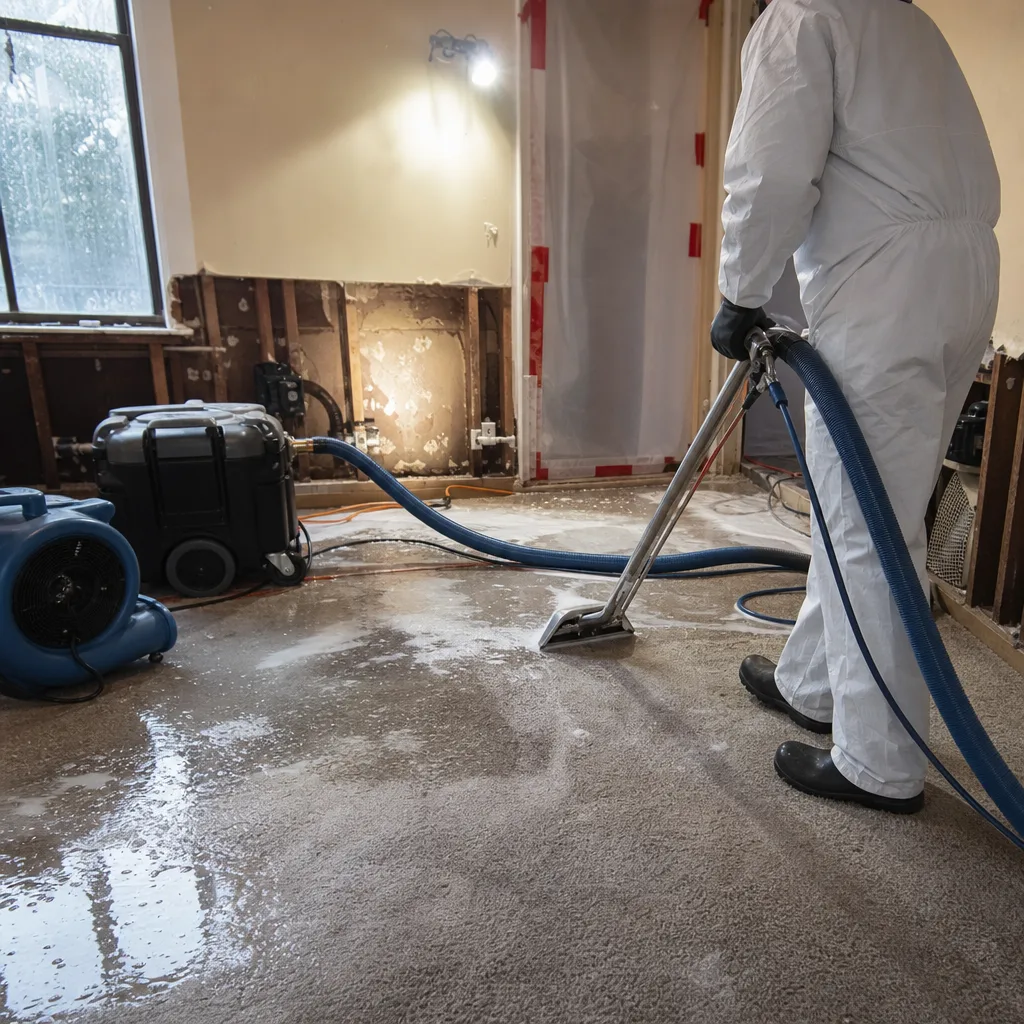
- When Restoration Work Requires a DOB Permit
- Alt-1, Alt-2, and Alt-3: Which Restoration Scopes Fall Under Each
- How NYC Local Law 1 and Local Law 31 Affect Restoration Work
- Using the DOB NOW Portal to Verify Contractor Filings
- What Inspection Sign-Offs Create in the Public Record
- Building Your Restoration File for Insurance and Resale
- Common Mistakes to Avoid
- When to Call a Professional
- Frequently Asked Questions
BeforeAfterWhen Restoration Work Requires a DOB Permit
New York City does not treat restoration as a single category. The Department of Buildings divides work by what is being altered, how extensive the alteration is, and which building systems are affected. Understanding these divisions prevents the most common permit error we see in Midtown Manhattan: a contractor beginning emergency drying or demo, then discovering mid-project that the scope requires a filing no one prepared.
Here are the restoration contexts that trigger permit requirements:
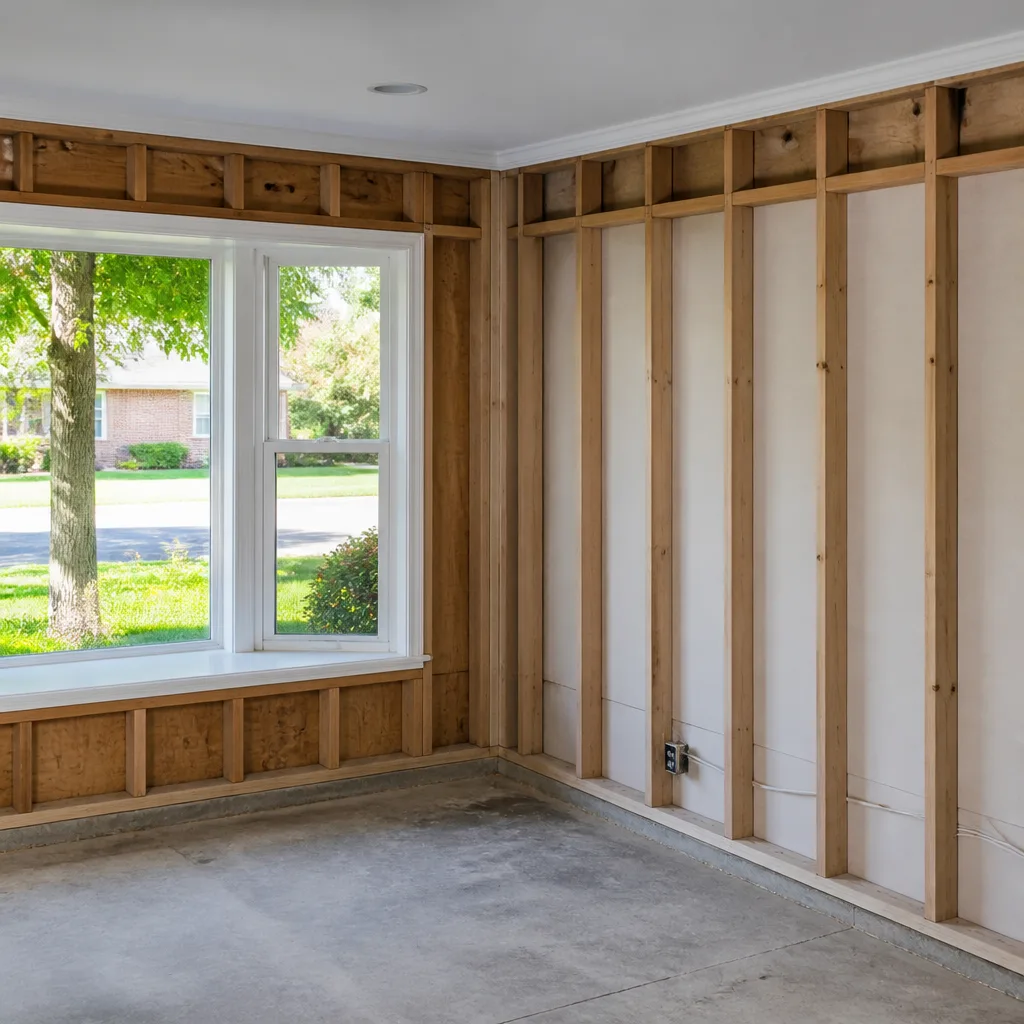
- Structural drying affecting the building envelope. When water intrusion requires opening exterior walls, replacing sheathing, or modifying window or door openings, the work alters the building’s weather barrier. This requires an Alt-2 or Alt-1 filing depending on whether the opening dimensions change.
- Mold remediation above defined square footage. The NYC Department of Health and Mental Hygiene sets thresholds for regulated mold work. When mold covers more than 10 square feet in a residential building or 30 square feet in a commercial building, or when it involves HVAC systems, a mold abatement contractor must follow specific work practices and notification requirements. While this is a DOHMH rule rather than a DOB permit, the remediation often involves demolition that does require DOB filing.
- Electrical or plumbing work disturbed during demo. Water damage frequently requires cutting into walls where electrical outlets, switches, or plumbing risers are located. Any replacement or relocation of these systems requires licensed trade work and appropriate permits. In Midtown Manhattan’s pre-war buildings, electrical panels are often original or near-original, and even minor modifications can trigger upgrade requirements under current code.
- Fire damage requiring structural member replacement. When fire compromises floor joists, beams, or columns, the replacement is structural work requiring engineering sign-off and DOB filing. The inspection record must show that replacement members meet current load requirements, which in older buildings may exceed original specifications.
- Changes to occupancy or use. If restoration work includes reconfiguring rooms in a way that changes egress paths or occupancy classifications, an Alt-1 filing is required. This arises most often in combined units common in Midtown Manhattan co-ops.
The threshold that surprises most homeowners: even extensive interior demolition for drying purposes can require a permit if it exposes structural elements or affects fire-rated assemblies. A contractor who opens a wet plaster ceiling in a 1920s Midtown building and finds compromised lath may need to file for the repair work that follows, even if the initial emergency opening was exempt as “emergency work” under DOB rules.
Emergency work itself has limits. The DOB allows certain immediate actions without prior filing: stabilizing unsafe conditions, preventing water from spreading, or securing a fire-damaged structure. But the exemption covers only what is necessary to prevent immediate hazard. Permanent repairs, even if they follow directly from the emergency, require proper permitting.
We document every opening we make with photographs showing location, dimensions, and surrounding conditions. These photos serve two purposes: they support the drying log that insurers require, and they provide the “before” documentation if permit-triggering conditions are discovered and a filing becomes necessary.
Alt-1, Alt-2, and Alt-3: Which Restoration Scopes Fall Under Each
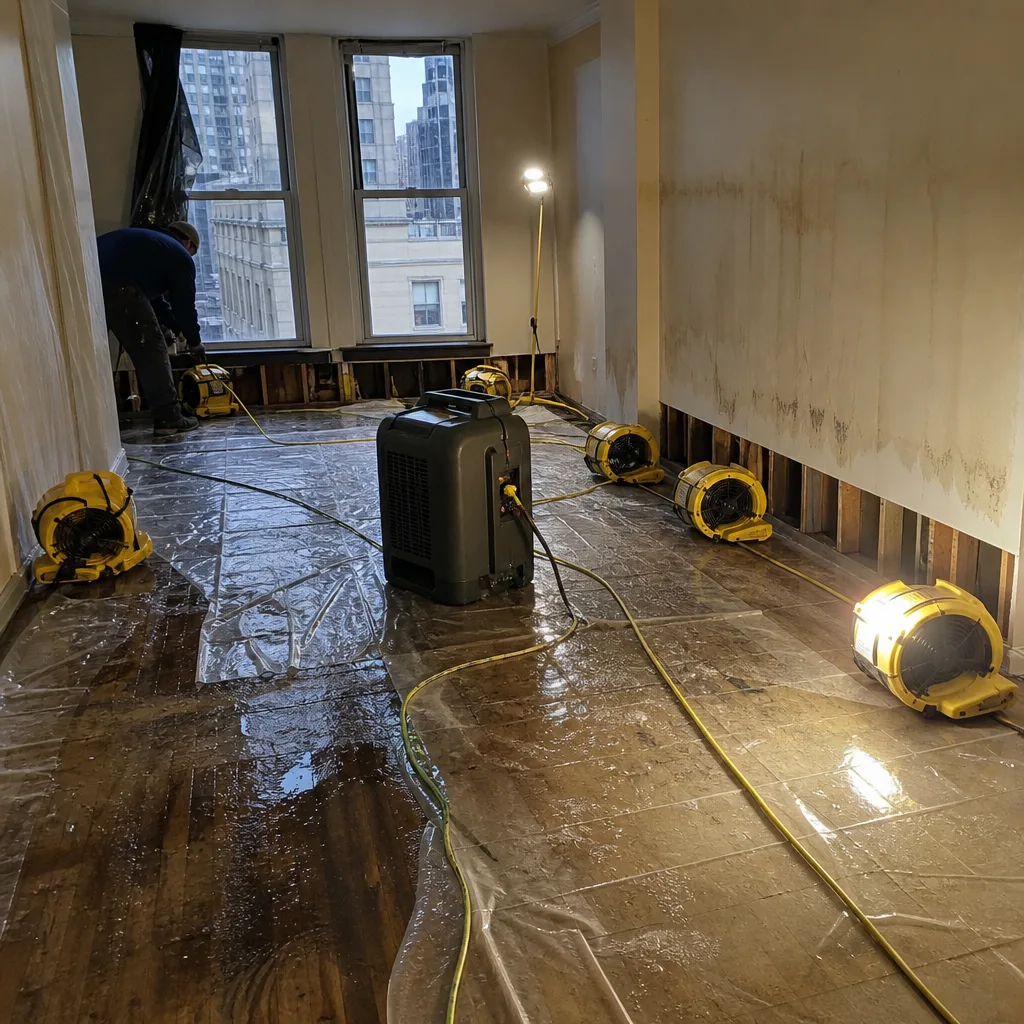
The DOB uses three alteration types, and restoration contractors routinely confuse them. Using the wrong type creates filing errors that delay inspections and can invalidate the work record.
Alt-1: Major Alterations (Type I)
An Alt-1 filing is required when work changes the building’s use, egress, or type of occupancy, or when it affects more than 50 percent of the floor area of any given space. In restoration contexts, this arises when:
- Fire or water damage requires reconfiguring a floor plan in a way that changes room count or egress paths
- A combined unit in a Midtown co-op is being restored after damage that affected both original units, and the restoration includes modifications to the combination
- Structural damage requires replacement of primary load-bearing elements that changes the structural system
Alt-1 applications require full architectural plans, engineering sign-off, and multiple agency reviews. The timeline typically runs 3-6 months for approval, which means restoration work that triggers an Alt-1 cannot proceed to permanent repair until the filing is approved. Emergency stabilization is still permitted, but the permanent scope must wait.
Alt-2: Minor Alterations (Type II)
Most restoration work falls here. An Alt-2 covers alterations that do not change use or occupancy and affect less than 50 percent of a space’s floor area. Examples include:
- Replacing water-damaged drywall, plaster, or flooring in affected rooms
- Opening and restoring exterior walls for drying or envelope repair without changing opening dimensions
- Replacing fire-damaged non-structural elements: cabinetry, trim, doors within existing openings
- Mold remediation that requires removal and replacement of finishes but not structural members
Alt-2 filings can often be submitted as “professional certification” work, where a registered architect or professional engineer certifies that plans comply with code and the DOB reviews without full plan examination. This reduces approval time to days rather than weeks, which matters when a homeowner is living elsewhere and paying temporary housing costs.
Alt-3: Minor Alterations (One-Time Inspection)
The Alt-3 is the least understood and most misused filing type. It covers specific, limited work that requires inspection but not full plan review: installation of certain equipment, limited plumbing or electrical work, or other defined categories. In restoration, an Alt-3 might apply to:
- Replacement of a water heater damaged by flooding
- Installation of temporary electrical service during restoration
- Certain types of exhaust or ventilation equipment installed during drying operations
The critical distinction: an Alt-3 is not a shortcut for work that should be an Alt-2. A contractor who files an Alt-3 for work that actually alters walls, finishes, or building systems has created a filing error that can require resubmission and may leave the work without proper inspection sign-off.
In our experience with Water Damage Restoration in Midtown Manhattan, the most common error is a contractor beginning what they believe is unpermitted emergency work, discovering scope beyond the emergency exemption, and then filing an Alt-3 to “cover” the work already done. This backward sequence almost always creates problems at inspection.
How NYC Local Law 1 and Local Law 31 Affect Restoration Work
Two local laws create pre-work requirements that restoration contractors in Midtown Manhattan cannot ignore. Both apply with special force to the pre-war buildings that dominate this market.
Local Law 1 of 2004: Lead-Based Paint Hazards
Local Law 1 requires lead-safe work practices in buildings constructed before 1960, or between 1960 and 1978 where lead paint is known to exist. The law applies to all restoration work that disturbs painted surfaces in these buildings, which includes virtually every pre-war structure in Midtown Manhattan.
Before work begins, the contractor must:
- Determine whether the building falls under the law (pre-1960 automatic; post-1960 if lead is known or presumed)
- Use EPA RRP-certified renovators for work that disturbs more than 6 square feet of interior painted surface or 20 square feet of exterior surface
- Contain the work area, avoid prohibited methods like open-flame burning or machine sanding without HEPA capture, and clean with HEPA vacuuming and wet wiping
- Provide the homeowner with the EPA pamphlet “Renovate Right” before work begins
The documentation requirement is specific: the contractor must retain records of certification, the pamphlet delivery, and work practices for three years. We include these records in every restoration file we deliver, because insurers and future buyers may request them.
The intersection with water damage is particularly important. Wet plaster or drywall with lead paint underneath creates a hazardous dust risk during demolition that dry removal does not. The moisture changes the material’s friability, and standard lead-safe practices must account for this. We have seen contractors in Midtown buildings skip the wet-wiping step after water-damaged lead paint removal, leaving lead dust that failed post-work clearance testing.
Local Law 31 of 2018: Mold Assessment and Remediation
Local Law 31 created a licensing and separation requirement for mold work in New York City. The law mandates that:
- Mold assessment and mold remediation must be performed by separate individuals or companies; no single entity can do both on the same project
- A licensed mold assessor must develop a mold remediation plan before work begins
- A licensed mold remediator must follow that plan and cannot modify it without assessor approval
- Post-remediation verification must be performed by the assessor, not the remediator
This separation requirement creates a specific documentation chain that insurers and buyers can verify. The mold remediation plan, the remediator’s work record, and the post-remediation assessment must all be present and consistent.
For Mold Remediation in Midtown Manhattan, the practical impact is significant. A water damage job that reveals mold cannot simply continue under the same contractor’s scope. The mold portion requires separate assessment, separate licensing, and separate verification. A restoration company that handles both water damage and mold must either subcontract the assessment to a separate licensed entity or refer the homeowner to an independent assessor.
The square footage thresholds matter here too. Below 10 square feet residential or 30 square feet commercial, the full Local Law 31 process is not triggered, but the mold must still be addressed. Between those thresholds and “large-scale” remediation (defined by the New York State Department of Labor), the full licensing and separation requirements apply. Above large-scale thresholds, additional notification and work plan requirements kick in.
Pre-war Midtown buildings present a compounding factor: their construction materials and chronic moisture issues often mean that visible mold represents a larger hidden problem. A 15-square-foot visible patch in a 1920s plaster wall may indicate 200 square feet of affected cavity space. The assessor’s scope of work, and the remediator’s plan, must account for this or the post-remediation verification will fail.
Using the DOB NOW Portal to Verify Contractor Filings
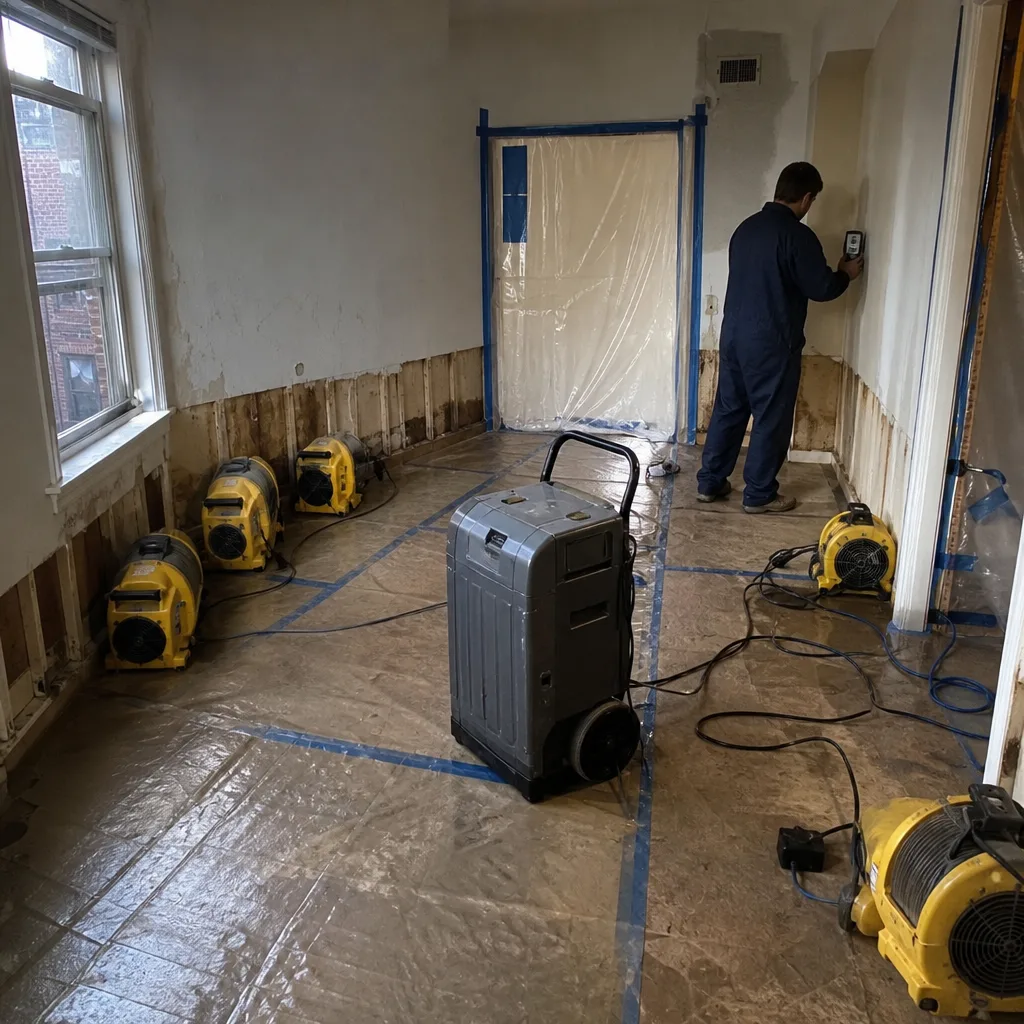
The DOB NOW: Build system allows anyone to search permit applications by property address, application number, or contractor license. This is a tool homeowners should use before work begins, not after problems appear.
Here is how to verify that your restoration contractor has filed properly:
- Obtain the property’s BIN (Building Identification Number). This 7-digit number is more reliable than street address for searches, especially in Midtown Manhattan where a single building may contain multiple addresses or where address numbering has changed. Find the BIN on the DOB’s Buildings Information System (BIS) by searching the address, or ask your building management for the certificate of occupancy which lists it.
- Search DOB NOW: Build. Navigate to the public portal at a002-irm.nyc.gov and select “Public Portal.” Choose “Search” and then “Jobs / Filing.” Enter the BIN and date range. Active permits for the property will display with application type, filing date, and job description.
- Verify the application type matches the scope. Check that an Alt-2 filing exists for work described as interior alterations, repairs, or restoration. If the job description seems too limited for the actual scope discussed with your contractor, ask for clarification before work proceeds.
- Confirm the contractor’s license. The filing will list the licensed filing representative (architect or engineer) and the contractor. Verify the contractor’s license number through the DOB’s “License Search” function. The license status should be “Active” with no outstanding violations.
- Check for open violations or stop work orders. Before authorizing work, search the property for any existing DOB violations or Environmental Control Board judgments. Open violations can complicate new filings and may indicate building-wide issues that affect your restoration scope.
A contractor who resists providing the application number or who asks you to “trust the process” is creating a documentation gap that can cost you later. Haven Standard, Clause 1 requires a written price before work begins; we extend this to permit verification by providing our application numbers and BIN search instructions in every project folder.
The portal also shows inspection appointments and results. After work is complete, you can verify that required inspections were scheduled, performed, and resulted in sign-off. An inspection marked “incomplete” or “failed” without subsequent re-inspection is a red flag that the work may not be properly closed in the record.
What Inspection Sign-Offs Create in the Public Record
When a DOB inspector approves work, the sign-off creates a permanent record accessible through BIS and DOB NOW. This record includes the inspection date, the inspector’s identification, the elements inspected, and the result. Understanding what this document is worth requires understanding what it does and does not prove.
An inspection sign-off indicates that the work visible to the inspector at the time of inspection appeared to comply with the filed plans and applicable code. It does not guarantee future performance, hidden conditions, or work that was concealed before inspection. In restoration contexts, this limitation matters: a sign-off on drywall replacement does not verify that cavity drying was complete before closure, or that mold was fully removed from behind the replaced surface.
What the sign-off does create is a documented checkpoint in a traceable process. For insurance purposes, it establishes that work was performed under permit and passed regulatory review. For resale, it shows prospective buyers and their attorneys that alterations were legally performed. For co-op and condo boards, it satisfies the building’s own compliance obligations.
The specific documents worth requesting from your contractor:
- Letter of completion or certificate of occupancy update. For Alt-1 work, this is the final document showing approved change. For Alt-2 work in buildings without certificate of occupancy changes, a letter of completion from the DOB closes the file.
- Inspection sign-off printouts. The DOB NOW record showing each required inspection, date performed, and result. These should be collected for plumbing, electrical, and construction inspections as applicable.
- Contractor’s own completion documentation. Photos, moisture readings, material specifications, and warranty information that supplement the regulatory record.
In Midtown Manhattan’s co-op market, the inspection record has taken on additional importance. Boards increasingly require documentation of any alteration work as a condition of sale approval. An unpermitted bathroom renovation from 2019, or a water damage repair without proper filing, can delay or derail a sale. The four-month delay in our opening example began with a board’s routine due diligence, not with any complaint about the work quality.
We deliver a complete permit and inspection file as standard on every job where permitting is required. This includes application numbers, inspector contact logs, sign-off dates, and instructions for future owners to verify the record. It is part of the documentation package that turns a restoration invoice into a claim an insurer pays without dispute.
Building Your Restoration File for Insurance and Resale
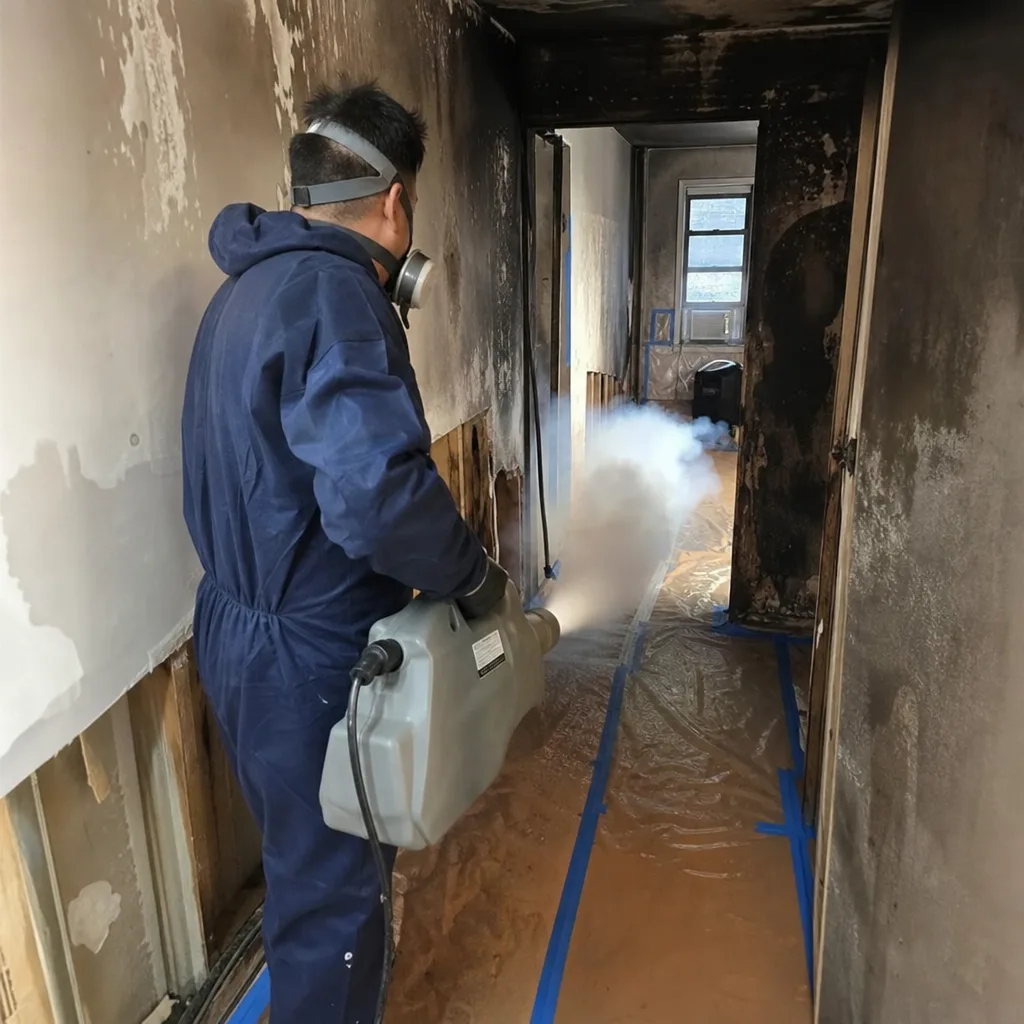
The permit and inspection record is one component of a complete restoration file. Insurers, adjusters, and future buyers each look for different documentation, and the file should satisfy all three.
For insurance, the critical documents are:
- The written scope and price agreed before work began (Haven Standard, Clause 1)
- Daily drying logs with psychrometric data: temperature, relative humidity, and specific humidity readings for each affected area, recorded with equipment serial numbers
- Photo documentation of conditions at each visit: moisture meter readings visible in frame, equipment placement, material removal progress, and final dry standard achievement
- Material invoices and specifications, including manufacturer data sheets for replacement products
- Permit applications, inspection appointments, and sign-offs
- Post-remediation verification where mold was involved, including laboratory results if testing was performed
Psychrometric data, for readers unfamiliar with the term, is the measurement of air and material moisture conditions that determines when drying is complete. We record this with calibrated meters and log it against the drying goals established in our initial assessment. Vapor pressure differential, the difference in moisture concentration between wet materials and the surrounding air, tells us whether the drying equipment is effectively moving moisture out of the structure or merely circulating humid air.
For resale, add:
- A narrative summary of what occurred, what was done, and what was replaced
- Warranty documents, including our 365-Day Done Right Promise under The Haven Standard
- Contractor license verification and insurance certificates
- Any environmental testing results: lead clearance, mold post-remediation verification, air quality
The narrative summary matters because building records show what was filed, not why. A future buyer seeing an Alt-2 for “interior alterations” in 2023 will not know this followed a pipe rupture unless the owner provides context. We prepare this summary as a standard deliverable.
For Fire & Smoke Damage Restoration in Midtown Manhattan, the file has additional complexity. Fire restoration often involves both emergency board-up (which may be exempt from permit) and permanent structural repair (which requires filing). The documentation must clearly separate these phases, with dates, photos, and permits corresponding to each. Smoke damage that requires HVAC cleaning or replacement adds mechanical system records to the file.
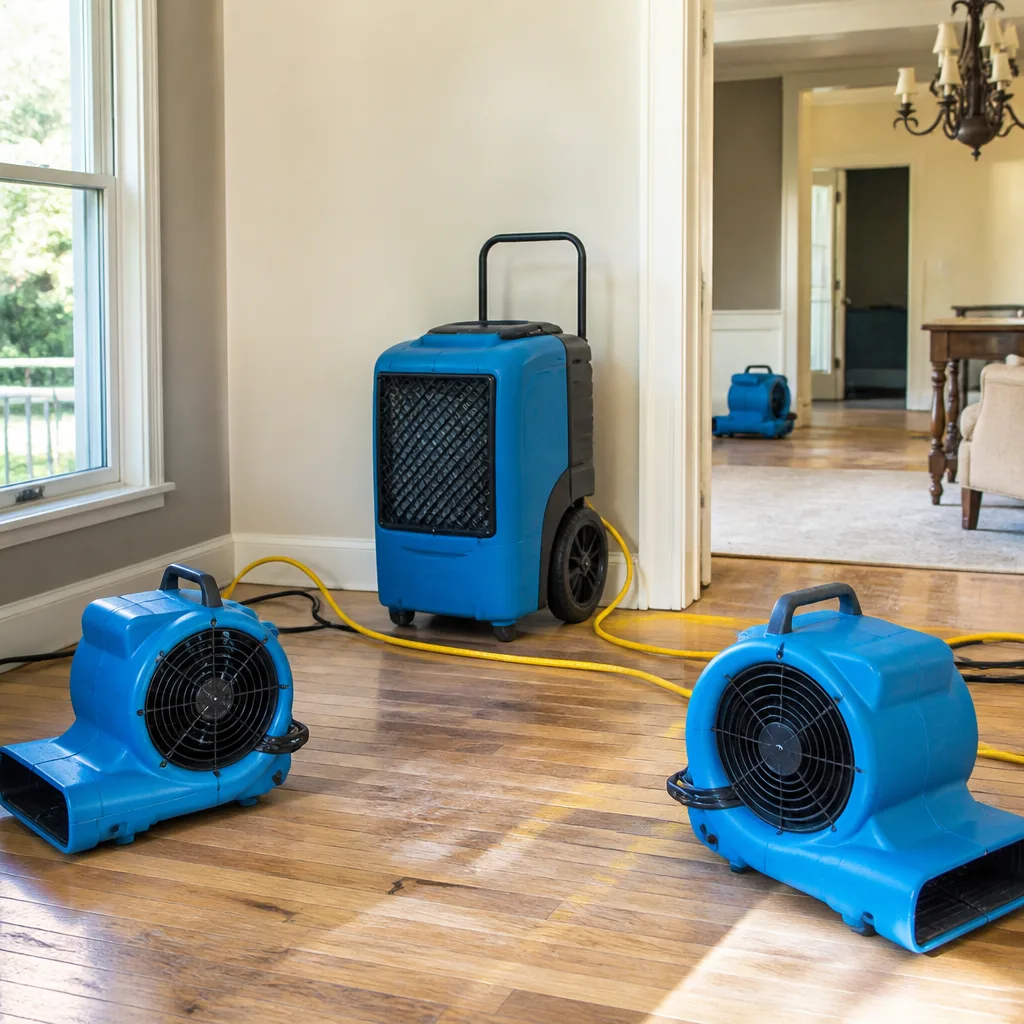
Our equipment documentation supports this process. We deploy professional-grade drying systems from B-Air and Injectidry, among others, and record equipment placement, runtime, and removal in the daily log. This creates a verifiable chain: the moisture readings justify the equipment, the equipment runtime justifies the invoice, and the invoice matches the written scope.
Common Mistakes to Avoid
- Assuming emergency work needs no documentation. The DOB emergency exemption covers only immediate hazard mitigation. A contractor who performs “emergency” demolition, installs replacement materials, and never files has created unpermitted work. Verify where the emergency phase ended and the permanent scope began.
- Accepting a contractor’s verbal assurance that permits are “handled.” In Midtown Manhattan, we have seen contractors claim filing responsibility while never submitting applications, leaving the homeowner with completed work that cannot be verified. Request the application number and verify it yourself through DOB NOW before payment in full.
- Failing to separate mold assessment from remediation. Local Law 31’s separation requirement is strict. A single company that assesses and remediates the same mold project has violated the law, and the documentation will not withstand scrutiny from insurers or buyers.
- Neglecting lead-safe practices in pre-war buildings. Local Law 1 applies to virtually every residential building in Midtown Manhattan constructed before 1960. Contractors who skip containment, HEPA cleanup, or the required homeowner notification create liability that attaches to the property owner.
- Confusing Alt-2 and Alt-3 filings. An Alt-3 filed for work that should be an Alt-2 will fail inspection or require refiling. The delay can extend temporary housing costs and complicate insurance timelines.
- Not requesting inspection sign-offs before final payment. A contractor who has been paid in full has reduced incentive to complete the inspection process. Structure payment milestones around permit milestones: deposit for emergency work, progress payment at rough inspection, final payment after sign-off.
- Discarding restoration documentation after insurance settlement. The file has value beyond the current claim. Keep permits, inspection records, photos, and warranties for the duration of ownership, and provide them to future buyers.
When to Call a Professional
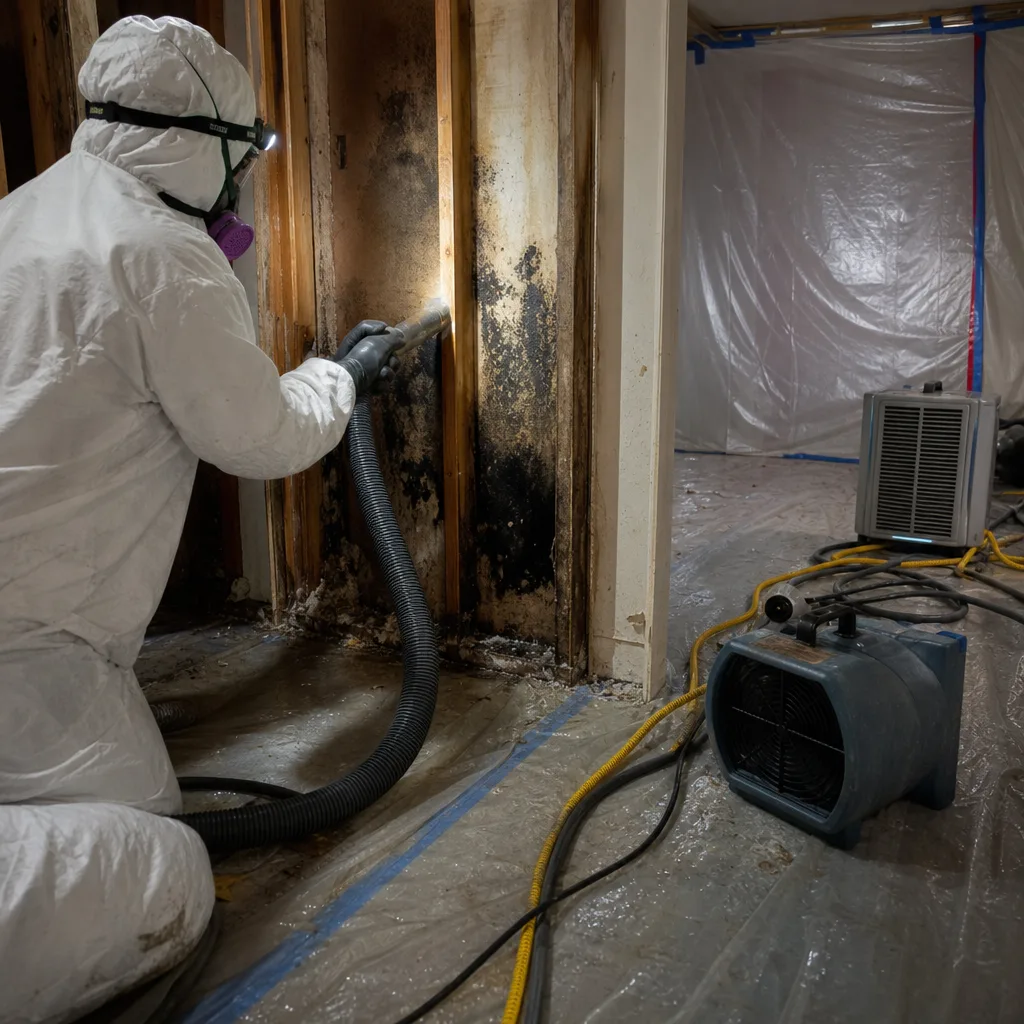
Call a licensed restoration professional when water, fire, or mold damage affects building systems, exceeds surface-level cleanup, or occurs in a regulated building type. Our How to Hire a Damage Restoration Contractor in Midtown Manhattan: A Step-by-Step Guide walks through the vetting process. In Midtown Manhattan, this describes most incidents in pre-war co-ops and condos, where Local Law 1 lead requirements, co-op board alteration agreements, and aging infrastructure compound the complexity.
Specific scenarios requiring professional involvement: visible mold exceeding 10 square feet in a residence; water damage requiring wall or ceiling opening; fire damage with suspected structural compromise; any damage in a building with known lead paint; and situations where insurance coverage is uncertain and documentation will determine claim outcome.
DryMark Restoration Midtown Manhattan offers free estimates in Midtown Manhattan. Every estimate is delivered in writing before work begins, with permit requirements identified and explained. Call (862) 212-1646 to schedule assessment.
Frequently Asked Questions
It depends on the scope. Emergency water extraction and surface drying typically do not require a DOB permit. Opening walls or ceilings for cavity drying, replacing drywall or plaster, or any work affecting electrical or plumbing systems triggers permit requirements. Your building’s alteration agreement may impose additional requirements beyond city code. Call (862) 212-1646 for a written scope that identifies applicable permits before work begins. You can also explore more guides & resources on our blog.
Use the DOB NOW: Build public portal with your building’s BIN. Search active jobs by date range and verify the application type matches the work scope. An Alt-2 should appear for most interior restoration; an Alt-1 only if use or occupancy changes. The filing should list your contractor’s license number, which you can verify as active through the DOB license search. We provide application numbers and search instructions in every project folder.
Yes, particularly in co-op buildings. Sale applications require disclosure of alterations, and boards routinely check DOB records. Unpermitted work appears as a gap or violation and can delay approval while the owner retroactively files or removes the work. In our opening example, the four-month sale delay resulted from exactly this process.
Most standard homeowners and HO-6 policies cover necessary permits and inspections as part of the restoration scope, but documentation requirements vary by carrier. The key is establishing that the permit was required for the covered loss and that the work was performed according to filed plans. We document this connection explicitly in our insurance packages, with permit applications cross-referenced to the loss description and scope of work.
The assessor evaluates mold conditions, develops the remediation plan, and performs post-remediation verification. The remediator executes the plan. The same individual or company cannot perform both roles on the same project. This separation ensures independent verification that remediation was complete and effective. We maintain relationships with licensed assessors and refer our Mold Remediation in Midtown Manhattan clients to them for the assessment and verification phases.
Alt-2 filings with professional certification can be approved in days. Full plan examination takes 2-4 weeks. Alt-1 applications requiring multiple agency review typically run 3-6 months. Emergency work can proceed under exemption for immediate hazard mitigation, but permanent repairs must await approval. We identify permit timelines in our written scope so homeowners can plan temporary housing and insurance extensions accordingly.
The complete file should contain: the written scope and price; daily drying logs with psychrometric data; photo documentation of each visit; material specifications and invoices; permit applications and inspection sign-offs; environmental testing results if applicable; and warranty documents including our 365-Day Done Right Promise. This documentation establishes that work was necessary, properly performed, and completed to standard, which supports both current and future claims.
The Bottom Line
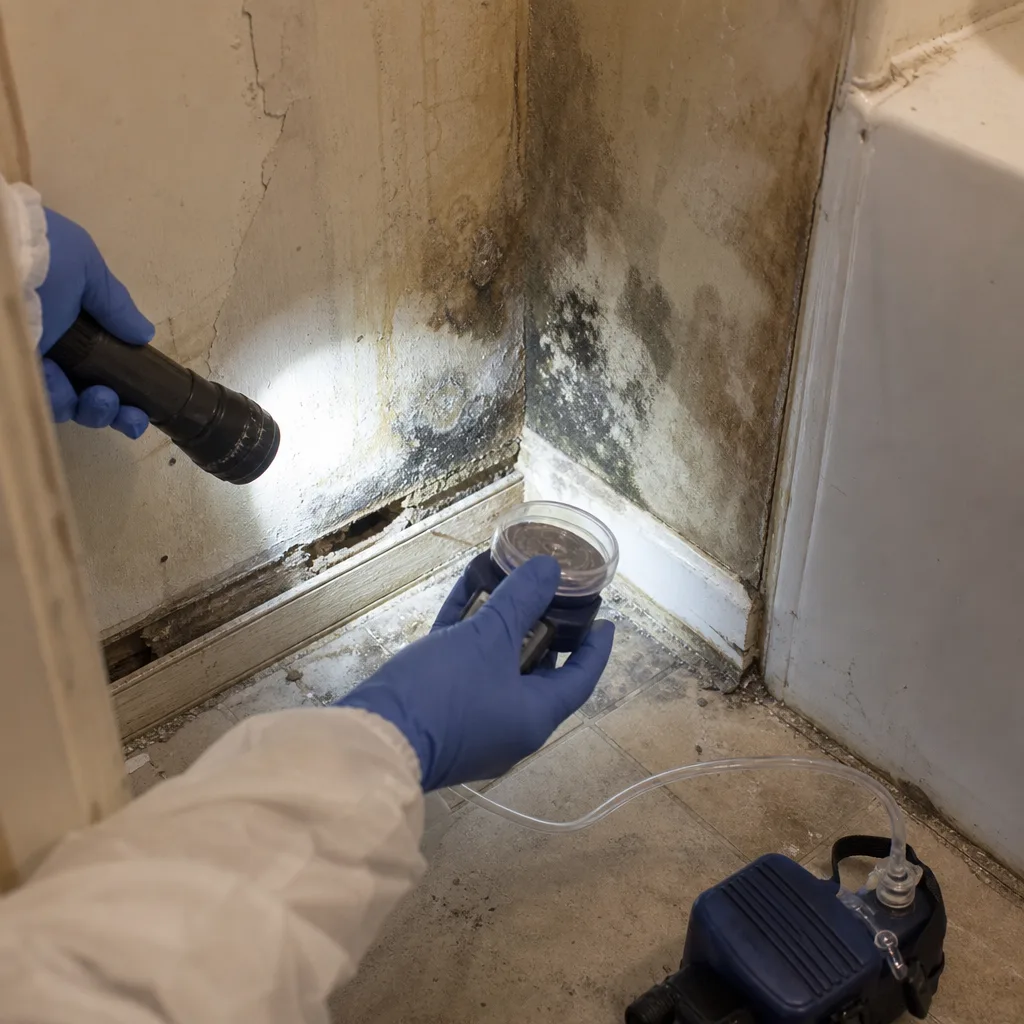
New York City’s restoration permit requirements are granular, enforceable, and increasingly relevant to property transactions. The right permit, filed correctly and inspected completely, creates a public record that protects insurance coverage and resale value. The wrong permit, or none at all, creates a hidden liability that may surface years later. Homeowners in Midtown Manhattan’s regulated building environment should verify contractor filings through DOB NOW, understand when Local Law 1 and Local Law 31 apply, and build a complete documentation file that outlasts the immediate emergency. The work of restoration is not finished when the equipment is removed; it is finished when the record is complete.
Written by Alicia Brennan, Owner at DryMark Restoration Midtown Manhattan, serving Midtown Manhattan since 2011.