
Last updated September 22, 2026
Free visual inspection and a written scope of work before any mitigation begins - photos, moisture readings, and drying logs go in your claim file
The scope we write is the scope we bill. Anything new gets shown to you, in writing, before we touch it.
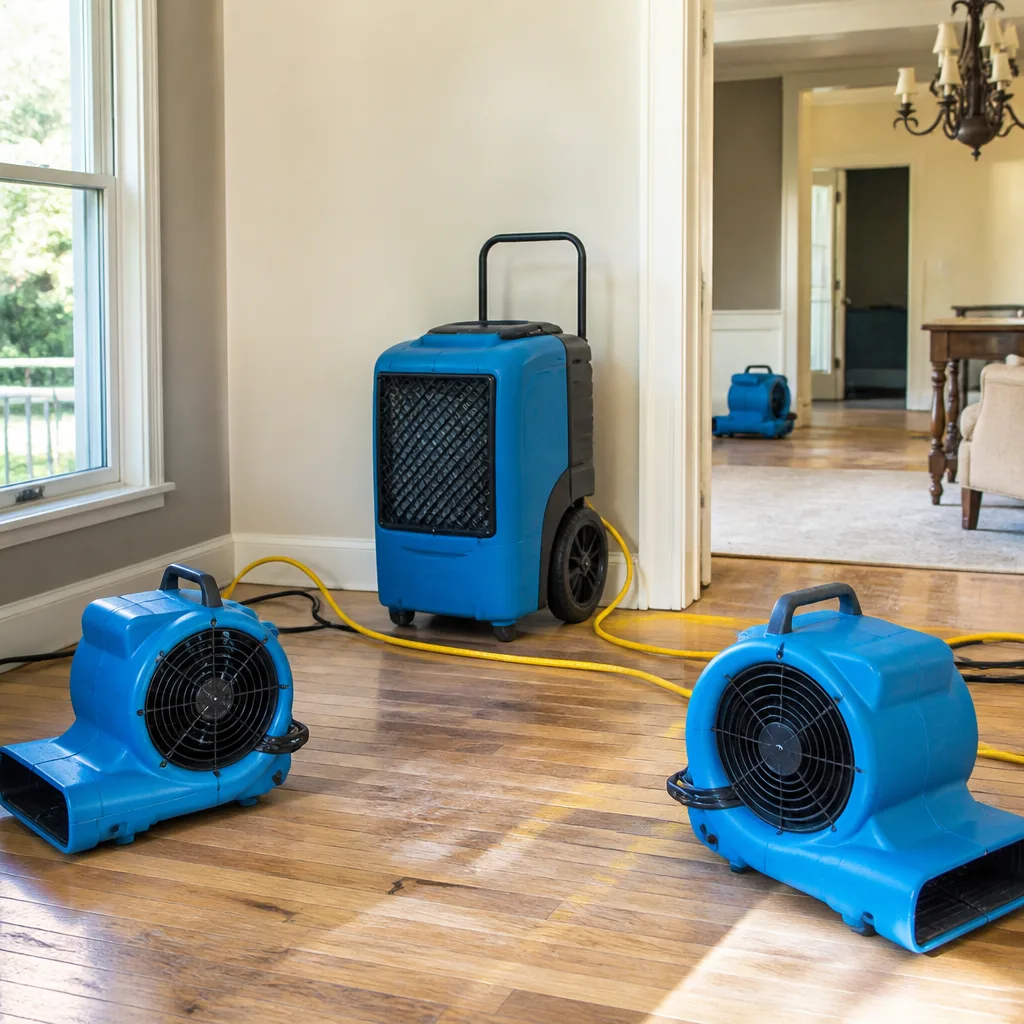

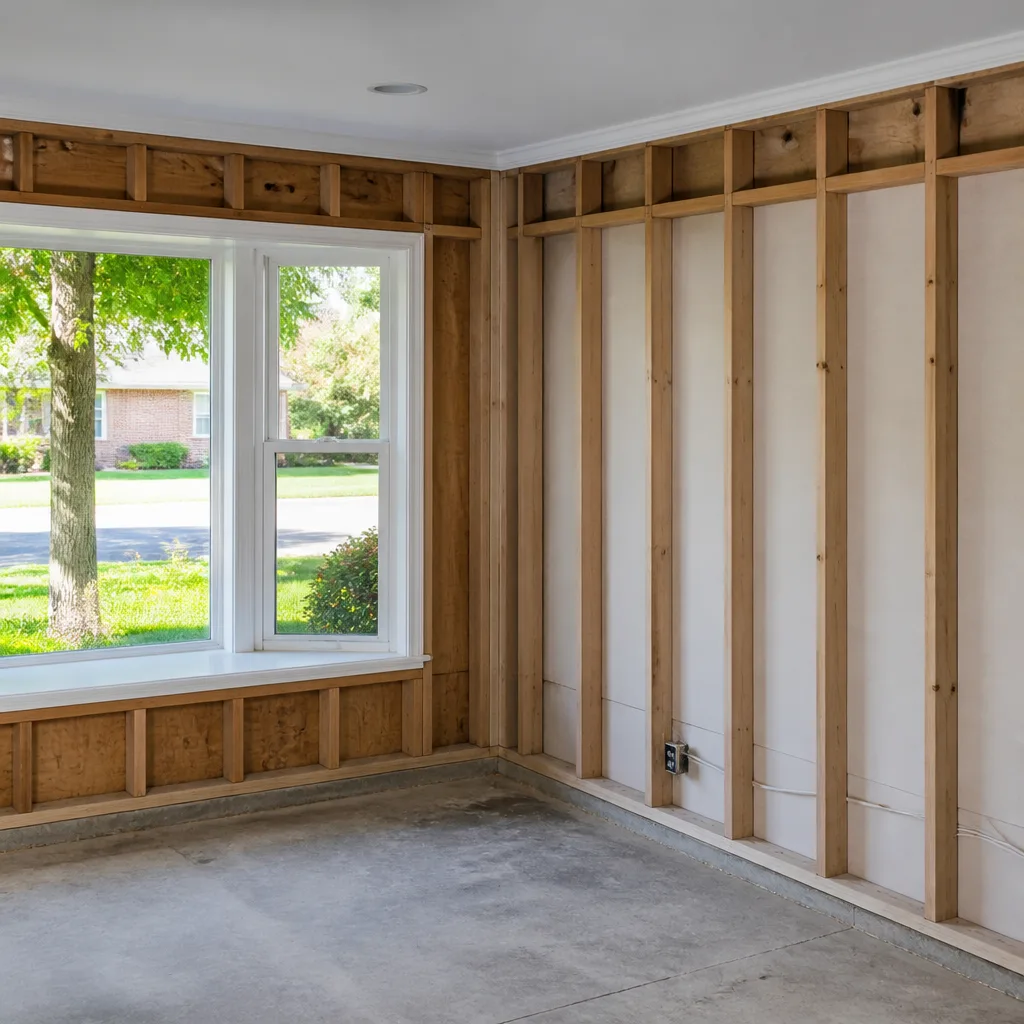

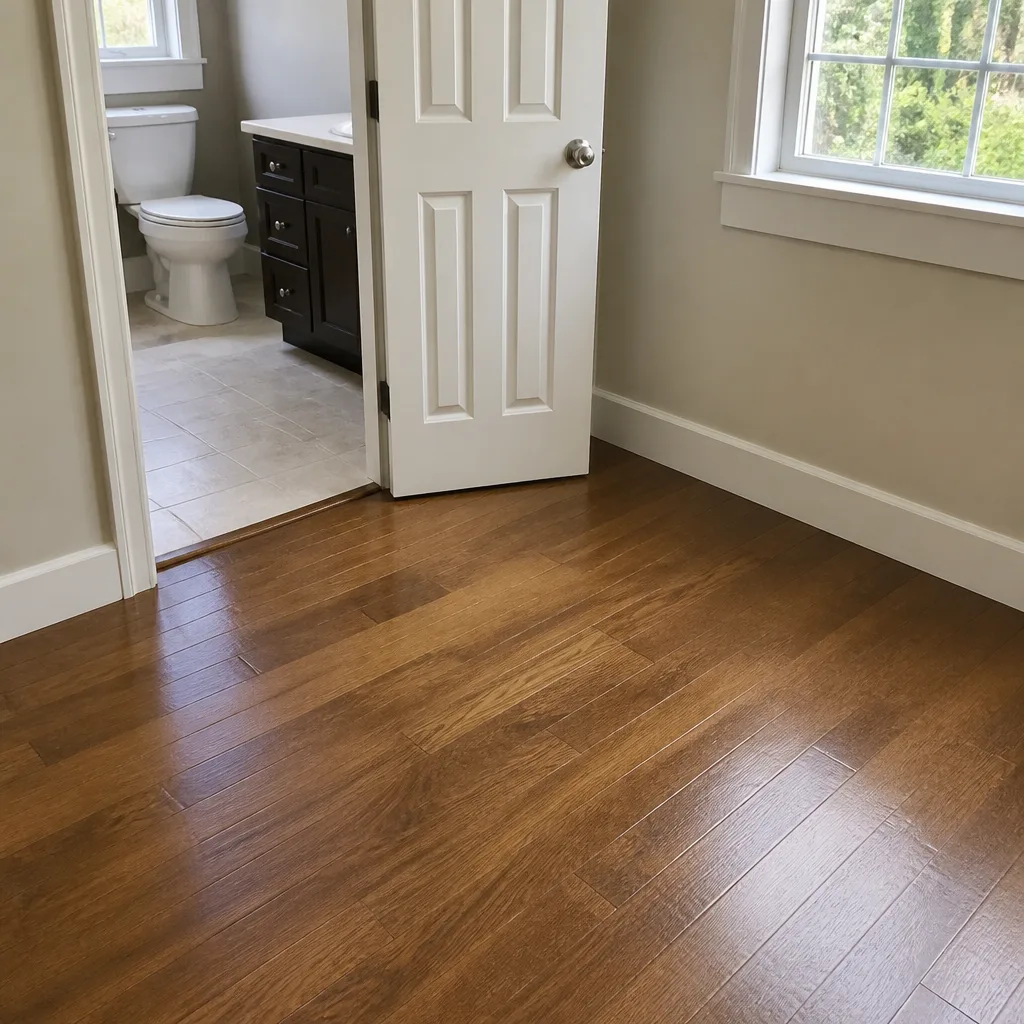
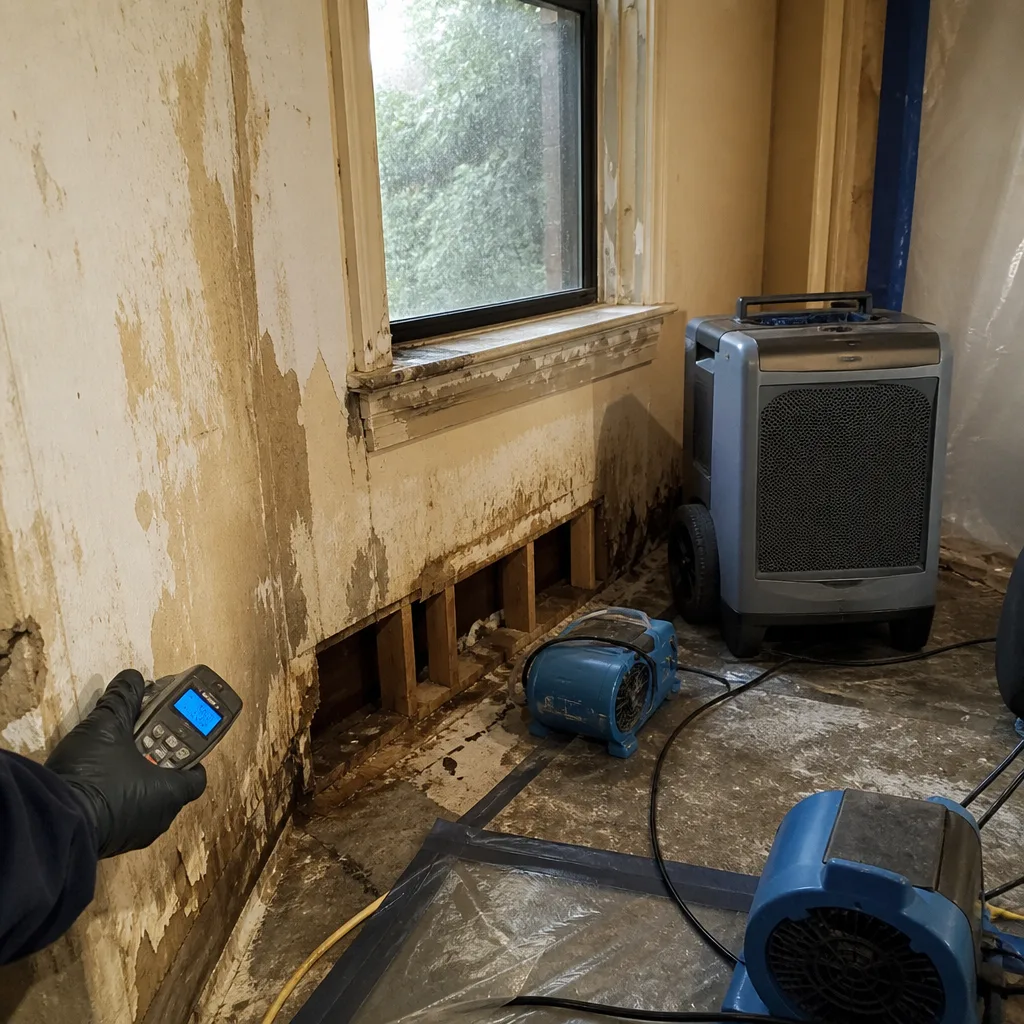 Before
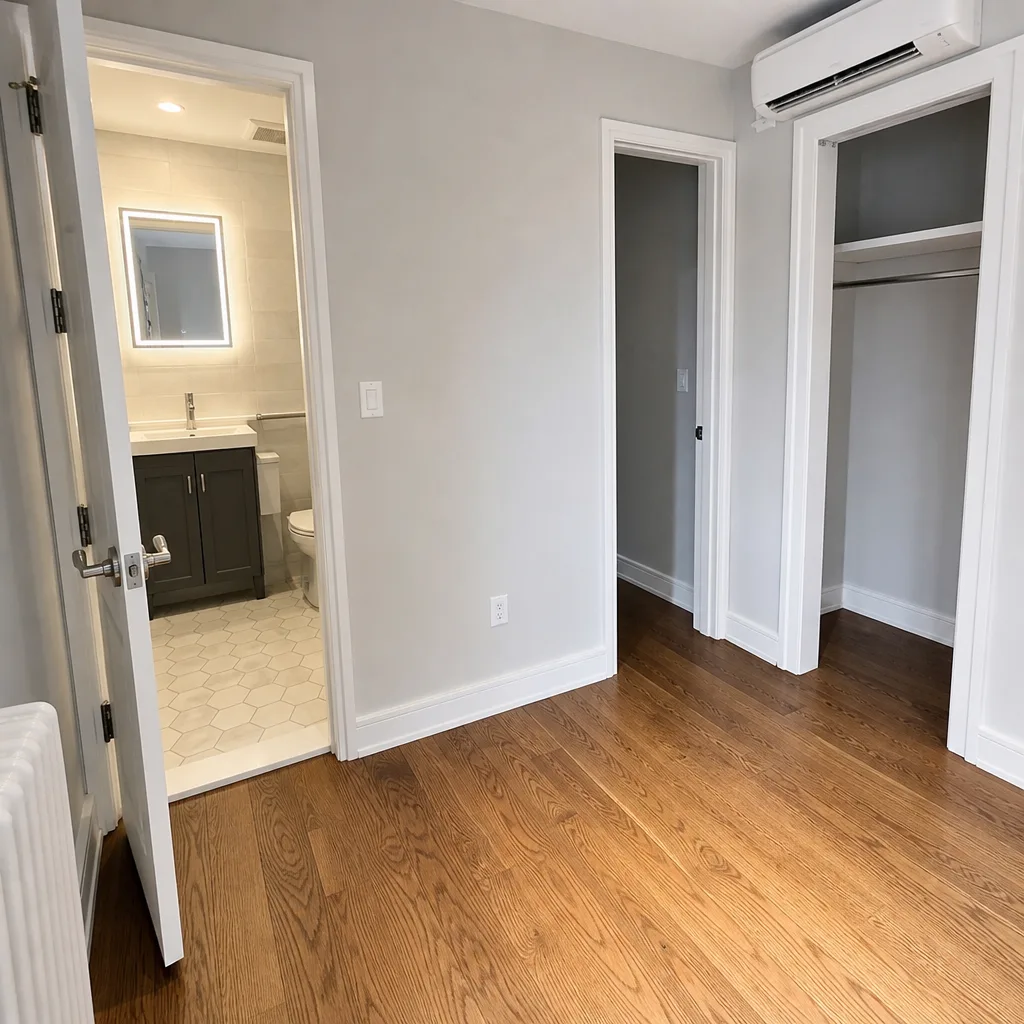 After
After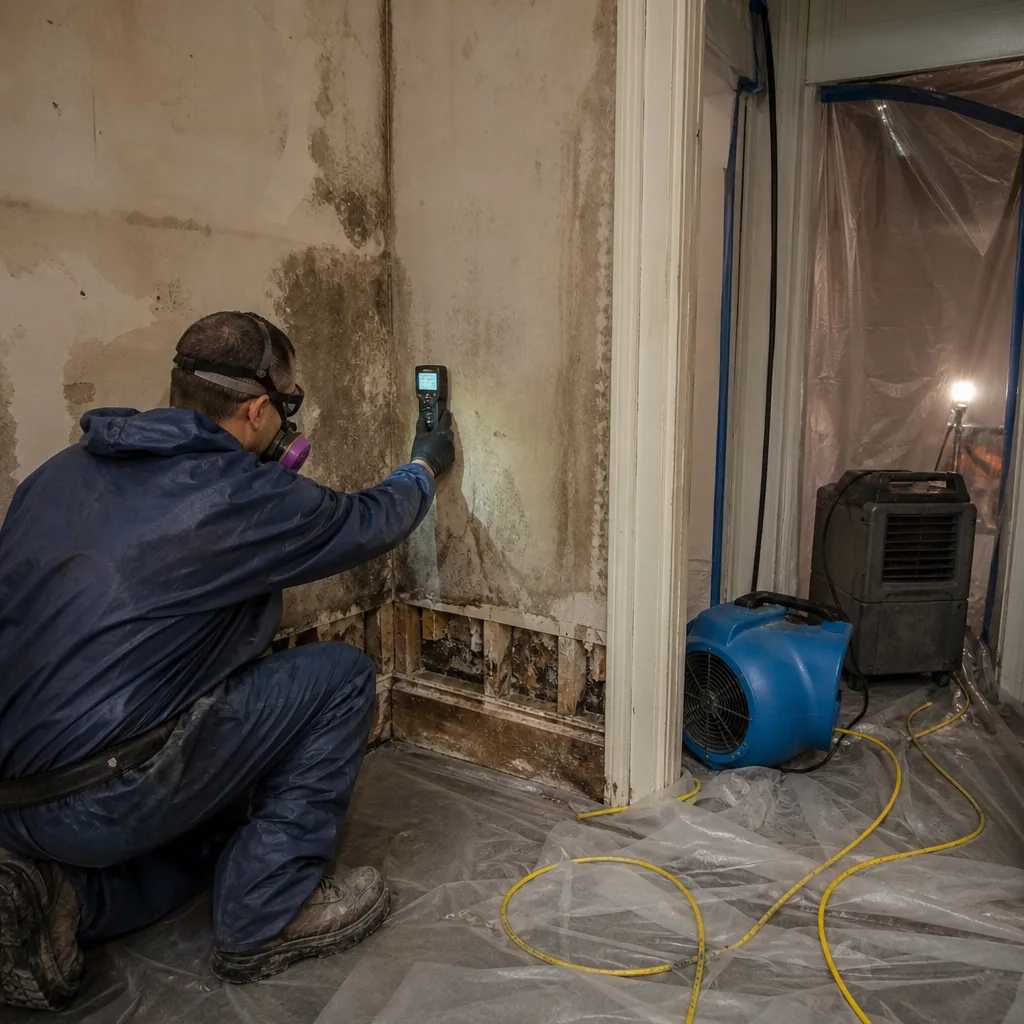 Before
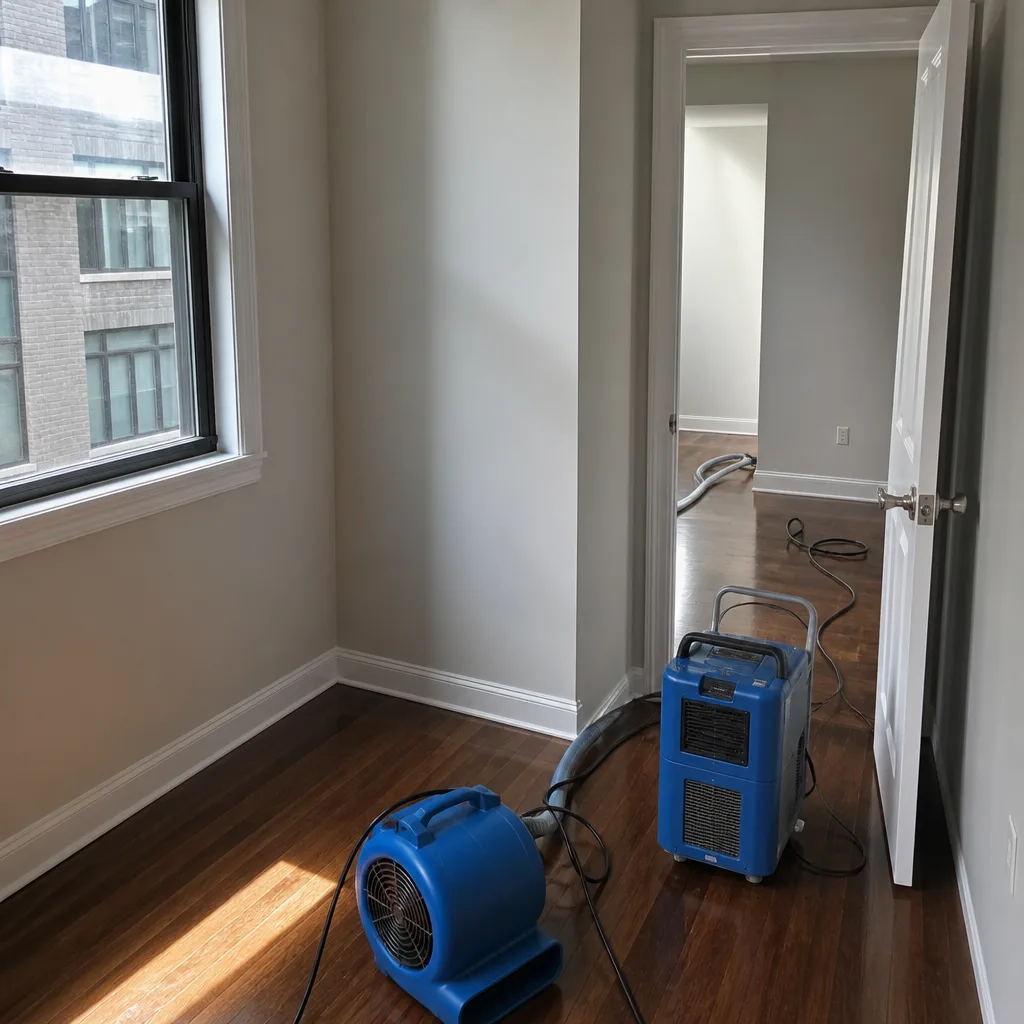 After
After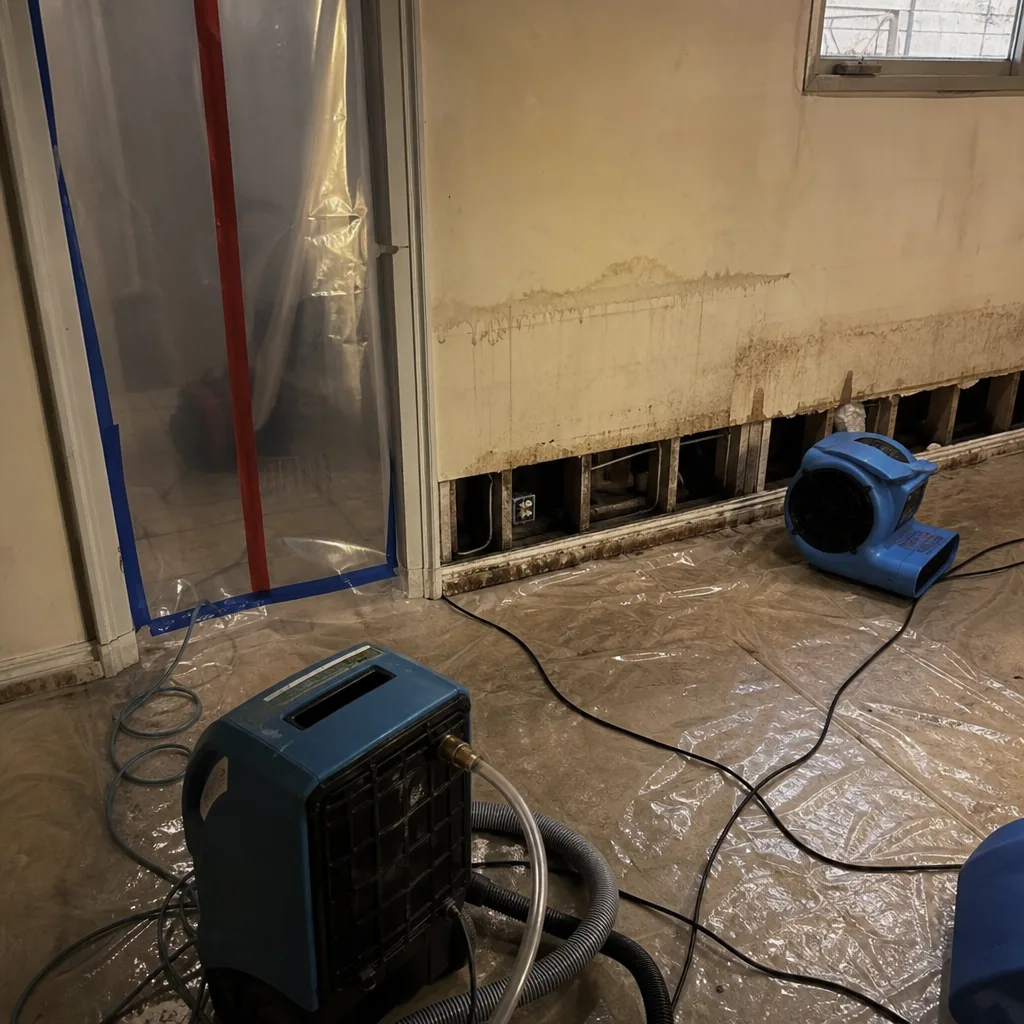 Before
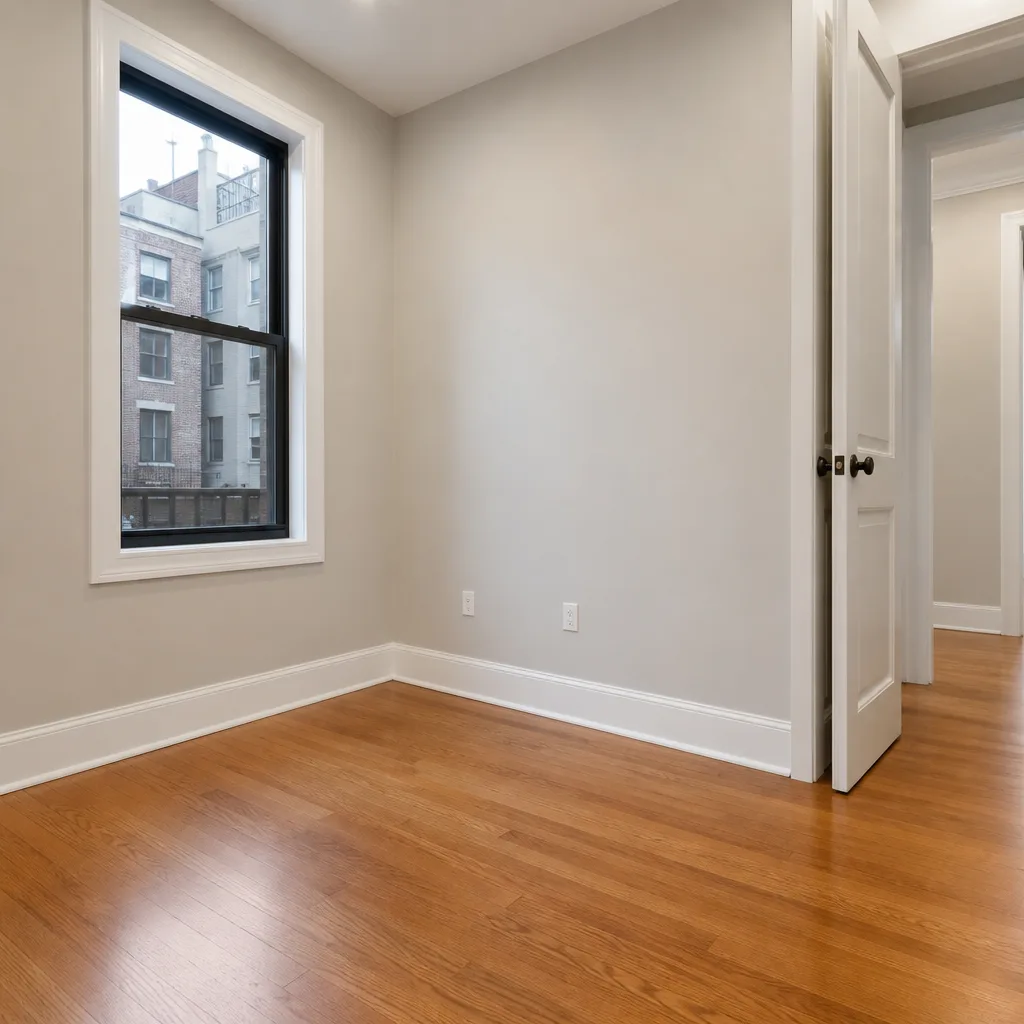 After
AfterDamage Restoration Warning Signs: A Midtown Manhattan Homeowner’s Reference Guide
A musty odor in a Midtown apartment that only appears on humid July afternoons is not an air quality annoyance. In our experience, it is a 90%+ relative humidity reading waiting to be found behind an exterior wall, and it costs a fraction to address before the baseboard separates from the plaster. Midtown Manhattan’s pre-war building stock, combined with pressurized steam heating systems and aging facade waterproofing, creates damage pathways that rarely announce themselves with standing water. Most homeowners we meet in the 10019, 10020, and 10036 zip codes first notice something subtle: a door that sticks in spring, paint that never quite dries to its original sheen, or a bathroom exhaust fan that seems to run constantly. This guide teaches you to read these signals before drywall has to come down, and to document them in a way that protects your claim, your co-op board relationship, and your wallet. For seasonal damage restoration care in Midtown Manhattan, understanding these patterns is essential.nd your investment.
Quick Answer
The warning signs that demand professional restoration in Midtown Manhattan include moisture meter readings above 16% on plaster or 20% on gypsum board, musty odors that persist beyond 48 hours after ventilation, efflorescence deposits larger than a quarter on concrete or masonry surfaces, and any door or window that binds seasonally in a pre-war building. These indicators, documented with dated photos and written notes, typically precede visible mold growth or structural damage by 30 to 90 days. Addressing them early reduces remediation costs by 60-80% compared to waiting for drywall failure.
Table of Contents
- Sensory Warning Signs Ranked by Urgency
- Structural Behavioral Signs in Pre-War Buildings
- How to Use a Consumer Moisture Meter
- Legally Significant Warning Signs in Co-Ops and Condos
- The Pre-Call Documentation Checklist
- What Waiting Costs in Midtown Manhattan
- Common Mistakes to Avoid
- When to Call a Professional
- Frequently Asked Questions
BeforeAfterSensory Warning Signs Ranked by Urgency
Not every odd smell or stain requires emergency dispatch. The key is matching the sensory signal to a measurable threshold, then tracking whether it persists or worsens. We have restored over 12,000 homes since 2011, and the pattern is consistent: homeowners who learn to rank these signs avoid both unnecessary panic and catastrophic delay. See our DIY vs Professional Damage Restoration guide for Midtown Manhattan homeowners to know when to call.
Odor: The First and Most Reliable Indicator
Musty, earthy, or wet-cardboard odors indicate active microbial growth at relative humidity above 60% on an organic surface. The threshold matters. A faint smell that disappears when you open a window for two hours suggests ambient humidity, not colonization. A smell that returns within four hours of closing the window, or that intensifies when the heat cycles on, indicates a moisture source behind the finish material.
In Midtown Manhattan, we regularly see this pattern in units above the 15th floor of pre-war buildings on West 57th Street and along Sixth Avenue. The combination of wind-driven rain against aging mortar and steam pipe condensation in wall cavities creates pockets where relative humidity stays above 70% year-round. The odor is your moisture meter’s cheaper cousin. Trust it, but verify it.
Visual Signals: What Size and Location Reveal
Paint bubbling or blistering smaller than a dime, isolated to a single wall, often indicates a one-time event: a window left open during a storm, an overfilled bathtub in the unit above. Monitor it. Photograph it weekly. If it does not expand or darken, it may dry without intervention.
Bubbling larger than a quarter, especially if it crosses wall-to-ceiling joints or appears in a linear pattern following a pipe chase, demands a moisture reading. The same applies to efflorescence, the white powdery deposit that appears on concrete, brick, or block surfaces. A dusting you can wipe away with a finger suggests seasonal moisture wicking. A crystalline buildup that returns after cleaning, or that covers more than 4 square inches, indicates a continuous water source.
Staining follows similar rules. Yellow-brown water stains with defined edges suggest a past leak that may be inactive. Stains with feathered, expanding edges, or that darken after rain, are active. In Midtown’s limestone-clad buildings, we see this frequently where facade pointing has failed, allowing water to migrate through the masonry and appear as staining on interior party walls.
Tactile and Thermal Signals
A wall that feels cool to the touch in summer, or warm in a specific spot in winter when the heat is off, indicates thermal bridging through moisture. Drywall should feel neutral to ambient temperature. A 5-degree Fahrenheit differential, confirmed with an infrared thermometer, localizes a moisture pocket without destructive testing.
Key thresholds to remember:
- Odor persisting >4 hours after ventilation: investigate with moisture meter
- Efflorescence >4 square inches or recurring after cleaning: professional reading needed
- Paint blistering >quarter-size or crossing joints: moisture meter within 48 hours
- Thermal differential >5°F from ambient: document and monitor weekly
- Any visible mold growth, any size: professional assessment, full stop
Structural Behavioral Signs in Pre-War Buildings
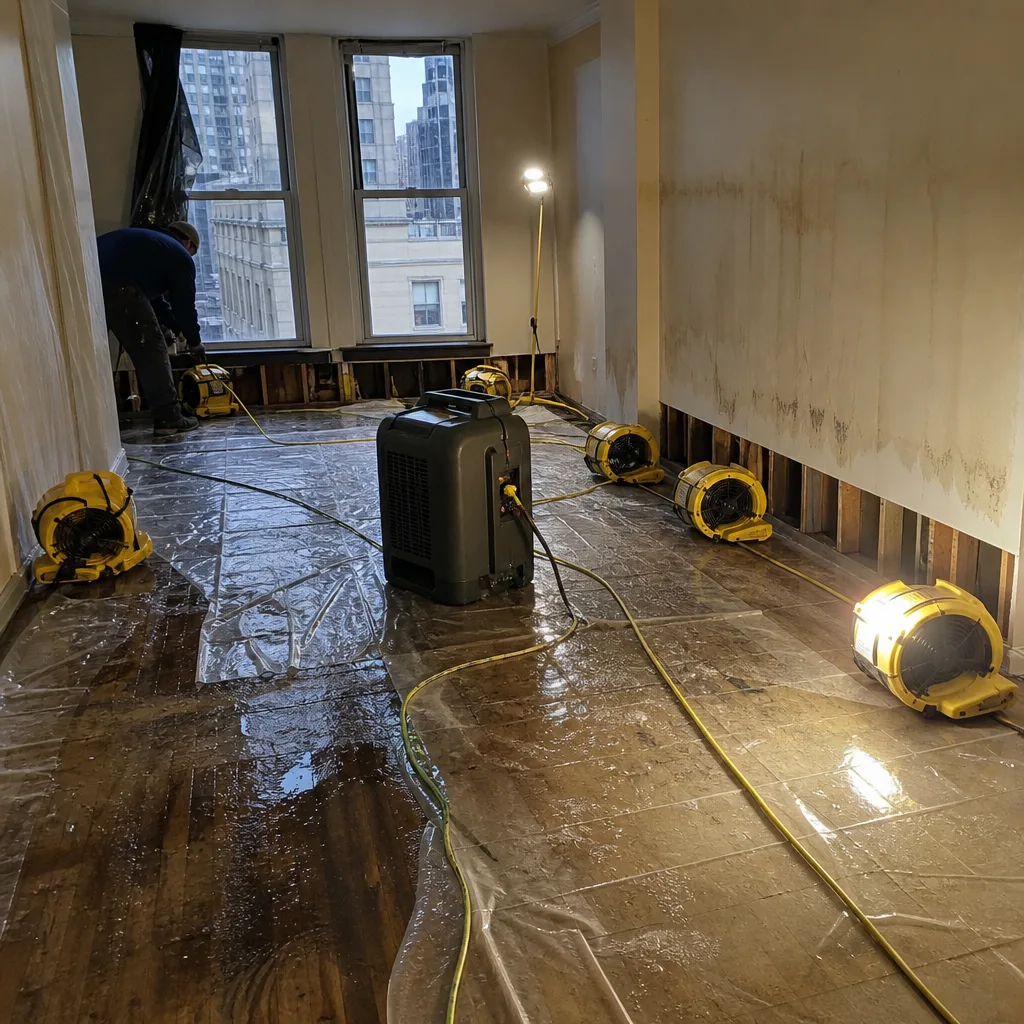
Midtown Manhattan’s housing stock is dominated by buildings constructed between 1900 and 1940, with significant post-war construction in the western corridor near Hudson Yards. These structures behave differently than suburban frame houses, and the warning signs reflect their construction.
Door and Window Binding: What It Actually Means
A door that sticks in spring but operates freely in fall is not settling. In a pre-war building with plaster walls and wood lath, it is almost always moisture-swollen framing. The seasonal pattern occurs because winter heating dries the perimeter framing, while spring humidity swells it. The critical distinction: if the binding is new, or if it is worsening year over year, the moisture source is increasing.
Document the gap. Measure the clearance between door and jamb at the top, middle, and bottom with a feeler gauge or credit card edge. A gap that varies by more than 1/8 inch seasonally, or that disappears entirely in humid months, indicates framing moisture content above 19%. That is the threshold where wood-destroying organisms become active, and where plaster keys begin to fail.
In buildings along Park Avenue and the East 50s, we see this frequently where roof parapet leaks saturate the top-floor ceiling and wall framing, then migrate down through the stack. The door binding appears two to three floors below the leak origin, by which time the roof damage has become extensive.
Plaster Cracks: Active Versus Historic
Pre-war plaster is lime-based, applied over wood lath in three coats. Hairline cracks following the lath lines are historic, often from initial curing or minor building movement. Cracks that widen seasonally, that run diagonally across lath lines, or that are accompanied by a slight bulge, indicate ongoing moisture cycling.
The bulge is the critical sign. Plaster detaches from lath when moisture swells the wood, then the plaster keys break as the wood dries. A bulge the size of a dinner plate, even without visible moisture, means the plaster has lost 50% or more of its mechanical attachment. It will fail catastrophically, often during the next heating season when differential shrinkage stresses the remaining keys.
Floor Deflection and Tile Failure
Midtown bathrooms in pre-war buildings often have mortar beds 1.5 to 2 inches thick beneath ceramic tile. When a leak develops in the waste line or supply, the mortar bed acts as a reservoir, holding 2 to 4 gallons of water per square yard before any visible sign appears. The first warning is often a hollow sound when tapping tile, or grout that crumbles despite appearing intact.
Floor deflection in wood-framed sections, typically found in townhouses and low-rise buildings in the West 40s and 50s, indicates joist moisture content above 20% or, worse, concealed subfloor decay. A floor that bounces perceptibly when walked on, or that has developed a noticeable slope, requires immediate professional assessment. The structural capacity of wood decreases by approximately 2% for every 1% increase in moisture content above 15%.
How to Use a Consumer Moisture Meter
A pin-type moisture meter costs $40 to $80 and removes the guesswork from every other sign on this list. We recommend every Midtown homeowner keep one, particularly in buildings with known facade or roof issues.
Baseline Readings for Common Midtown Materials
Before you can interpret a reading, you need a baseline. Take readings in areas you know are dry: an interior closet wall, a ceiling area far from plumbing, a floor area away from exterior walls. Record these as your building’s normal.
| Material | Normal Range | Elevated (Monitor) | Critical (Action Required) |
|---|---|---|---|
| Plaster (lime-based, pre-war) | 8-12% | 13-18% | >18% |
| Gypsum board (post-war) | 5-9% | 10-16% | >16% |
| Concrete block or slab | 4-7% | 8-12% | >12% |
| Wood framing, subfloor | 6-11% | 12-19% | >19% |
| Hardwood flooring | 6-9% | 10-14% | >14% |
These percentages are wood moisture equivalent (WME) readings, the standard output of most consumer pin meters. The meter measures electrical resistance between the pins; water conducts, dry material resists.
Step-by-Step Measurement Protocol
- Calibrate if required. Some meters need calibration to a known dry sample. Follow manufacturer instructions.
- Measure at multiple depths. Surface readings can be misleading. For plaster, press pins to full depth (typically 3/8 inch). For drywall, use the depth setting appropriate to your material thickness.
- Take a grid pattern. In a suspected area, measure every 12 inches horizontally and vertically. Map readings on paper or photograph the meter display at each point.
- Compare to your baseline. A reading 5 percentage points above your established normal, in a pattern that follows a vertical or horizontal line, indicates a moisture source.
- Track over time. Re-measure weekly at the same points. Stable or declining readings suggest a one-time event drying out. Increasing readings indicate an active leak.
Important limitation: pin meters cannot distinguish between liquid water and high humidity in the material. A reading of 25% on plaster could be active dripping or sustained 85% relative humidity. Both require intervention, but the source differs. For source identification, thermal imaging or a professional-grade meter with reference scale is necessary.
We document all moisture readings to IICRC standards using professional-grade equipment from Dri-Eaz and Phoenix, with readings taken at consistent intervals to produce the drying logs that accompany every claim submission. A homeowner’s initial meter survey, photographed and dated, becomes valuable baseline evidence if the situation escalates.
Legally Significant Warning Signs in Co-Ops and Condos
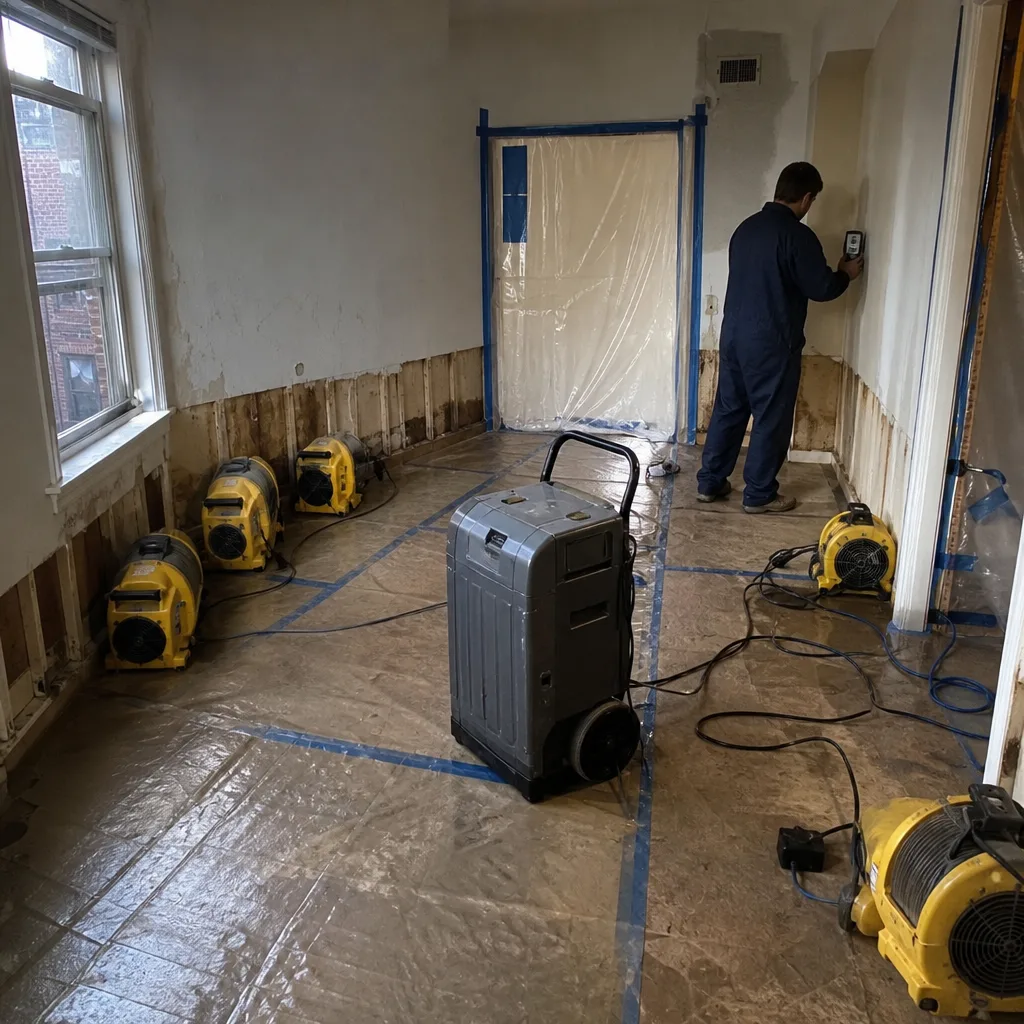
Midtown Manhattan’s housing market is overwhelmingly cooperative and condominium ownership. This legal structure creates documentation obligations that suburban homeowners rarely face. A water stain from the unit above is not merely a maintenance issue; it is potential evidence in a dispute about common element versus individual responsibility, with strict notice requirements.
The Written Notice Requirement
Every co-op proprietary lease and condo declaration in New York requires shareholders and unit owners to report water intrusion promptly, typically within 24 to 48 hours of discovery. Failure to report can shift liability for resulting damage from the building to the individual unit owner. More critically, it can void insurance coverage if the carrier determines that delayed notice allowed preventable damage.
When you observe any warning sign that could originate from another unit or a building system, your first call is to the managing agent, but your first action is documentation. Email creates a timestamp. A phone call does not. Follow every call with an email summarizing what was discussed.
Signs That Trigger Mandatory Reporting
- Water staining on ceilings, especially with defined edges suggesting a leak point above
- Odor that intensifies near plumbing stacks or riser chases, indicating possible drain line breach
- Visible moisture or efflorescence on party walls, which may indicate facade or roof failure (common element)
- Any sign of water in electrical conduit or junction boxes, which is both a building system issue and a life safety hazard
- Mold growth in areas with no interior moisture source, suggesting building envelope failure
In buildings with known facade restoration history, such as those on West 58th Street undergoing Local Law 11 compliance, efflorescence on interior walls during or after masonry work is particularly significant. It may indicate that the restoration contractor’s waterproofing details were improperly executed, creating a building liability that the board must address.
Documenting for the Board and Your Insurer
Your initial documentation should include: dated photographs of the visible sign; moisture meter readings if available; a written description of when you first noticed it, under what conditions (after rain, when heat cycled on, etc.); and the exact location relative to building features (north exterior wall, above the kitchen soffit, etc.). This is the same documentation we produce in formal assessments, and it carries weight in both board proceedings and insurance claims.
We have reviewed hundreds of claims where a homeowner’s informal documentation, created before any contractor arrived, established the timeline that determined coverage. Water damage restoration in Midtown Manhattan often begins with a dispute about when the loss started and who knew when. Your records close that gap.
The Pre-Call Documentation Checklist
Before calling any restoration contractor, run through this checklist. The 15 minutes it takes produces evidence that protects your claim, your relationship with your board, and your negotiating position on scope and price.
Immediate Actions (Within the First Hour)
- Photograph everything. Wide shots establishing location, medium shots showing the affected area in context, close-ups of specific damage. Include a timestamp. Most smartphones embed this automatically; verify it is enabled.
- Note environmental conditions. Outdoor temperature and humidity, indoor thermostat setting, whether heat or AC was running, weather in the past 72 hours. These affect moisture meter interpretation and drying strategy.
- Identify potential sources. What is directly above, below, and adjacent to the affected area? Which walls are exterior, which are party walls, where are plumbing risers?
- Check other units if possible. In a co-op or condo, ask upstairs neighbors if they have noticed anything. Their confirmation or denial shapes source identification.
- Review your insurance policy. Note your deductible, any mold coverage limits, and whether you have replacement cost or actual cash value coverage. Do not file yet; just know your numbers.
Before the Contractor Arrives
- Re-photograph with scale reference. Include a ruler or coin in the frame for size documentation.
- Take moisture readings if you have a meter, or note tactile observations (cool spots, soft drywall) if you do not.
- Prepare your questions. What documentation will they provide? Is pricing written before work begins? What standards do they follow? We answer these before being asked, because Haven Standard, Clause 1 requires it.
- Verify license and insurance. Any legitimate contractor provides this on request. New York City requires a Home Improvement Contractor license for restoration work; verify it through the Department of Consumer Affairs.
This documentation becomes the foundation of your claim file. When we arrive, we add to it: professional moisture mapping with DryMark Restoration Midtown Manhattan home equipment, thermal imaging, psychrometric data (the measurement of temperature, humidity, and vapor pressure that determines drying strategy), and a written scope with line-item pricing before any equipment is placed.
What Waiting Costs in Midtown Manhattan
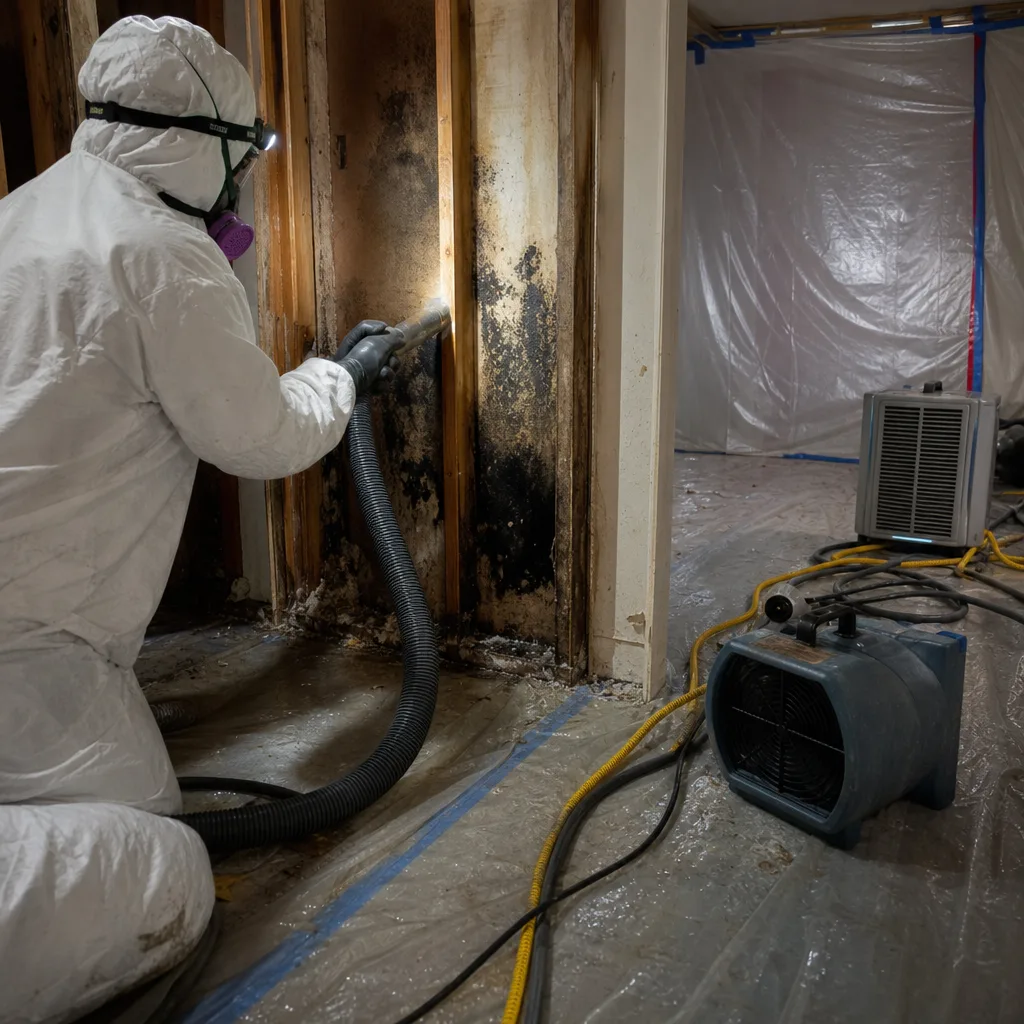
The financial penalty for delayed response is not linear; it accelerates. We have documented this across thousands of jobs, and the pattern holds whether the initial cause was a burst pipe, facade leak, or slow plumbing failure.
Category 1 water, clean water from a supply line, becomes Category 2 (gray water with microbial content) in 48 to 72 hours at room temperature. It becomes Category 3 (black water, hazardous) in 7 days. Each escalation roughly doubles remediation cost. In Midtown’s older buildings, where wall cavities contain decades of accumulated dust and organic material, the timeline compresses. We have seen Category 1 become Category 2 in 36 hours in a warm, humid summer environment with poor ventilation.
Mold follows a similar curve. Visible growth on drywall typically appears 14 to 21 days after moisture intrusion at 70% relative humidity. But the growth is already established, at the microscopic level, within 72 hours. Remediation of a 10-square-foot patch, addressed at the odor stage, might cost $800 to $1,200. The same area, after visible growth and spread to adjacent rooms, typically runs $3,500 to $6,000 in Midtown Manhattan, with additional costs for contents cleaning, temporary relocation, and potential health department notification if the affected area exceeds 30 square feet.
Structural damage in pre-war buildings adds another multiplier. Lime plaster, once saturated and dried repeatedly, loses its bond to lath and begins to powder. The repair is not patchwork; it is removal of entire wall sections, replacement of deteriorated lath, and three-coat plaster application by specialists increasingly scarce in New York. A $2,000 drying job becomes a $15,000 reconstruction.
The documentation gap compounds these costs. Without dated photos and moisture readings, insurers dispute whether damage was sudden and accidental (covered) or long-term maintenance neglect (excluded). We built Back to Dry around closing that gap, because we have seen homeowners absorb $20,000 in otherwise covered losses due to inadequate records.
Common Mistakes to Avoid
- Assuming the super’s repair solves the moisture problem. A patched pipe stops the water source but does not address absorbed moisture in surrounding materials. We have opened walls six months after a “fixed” leak to find active mold colonies on saturated insulation.
- Using bleach on visible mold. Bleach evaporates faster than it penetrates porous materials, leaving moisture that feeds deeper growth. It also destroys pigment without killing the mycelium, creating a false sense of resolution while the problem worsens.
- Ignoring seasonal patterns. A smell that disappears in October and returns in May is not imaginary. It is a moisture source activated by humidity cycles, and it will worsen year over year as organic material accumulates.
- Waiting for the board to act on common element issues. New York courts have consistently held that unit owners have a duty to mitigate their own damage even when the source is a building system. Document, notify, but do not delay protective action.
- Accepting verbal estimates. Haven Standard, Clause 1 exists because we have seen homeowners charged double initial “ballpark” figures once crews were inside with equipment running. A written price before work begins is not a preference; it is protection.
- Failing to photograph the pre-intervention condition. Without your own dated photos, you have no independent evidence if a contractor’s documentation is incomplete or disputed by your insurer.
- Overlooking the insurance implications of DIY drying. Rented fans and dehumidifiers, used without moisture mapping, often dry surfaces while leaving wall cavities saturated. Insurers may deny subsequent mold claims as resulting from improper initial response.
When to Call a Professional
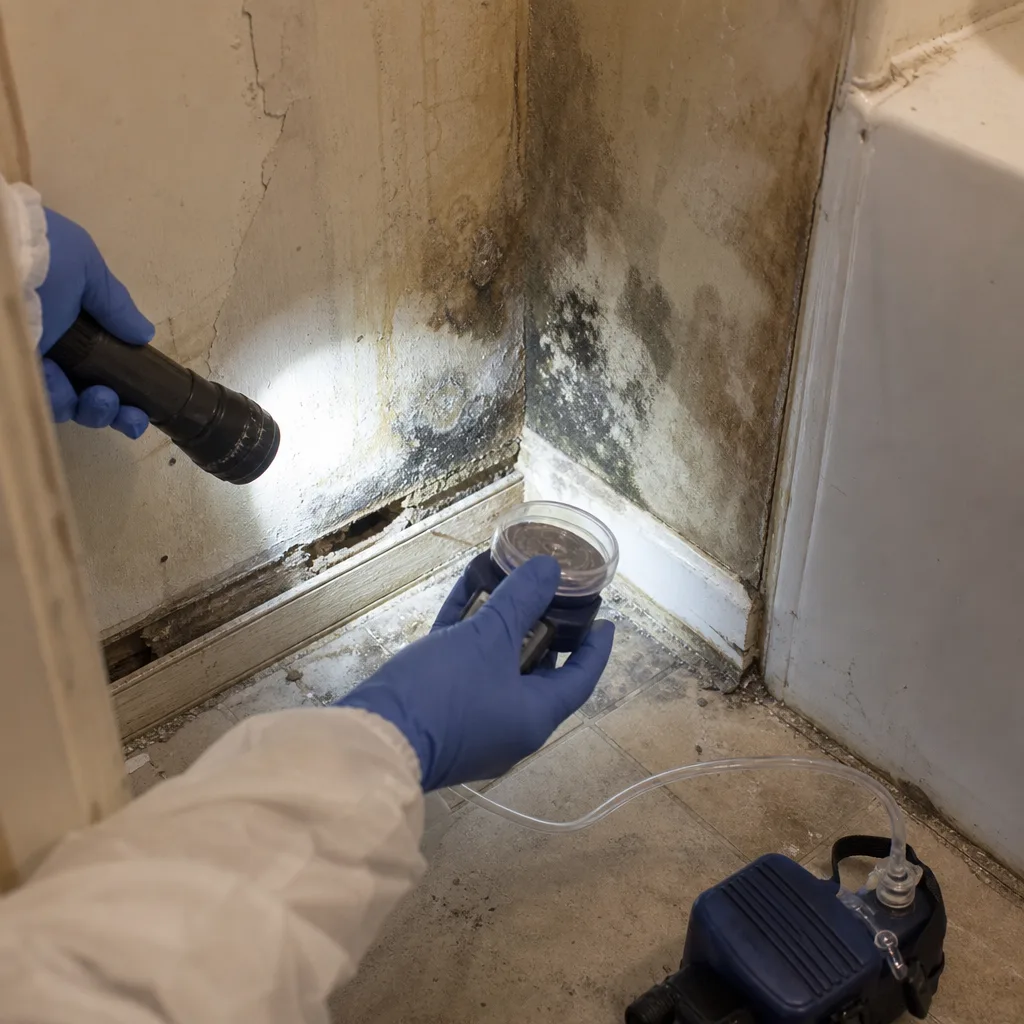
Call when moisture meter readings exceed the critical thresholds in this guide, when any visible mold appears, when odors persist beyond 48 hours of ventilation, or when structural signs (binding doors, bulging plaster, floor deflection) are new or worsening. Call immediately for any water intrusion involving electrical systems, sewage backup, or suspected fire sprinkler discharge.
DryMark Restoration Midtown Manhattan offers free estimates in Midtown Manhattan. Explore our more guides & resources for additional homeowner support. We provide a written price before any work begins, documented photo records on every visit, and moisture mapping to IICRC standards using equipment from XPOWER, B-Air, and Injectidry. Our live dispatch answers every call, 24 hours a day, 7 days a week, with no voicemail on emergency lines. Call (862) 212-1646 for a free estimate.
Frequently Asked Questions
Reputable restoration companies in Midtown Manhattan typically charge $150 to $350 for a comprehensive moisture assessment, though many, including DryMark Restoration Midtown Manhattan, apply this fee toward remediation if work proceeds. The assessment should include thermal imaging, pin and non-invasive moisture readings, and a written report with photographs. Be wary of “free inspections” that function as sales presentations without documented findings. Call (862) 212-1646 for our current assessment pricing.
It depends on your policy’s “all-risk” or “named peril” structure, and on whether the damage was sudden and accidental versus gradual. Most HO-6 condominium policies cover damage to your unit’s interior from above-unit leaks, but subject to your deductible and any mold sublimits. Co-op policies vary more widely. The critical factor is documentation: dated photos, moisture readings, and prompt written notice to the building. Without these, carriers routinely deny as “long-term water damage” or “maintenance issue.” We coordinate directly with adjusters to present our documentation in the format they require for claim approval.
A consumer-grade pin meter, used correctly, provides valid preliminary data. The limitation is interpretation: distinguishing between active leaks, humidity absorption, and residual moisture from a past event requires understanding of psychrometrics and building science. We encourage homeowners to own meters and take initial readings, then call us when readings exceed thresholds or patterns are unclear. Your readings become part of the documented timeline that supports your claim.
For active water intrusion with ongoing damage, DryMark Restoration Midtown Manhattan dispatches within 90 minutes of call receipt, 24 hours a day, 7 days a week. For assessment of warning signs without active flow, we typically schedule within 24 hours. Response time matters most in the first 48 hours, when Category 1 water can be extracted and dried before microbial escalation. After that window, the job becomes more complex and costly regardless of crew arrival speed.
Visible mold growth exceeding 10 square feet, or any growth in an HVAC system, requires professional remediation under New York City Department of Health guidelines. Below 10 square feet, on hard surfaces only, homeowners may clean with detergent and water, but must address the moisture source or growth will recur. The hidden risk is subvisible colonization: we have found extensive mold behind apparently clean drywall, detected only by moisture mapping and air sampling. If you smell mold but cannot see it, professional assessment is warranted.
At minimum: a written scope of work with line-item pricing signed before work begins; daily moisture logs showing readings at defined intervals; photographic documentation of each phase; and a final report certifying dry standard achievement. Under The Haven Standard, we also provide a 365-Day Done Right Promise, a signed warranty that if any issue related to our work recurs, we return at no charge. This documentation package is what transforms a restoration invoice into a claim an insurer pays without dispute.
The Bottom Line
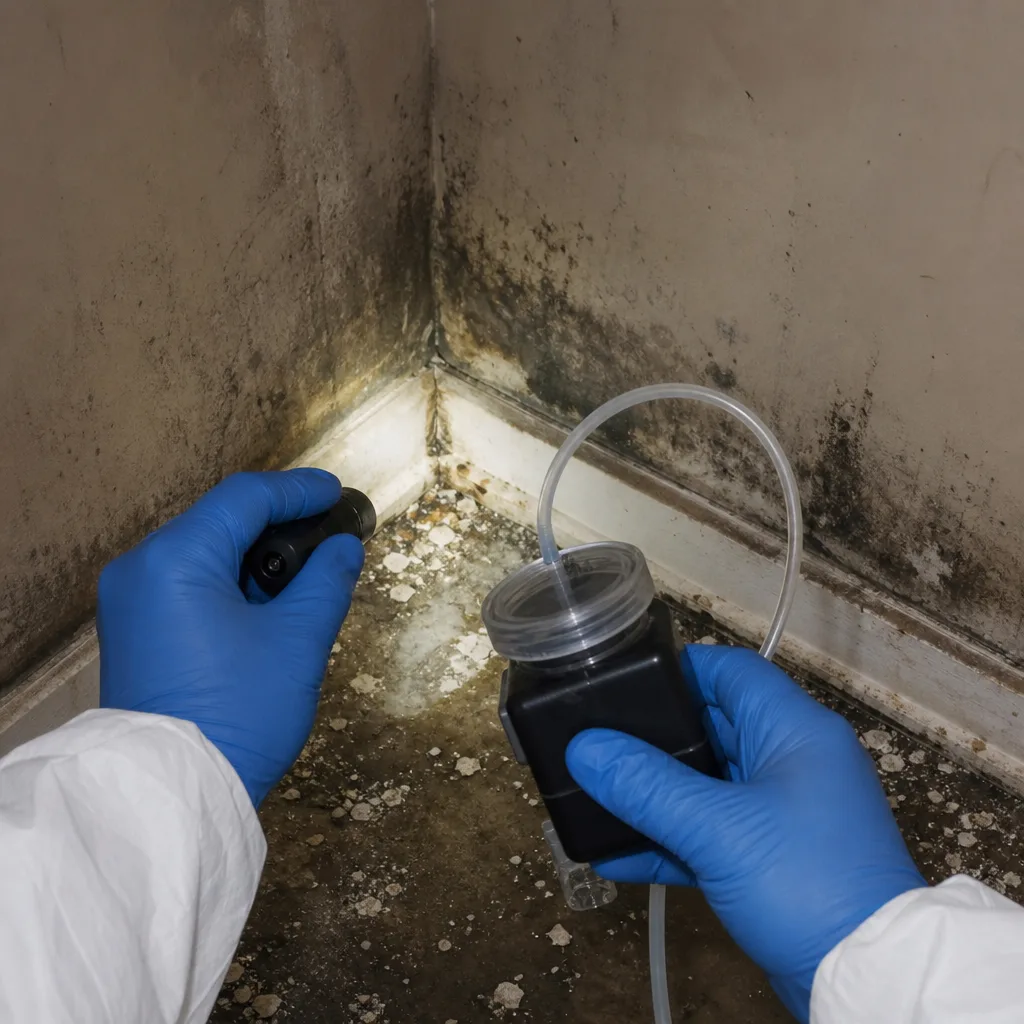
Damage restoration in Midtown Manhattan is not about responding to disasters. It is about reading buildings before they fail, documenting what you find in a way that protects your financial interests, and knowing which signals demand immediate professional intervention. The warning signs in this guide, measured against the thresholds provided, give you that reading ability. The documentation checklist ensures your evidence is admissible. And the cost data should make clear: early response, supported by proper records, is the single most effective investment you can make in your property’s preservation. When you need a partner who treats documentation as seriously as drying, we are here.
Written by Alicia Brennan, Owner at DryMark Restoration Midtown Manhattan, serving Midtown Manhattan since 2011.